
Civil Litigation Lawyer Marketing
The Ultimate Guide for Law Firms

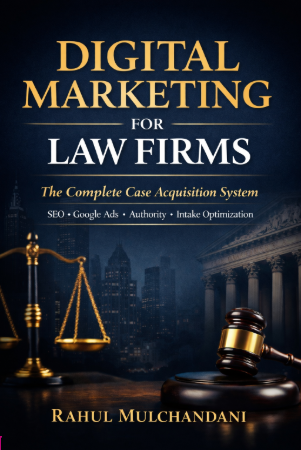
Written by: Rahul Mulchandani
Founder, Digital Marketing Strategist and
Author of "Digital Marketing For Lawyers" Book
Written by: Rahul Mulchandani
Founder, Digital Marketing Strategist and Author of "Digital Marketing For Lawyers" Book
Table of Contents
Civil litigation lawyer marketing has evolved dramatically over the last few years. Competition is no longer limited to neighboring law firms. Today’s litigation practices compete against regional firms, national firms, legal directories, online marketplaces, and increasingly, AI-driven search experiences that influence how prospective clients discover and evaluate attorneys.
Analyze this Litigation lawyer marketing content with AI tools:
ChatGPT Perplexity Grok Google AI ClaudeThe firms consistently attracting high-value business disputes, contract litigation matters, shareholder claims, and complex commercial cases are rarely those relying solely on referrals. Instead, they have developed sophisticated marketing systems that combine search engine optimization, thought leadership, paid advertising, referral development, and conversion-focused website strategies.
For civil litigators, marketing presents unique challenges. Prospective clients often conduct extensive research before contacting an attorney. Businesses facing complex disputes may evaluate multiple firms, review attorney credentials, read published articles, examine case results, and seek recommendations from trusted advisors before making a hiring decision.
As Google’s Helpful Content system and E-E-A-T standards continue shaping search visibility, firms must demonstrate genuine legal experience, industry expertise, and trustworthiness across every digital touchpoint.
This comprehensive guide explains how civil litigation firms can build a modern client acquisition system that consistently attracts qualified, high-value cases while establishing long-term market authority.
What Is Civil Litigation Lawyer Marketing?
Civil litigation lawyer marketing refers to the strategic process of attracting, converting, and retaining clients involved in legal disputes outside the criminal justice system.
Unlike consumer-focused practice areas, civil litigation marketing frequently targets business owners, executives, shareholders, investors, property owners, and in-house counsel. These clients typically seek legal representation for high-stakes disputes involving significant financial exposure.
Common litigation matters include:
- Commercial litigation
- Contract disputes
- Partnership disputes
- Shareholder litigation
- Construction litigation
- Employment disputes
- Real estate litigation
- Business torts
- Professional negligence claims
- Breach of fiduciary duty actions
Because these matters often involve substantial financial consequences, prospects tend to perform extensive due diligence before hiring counsel. A potential client may spend weeks researching attorneys, reviewing firm websites, reading legal publications, and evaluating online reviews.
This lengthy decision-making process means successful marketing requires significantly more than a basic website or occasional networking.
Effective civil litigation marketing combines:
- Search engine optimization (SEO)
- Thought leadership content
- Google Ads and paid media
- Professional referral development
- Reputation management
- Website conversion optimization
- LinkedIn marketing
- Public relations and digital authority building
Google classifies legal content as a “Your Money or Your Life” (YMYL) category. Under Google’s Search Quality Evaluator Guidelines, legal websites must demonstrate strong Experience, Expertise, Authoritativeness, and Trustworthiness (E-E-A-T) signals to compete effectively in organic search.
How Civil Litigation Marketing Differs From Other Legal Practice Areas
Civil litigation marketing differs substantially from personal injury, family law, or criminal defense marketing.
| Factor | Civil Litigation | Personal Injury |
|---|---|---|
| Average Client Research Period | Weeks to months | Hours to days |
| Typical Decision Maker | Businesses, executives | Individual consumers |
| Case Value | Often high | Moderate to high |
| Importance of Thought Leadership | Extremely high | Moderate |
| Referral Dependency | Very high | Moderate |
| Role of LinkedIn | Significant | Limited |
For example, a company facing a shareholder dispute worth millions of dollars is unlikely to hire counsel after viewing a single advertisement. Decision-makers typically evaluate credentials, trial experience, representative matters, and industry knowledge before scheduling a consultation.
As a result, civil litigation firms must market expertise rather than simply advertise availability.
Why Marketing Matters for Civil Litigation Firms
Many litigators built successful practices through referrals alone. While referrals remain essential, relying exclusively on them has become increasingly risky.
Several significant market shifts have transformed client acquisition.
Get More Clients for Your Law Firm
Stop losing potential cases to competitors. Let’s build a strategy that brings you consistent, high-quality leads.
Prospective Clients Start Their Search Online
Research consistently shows that most legal consumers begin their attorney search online. Even referrals frequently validate recommendations by reviewing a firm’s digital presence.
Common searches include:
- commercial litigation attorney near me
- contract dispute lawyer
- shareholder dispute attorney
- business litigation law firm
- civil litigation attorney in [city]
- partnership dispute lawyer
If your firm does not appear prominently in search results, prospects may never discover your practice.
Moreover, appearing in search results alone is insufficient. Prospective clients expect sophisticated websites that demonstrate competence, authority, and trust.
AI Search Is Changing Legal Discovery
Search behavior continues evolving rapidly.
Google’s AI Overviews and other generative search experiences increasingly summarize legal information directly within search results. Firms seeking visibility in these environments must publish comprehensive, authoritative content.
Content formats increasingly favored by AI-driven systems include:
- Detailed legal guides
- Attorney-authored articles
- FAQ resources
- Case analyses
- Industry commentary
- Original insights
Legal marketers increasingly use tools such as Semrush AI Toolkit, Ahrefs Brand Radar, and Google Search Console to evaluate visibility within AI-generated search experiences.
Firms publishing generic 500-word blog posts often struggle to gain visibility in these new environments.
Competition Has Intensified
Many regional and national litigation firms now allocate substantial budgets to digital marketing initiatives.
Competitive firms frequently invest in:
- Search engine optimization
- Google Ads campaigns
- LinkedIn advertising
- Professional video production
- Public relations campaigns
- Webinar marketing
- Marketing automation systems
Without a deliberate marketing strategy, firms risk losing market share regardless of the quality of their legal work.
Marketing Creates Business Stability
Referral-based practices often experience unpredictable revenue cycles.
By diversifying acquisition channels, firms create a more stable pipeline of opportunities.
A balanced civil litigation marketing strategy typically includes:
- Organic search visibility
- Referral relationships
- Paid advertising
- Thought leadership
- Professional networking
- Email nurturing
This diversification reduces dependence on any single source of business while creating long-term growth opportunities.
Understanding Civil Litigation Client Intent
One of the biggest mistakes law firms make is treating every keyword and marketing opportunity identically.
Successful litigation marketing begins by understanding search intent.
Search intent describes the reason behind a user’s query and often indicates where that prospect sits within the buying journey.
Transactional Intent
Transactional searches indicate that a prospect is actively seeking legal representation.
Examples include:
commercial litigation attorney
business litigation lawyer near me
contract dispute attorney
civil trial lawyer
partnership dispute lawyer
These prospects typically expect immediate access to:
Attorney credentials
Case experience
Consultation options
Reviews and testimonials
Office locations
Contact information
Pages targeting transactional searches should prioritize conversion optimization while reinforcing trust and expertise.
Informational Intent
Informational searches occur earlier in the client journey.
Examples include:
what constitutes breach of contract
how to sue a business partner
commercial litigation process
shareholder oppression remedies
how long does civil litigation take
Although these visitors may not require immediate representation, they often become future clients.
Publishing high-quality informational content allows firms to establish authority before prospects begin evaluating attorneys.
Experienced legal marketers frequently observe that informational content contributes significantly to assisted conversions within Google Analytics 4 attribution reports.
High-Value Commercial Intent
Certain searches consistently produce exceptionally valuable matters.
Examples include:
shareholder litigation attorney
business divorce lawyer
fiduciary litigation attorney
partnership dispute attorney
minority shareholder oppression lawyer
Because these disputes often involve businesses, ownership interests, or significant assets, they frequently generate substantial legal fees.
Many successful litigation firms prioritize these terms when developing SEO and PPC campaigns.
Keyword Research Strategy for Civil Litigation Firms
Advanced keyword research extends far beyond search volume.
Experienced legal marketers typically analyze:
- Commercial intent.
- Estimated case value.
- Competitive difficulty.
- Geographic modifiers.
- Practice area profitability.
Recommended research tools include:
- Google Keyword Planner
- Semrush Keyword Magic Tool
- Ahrefs Keywords Explorer
- Google Search Console
- AlsoAsked
- AnswerThePublic
Within Semrush, the Keyword Magic Tool’s “Questions” filter often uncovers valuable long-tail litigation topics suitable for FAQ pages and thought leadership content.
Examples include:
- can minority shareholders sue majority shareholders
- how long does business litigation take
- what damages are available for breach of contract
Capturing these searches helps firms build topical authority while attracting highly qualified prospects.
SEO Strategies for Civil Litigation Lawyers
Organic search remains one of the highest-ROI marketing channels for civil litigation firms. Unlike paid advertising, strong SEO assets continue generating qualified leads long after publication.
However, ranking for competitive litigation keywords requires far more than adding keywords to a website. Google’s 2026 algorithms prioritize topical authority, experience signals, content depth, user experience, and brand credibility.
Successful litigation firms build comprehensive search ecosystems rather than isolated pages.
Build Comprehensive Practice Area Silos
One of the most common mistakes civil litigation firms make is relying on a single “Civil Litigation” page to rank for dozens of services.
This approach rarely works in competitive markets.
Instead, firms should create dedicated practice area silos.
A typical civil litigation content architecture may include:
Primary Service Pages
Commercial Litigation
Contract Disputes
Shareholder Litigation
Partnership Disputes
Business Torts
Construction Litigation
Employment Litigation
Real Estate Litigation
Fiduciary Litigation
Appeals
Supporting Cluster Content
For example, a Commercial Litigation silo might include:
What Is Commercial Litigation?
Breach of Contract Claims Explained
Common Defenses in Business Litigation
Business Fraud Litigation Process
Injunctions in Commercial Disputes
Alternative Dispute Resolution vs Litigation
Commercial Litigation Timelines
Recoverable Damages in Business Lawsuits
Google increasingly rewards websites demonstrating comprehensive topical coverage.
A practical benchmark is developing 15 to 30 supporting articles around each major practice area.
Optimize for E-E-A-T Signals
Google’s Search Quality Evaluator Guidelines emphasize Experience, Expertise, Authoritativeness, and Trustworthiness (E-E-A-T), particularly for legal websites.
Civil litigation firms should actively demonstrate these signals throughout their websites.
Demonstrate Experience
Include:
Representative matters
Trial experience summaries
Attorney biographies
Court admissions
Industry experience
Litigation case studies
Instead of generic statements such as “We fight for our clients,” provide specific examples:
Represented a manufacturing company in a shareholder dispute involving allegations of fiduciary misconduct and negotiated a multimillion-dollar settlement before trial.
Detailed experience statements provide significantly stronger credibility signals.
Demonstrate Expertise
Publish content authored or reviewed by attorneys.
Recommended content formats include:
Legal analyses
Court decision commentary
White papers
Webinar transcripts
Industry-specific legal updates
Attorney bylines should include:
Full name
Credentials
Bar admissions
Practice concentration
Biography links
Google increasingly values transparent authorship.
Demonstrate Authority
Authority frequently develops through external validation.
Sources of authority include:
Speaking engagements
Media mentions
Industry awards
Bar leadership positions
Scholarly publications
Professional association memberships
Digital PR campaigns can significantly improve authority.
Examples include:
Contributing commentary to business publications.
Publishing legal analyses in industry journals.
Participating in podcasts and webinars.
Providing expert commentary on significant court decisions.
Demonstrate Trust
Trust signals should appear throughout the website.
Important trust elements include:
Secure HTTPS protocol
Attorney contact information
Office locations
Privacy policy
Terms of use
Bar association memberships
Testimonials
Professional awards
Trust signals are especially important because legal services fall under Google’s YMYL standards.
Local SEO for Civil Litigation Firms
Although many litigation matters involve businesses, local visibility remains essential.
Corporate decision-makers often seek attorneys familiar with local courts and jurisdictions.
Optimize Google Business Profile
Google Business Profile (GBP) remains one of the strongest local ranking factors.
Civil litigation firms should fully optimize their profiles.
Recommended primary categories include:
Law Firm
Trial Attorney
Civil Law Attorney
Additional optimization opportunities include:
Services Section
Add detailed services such as:
Commercial Litigation
Contract Litigation
Partnership Disputes
Business Litigation
Shareholder Litigation
Business Description
The description should naturally incorporate practice areas, jurisdictions served, and unique experience.
Google Posts
Publish weekly posts discussing:
Legal updates
Firm news
Published articles
Speaking engagements
Questions & Answers
Pre-populate common questions such as:
Do you handle shareholder disputes?
What types of business litigation matters do you accept?
Do you represent plaintiffs and defendants?
Photos
Upload:
Attorney headshots
Office images
Team photos
Community involvement photos
BrightLocal’s annual Local Consumer Review Survey consistently shows that review quality and recency influence consumer decision-making.
Citation Management and NAP Consistency
NAP stands for Name, Address, and Phone Number.
Inconsistent citations create confusion for search engines.
Core legal citation sources include:
- Avvo
- Justia
- FindLaw
- Martindale-Hubbell
- Super Lawyers
- Better Business Bureau
- Yelp
- Chamber of Commerce websites
Multi-office firms should ensure that every location maintains unique and consistent citations.
Citation management tools such as BrightLocal, Whitespark, and Moz Local streamline ongoing maintenance.
Technical SEO Requirements for Litigation Websites
Technical SEO forms the foundation of search visibility.
Common technical issues include:
- Broken internal links
- Duplicate location pages
- Slow page speeds
- Crawl inefficiencies
- Indexing problems
Recommended auditing tools include:
| Tool | Key Feature |
|---|---|
| Screaming Frog | Full website crawl analysis |
| Sitebulb | Visual crawl reports |
| Google Search Console | Coverage and indexing reports |
| Ahrefs Site Audit | Technical issue detection |
| Semrush Site Audit | Ongoing technical monitoring |
Core Web Vitals Benchmarks
Google continues using page experience signals.
Target metrics include:
| Metric | Recommended Target |
|---|---|
| Largest Contentful Paint (LCP) | Under 2.5 seconds |
| Interaction to Next Paint (INP) | Under 200 milliseconds |
| Cumulative Layout Shift (CLS) | Under 0.1 |
Firms should regularly monitor these metrics within Google Search Console’s Core Web Vitals report.
Link Building Strategies for Civil Litigation Lawyers
Backlinks remain one of Google’s strongest ranking signals.
However, quality significantly outweighs quantity.
Effective link-building strategies include:
Digital PR
Publish original insights regarding:
Litigation trends
Court decisions
Industry disputes
Regulatory developments
Journalists frequently seek legal commentary on significant cases.
Professional Organizations
Acquire links from:
State bar associations
Local bar associations
Industry associations
Chambers of commerce
Guest Contributions
Contribute articles to:
Business publications
Industry websites
Trade associations
Legal publications
Speaking Engagements
Conference presentations frequently generate authoritative backlinks.
The strongest backlink profiles often consist of highly relevant, authoritative websites rather than large volumes of low-quality directory links.
PPC and Paid Advertising for Litigation Firms
While SEO builds long-term authority, pay-per-click advertising provides immediate visibility.
Google Ads can generate exceptionally valuable civil litigation leads when campaigns are properly structured.
However, litigation advertising is expensive.
Commercial litigation keywords frequently range from $25 to more than $150 per click in highly competitive markets.
Poor campaign structure can quickly waste substantial budgets.
Recommended Campaign Structure
Successful litigation campaigns organize services into tightly themed campaigns.
Example structure:
| Campaign | Example Ad Groups |
|---|---|
| Commercial Litigation | Business disputes, contract disputes |
| Partnership Disputes | Buyouts, business divorce |
| Shareholder Litigation | Oppression claims, derivative actions |
| Construction Litigation | Contractor disputes, delay claims |
| Contract Litigation | Breach of contract, contract enforcement |
Avoid combining unrelated practice areas within a single campaign.
Granular segmentation improves:
- Ad relevance
- Quality Score
- Click-through rates
- Conversion rates
Keyword Match Types
Google Ads provides several match options.
For litigation firms, the safest initial approach is:
Exact Match
Example:
[commercial litigation attorney]
Exact match generally produces highly qualified traffic.
Phrase Match
Example:
“shareholder dispute lawyer”
Phrase match expands reach while maintaining relevance.
Broad Match
Broad match should be used cautiously.
Although Google’s machine learning has improved, broad match frequently triggers irrelevant searches.
Broad match campaigns should always include robust negative keyword lists.
Negative Keywords: A Critical Cost-Control Tool
Negative keywords prevent ads from appearing for irrelevant searches.
Common legal negative keywords include:
- free
- legal aid
- salary
- jobs
- school
- law school
- template
- definition
- example
- pro bono
- forms
- cheap
Review Google’s Search Terms Report weekly.
Experienced PPC managers often discover dozens of irrelevant searches requiring exclusion.
Quality Score Optimization
Quality Score significantly influences advertising costs.
Google calculates Quality Score using three primary factors:
| Factor | Description |
|---|---|
| Expected CTR | Likelihood users will click |
| Ad Relevance | Alignment between keyword and ad |
| Landing Page Experience | User experience after click |
Improving Quality Score frequently reduces cost per click while improving ad position.
Example Alignment
Keyword:
“partnership dispute attorney”
Ad headline:
Experienced Partnership Dispute Attorneys
Landing page:
Dedicated Partnership Dispute page.
Poor alignment occurs when every keyword sends traffic to a generic homepage.
High-Converting Ad Copy Principles
Civil litigation prospects respond best to credibility-driven messaging.
Effective ad elements include:
- Years of experience
- Trial experience
- Industry focus
- Confidential consultations
- Business dispute experience
Example headlines:
- Commercial Litigation Attorneys
- Experienced Business Trial Lawyers
- Protect Your Business Interests
- Partnership Dispute Representation
Avoid exaggerated claims that may violate attorney advertising rules.
Landing Page Requirements
Every PPC campaign should direct users to dedicated landing pages.
Essential landing page elements include:
Strong Headlines
Address the specific dispute immediately.
Example:
“Experienced Attorneys for Complex Shareholder Disputes”
Trust Signals
Include:
Attorney credentials
Case experience
Testimonials
Awards
Speaking engagements
Conversion Elements
Consultation forms
Click-to-call buttons
Sticky headers
Live chat
Multiple calls-to-action
Educational Content
High-value business clients often appreciate substantive information explaining:
Litigation process
Typical timelines
Available remedies
Conversion Tracking Setup
Accurate tracking determines campaign profitability.
Every litigation campaign should track:
- Phone calls
- Form submissions
- Chat interactions
- Consultation requests
Recommended tracking stack:
| Tool | Primary Function |
|---|---|
| Google Tag Manager | Event management |
| Google Analytics 4 | User behavior analysis |
| CallRail | Call attribution |
| Google Ads Enhanced Conversions | Improved attribution |
| Lawmatics | Lead-to-client tracking |
Offline conversion imports represent an advanced but highly valuable feature.
By importing signed-client data back into Google Ads, firms enable Google’s bidding algorithms to optimize toward actual retained clients rather than simple form submissions.
This often produces dramatically better lead quality.
Budget Allocation Recommendations
A typical monthly litigation advertising budget may follow this model:
| Channel | Percentage Allocation |
|---|---|
| Google Search Ads | 60% |
| Remarketing | 15% |
| LinkedIn Advertising | 15% |
| Local Services Ads (where available) | 10% |
Remarketing deserves particular attention.
Business owners frequently visit multiple law firm websites before contacting counsel. Remarketing campaigns allow firms to re-engage previous visitors and remain visible during lengthy decision cycles.
Content Marketing and Thought Leadership for Civil Litigation Lawyers
For most civil litigation firms, thought leadership is not optional. It is often the deciding factor that separates firms competing on expertise from firms competing on price.
Business owners, executives, and in-house counsel rarely hire litigators based solely on advertisements. They look for attorneys who demonstrate strategic thinking, deep legal knowledge, and practical experience handling complex disputes.
Content marketing allows firms to establish this authority before the first consultation ever occurs.
Why Thought Leadership Matters in Civil Litigation
Civil litigation clients frequently conduct extensive due diligence before hiring counsel.
A prospective client may:
- Review attorney biographies.
- Read multiple articles published by the firm.
- Examine representative matters.
- Watch videos explaining legal issues.
- Search for speaking engagements or media appearances.
- Review LinkedIn activity.
- Compare several competing firms.
The firms consistently winning high-value matters are often those perceived as industry authorities.
Google’s Helpful Content system also favors original, experience-based content rather than generic articles rewritten from other websites.
Publishing insightful legal commentary strengthens both search visibility and client trust.
High-Performing Content Types for Litigation Firms
Practice Area Guides
Comprehensive practice area resources frequently generate substantial organic traffic.
Examples include:
Ultimate Guide to Commercial Litigation
Shareholder Dispute Litigation Explained
Partnership Dissolution Litigation Process
Business Fraud Litigation Guide
Long-form content covering every stage of a dispute often performs exceptionally well because it satisfies informational intent while demonstrating expertise.
Legal Updates and Case Commentary
Analyzing recent court decisions provides several benefits:
- Demonstrates expertise.
- Generates timely content.
- Attracts backlinks.
- Supports AI search visibility.
Examples:
- Recent Supreme Court decisions affecting businesses.
- Significant state appellate rulings.
- Regulatory developments affecting target industries.
The key is providing practical analysis rather than merely summarizing opinions.
Instead of simply reporting a ruling, explain:
- What changed?
- Which businesses are affected?
- What legal risks now exist?
- What actions should organizations take?
This practical perspective differentiates expert content from commodity content.
Industry-Specific Content
Many litigation firms attempt to market broadly to every possible client.
A more effective strategy often involves industry specialization.
Examples include:
Construction Industry Content
Topics may include:
Construction contract disputes.
Delay claims.
Change order litigation.
Mechanic’s lien disputes.
Defect litigation.
Healthcare Industry Content
Examples:
Physician partnership disputes.
Healthcare employment litigation.
Noncompete litigation.
Medical practice shareholder disputes.
Real Estate Industry Content
Examples:
Commercial lease disputes.
Partnership disagreements.
Development litigation.
Construction-related claims.
Industry-focused content frequently converts better because prospects perceive specialized expertise.
Create Experience-Based Content
One of the strongest E-E-A-T signals is first-hand experience.
Whenever ethically permissible, publish anonymized examples.
Example Scenario
A regional manufacturing company experienced a dispute between majority and minority shareholders involving allegations of self-dealing.
Counsel obtained temporary injunctive relief preventing asset transfers while negotiating a buyout agreement that avoided prolonged litigation.
Scenarios like these communicate strategic experience far more effectively than vague marketing statements.
Always comply with confidentiality obligations and attorney advertising rules when discussing past matters.
Video Marketing for Civil Litigators
Video continues to grow as an important legal marketing channel.
Videos frequently improve:
- User engagement.
- Time on page.
- Conversion rates.
- Search visibility.
Recommended topics include:
- Commercial litigation process overview.
- What happens during civil discovery?
- Partnership dispute strategies.
- Trial preparation timelines.
- Recent court decisions.
Short videos between two and five minutes often perform particularly well.
Attorneys do not need professional studio production to succeed.
Clear audio, strong lighting, and valuable insights typically outperform highly produced but generic content.
LinkedIn: The Most Important Social Platform for Civil Litigators
Unlike many consumer-focused practices, civil litigators frequently target business audiences.
As a result, LinkedIn often becomes the most valuable social platform.
Decision-makers actively use LinkedIn to evaluate attorneys.
Recommended LinkedIn Content Mix
Content Type | Percentage |
Legal insights | 40% |
Industry commentary | 25% |
Speaking engagements | 15% |
Firm news | 10% |
Personal professional perspectives | 10% |
Examples of effective posts:
Analysis of significant court rulings.
Commentary on litigation trends.
Risk management insights.
Regulatory developments.
Consistency matters more than frequency.
One to three high-quality posts per week generally outperforms daily low-value posting.
Content Distribution Strategies
Publishing content is only the first step.
Promotion drives visibility.
Recommended distribution channels include:
- LinkedIn.
- Email newsletters.
- Industry associations.
- Webinars.
- Podcasts.
- Digital PR campaigns.
Many firms significantly underperform simply because they fail to promote the content they create.
Referral Marketing and Professional Networks
Despite advances in digital marketing, referrals remain one of the highest-converting lead sources for civil litigation firms.
However, successful firms rarely rely on passive referrals.
They actively cultivate, nurture, and expand professional relationships.
Why Referral Marketing Remains Essential
Complex business disputes often arise within trusted professional networks.
Business owners frequently ask:
Their CPA.
Corporate counsel.
Banker.
Financial advisor.
Industry peers.
As a result, referral relationships frequently produce highly qualified opportunities.
Referral-generated prospects also tend to:
Convert at higher rates.
Require less education.
Trust recommendations more readily.
Generate larger matters.
Identify Key Referral Sources
Successful litigation firms typically segment referral partners.
Attorney Referral Sources
Potential sources include:
Estate planning attorneys.
Corporate lawyers.
Employment attorneys.
Family law attorneys.
Real estate lawyers.
Bankruptcy attorneys.
Many attorneys prefer referring litigation matters rather than handling disputes themselves.
Professional Advisors
Non-attorney professionals often encounter disputes before lawyers become involved.
Examples include:
Certified Public Accountants.
Financial advisors.
Business consultants.
Commercial bankers.
Insurance professionals.
Building relationships with these advisors can create substantial referral opportunities.
Industry Organizations and Associations
Industry participation supports both networking and authority development.
Examples include:
Chambers of Commerce.
Construction associations.
Real estate organizations.
Manufacturing associations.
Technology councils.
Speaking engagements at association events often generate exceptionally strong referral relationships.
Building a Formal Referral System
One of the biggest mistakes law firms make is failing to systematize referrals.
An effective referral program includes:
Step 1: Identify Top Relationships
Review historical matters to determine:
Who refers cases?
Which referrals generate revenue?
Which relationships remain underdeveloped?
Step 2: Segment Referral Sources
Classify relationships based on:
Referral frequency.
Revenue generated.
Strategic importance.
Step 3: Maintain Regular Contact
Create quarterly outreach schedules.
Activities may include:
Coffee meetings.
Educational lunches.
Webinars.
Joint presentations.
Industry events.
Consistency strengthens relationships.
Step 4: Provide Value First
The strongest referral relationships are reciprocal.
Examples include:
Sharing legal updates.
Providing educational resources.
Introducing business contacts.
Offering CLE presentations.
Professionals are more likely to refer attorneys who consistently provide value.
Use CRM Technology to Manage Relationships
Modern legal CRM platforms help firms track and nurture relationships.
Popular solutions include:
Platform | Notable Features |
Lawmatics | Marketing automation and intake |
Clio Grow | Lead management and automation |
HubSpot | Relationship management and reporting |
Zoho CRM | Workflow customization |
Salesforce | Enterprise-level relationship tracking |
Without systems, many firms lose valuable opportunities simply because follow-up never occurs.
Digital Referral Development
Referral marketing increasingly occurs online.
Attorneys can strengthen referral networks through:
LinkedIn engagement.
Joint webinars.
Co-authored articles.
Podcast appearances.
Virtual networking events.
Digital relationship-building often expands networks beyond geographic boundaries.
Website Design and Conversion Optimization for Civil Litigation Firms
A law firm website should function as a business development platform rather than an online brochure.
Sophisticated prospects evaluate websites critically.
A poorly designed website can undermine trust regardless of attorney credentials.
The Purpose of a Civil Litigation Website
Effective litigation websites should accomplish four goals:
Demonstrate expertise.
Build trust.
Educate visitors.
Generate consultations.
Every design decision should support these objectives.
Essential Trust Signals
Civil litigation clients seek evidence of competence.
High-performing websites prominently display:
Attorney biographies.
Representative matters.
Trial experience.
Publications.
Awards and recognitions.
Speaking engagements.
Professional memberships.
Testimonials and reviews.
Business clients often scrutinize attorney credentials extensively.
Detailed attorney profiles frequently become among the most visited pages on litigation websites.
Homepage Best Practices
A strong homepage should immediately communicate:
What the firm does.
Who the firm serves.
Why the firm is qualified.
Above-the-fold content should include:
Clear headline.
Primary call-to-action.
Attorney imagery.
Contact options.
Example headline:
“Experienced Commercial Litigation Attorneys Representing Businesses in Complex Disputes.”
Avoid vague messaging such as:
“Providing Exceptional Legal Services Since 1998.”
Specificity converts.
Practice Area Page Structure
Each practice page should contain:
Introduction
Briefly define the dispute type.
Common Client Problems
Describe scenarios prospects commonly face.
Litigation Process
Explain procedural steps.
Experience Section
Highlight representative matters and attorney experience.
Frequently Asked Questions
Address common concerns.
Calls-to-Action
Encourage consultations throughout the page.
Long-form pages between 1,500 and 3,000 words frequently perform well in competitive markets.
Conversion Optimization Principles
Many firms focus heavily on traffic while ignoring conversion.
Even modest conversion improvements can dramatically increase revenue.
Critical Conversion Elements
Sticky phone number.
Click-to-call buttons.
Short consultation forms.
Live chat.
Multiple calls-to-action.
Attorney photographs.
Social proof.
Legal website conversion rates commonly range between 3% and 10%.
Highly targeted commercial litigation landing pages may exceed 12%.
Landing Pages for Paid Advertising
Paid advertising campaigns should never direct users to generic pages.
Dedicated landing pages should align precisely with search intent.
Example:
Search:
“shareholder oppression attorney”
Landing page:
Dedicated Shareholder Oppression page.
This alignment improves:
Conversion rates.
Quality Score.
Cost efficiency.
Mobile-First Design
More than half of legal website traffic originates from mobile devices.
Mobile optimization is therefore mandatory.
Key considerations include:
Fast loading speeds.
Simplified navigation.
Large clickable buttons.
Mobile-friendly forms.
Sticky contact options.
Google primarily indexes websites using mobile-first indexing.
Poor mobile experiences negatively affect both rankings and conversions.
Core Web Vitals and Performance
Google’s Core Web Vitals remain important page experience signals.
Recommended benchmarks:
Metric | Goal |
Largest Contentful Paint | Under 2.5 seconds |
Interaction to Next Paint | Under 200 ms |
Cumulative Layout Shift | Under 0.1 |
Performance tools include:
Google PageSpeed Insights.
Lighthouse.
GTmetrix.
Google Search Console.
Accessibility Requirements
Accessibility benefits both users and SEO.
Best practices include:
Proper heading hierarchy.
Alternative text for images.
Keyboard navigation support.
Sufficient color contrast.
Accessible forms.
Following WCAG 2.2 standards reduces usability barriers and potential legal risks.
Chat, AI, and Intake Automation
Modern law firms increasingly implement:
Live chat.
AI chat assistants.
Automated intake workflows.
Online scheduling systems.
Tools such as LawDroid, Smith.ai, and Clio Scheduler can improve responsiveness and increase consultation volume.
Response speed matters.
Research consistently shows that firms contacting leads within five minutes achieve significantly higher conversion rates than firms responding hours later.
Measuring Marketing ROI for Civil Litigation Firms
One of the most significant mistakes law firms make is measuring marketing performance using vanity metrics.
High rankings, website traffic, social media impressions, and click-through rates have little value unless they produce qualified consultations and signed matters.
Civil litigation firms should evaluate marketing through a revenue-focused framework.
Why Revenue Matters More Than Leads
Not all leads are equal.
Consider the following example:
Channel | Leads Generated | Signed Clients | Revenue Generated |
Google Ads | 40 | 3 | $350,000 |
Organic SEO | 20 | 5 | $750,000 |
Referrals | 10 | 6 | $1,200,000 |
Although Google Ads generated the most leads, referrals produced substantially more revenue.
Sophisticated firms therefore optimize marketing based on profitability rather than volume.
Build a Full-Funnel Measurement System
Effective reporting tracks prospects throughout the entire client journey.
Recommended funnel stages include:
Funnel Stage | Primary Metrics |
Visibility | Impressions, rankings, local visibility |
Traffic | Sessions, users, engagement |
Leads | Calls, forms, chats |
Consultations | Qualified meetings |
Opportunities | Proposal requests, follow-ups |
Clients | Signed engagements |
Revenue | Fees generated |
Tracking each stage helps identify bottlenecks.
For example:
Strong traffic but few leads may indicate conversion issues.
Strong lead volume but few signed clients may indicate intake problems.
Strong consultations but low revenue may indicate poor lead quality.
Key Marketing KPIs for Civil Litigation Firms
SEO Metrics
Monitor:
Organic traffic growth.
Keyword rankings.
Local Map Pack visibility.
Click-through rate.
Indexed pages.
Branded search volume.
Google Search Console remains the most reliable source for organic performance data.
PPC Metrics
Critical PPC metrics include:
Cost per click (CPC).
Cost per lead (CPL).
Click-through rate (CTR).
Conversion rate.
Cost per acquisition (CPA).
Return on ad spend (ROAS).
Many litigation firms focus excessively on CPC.
Lower CPCs are not always better if lead quality declines.
Website Performance Metrics
Recommended website benchmarks include:
Metric | Typical Benchmark |
Bounce rate | Under 60% |
Engagement rate | Above 50% |
Landing page conversion rate | 3% to 12% |
Average engagement time | Over 90 seconds |
High-value commercial pages often demonstrate longer engagement times because prospects conduct extensive research.
Recommended Analytics Stack
Successful firms generally use multiple technologies.
Google Analytics 4
GA4 provides:
User behavior analysis.
Traffic source reporting.
Conversion tracking.
Attribution insights.
Google Tag Manager
GTM enables implementation of:
Event tracking.
Form tracking.
Scroll tracking.
Call tracking.
CallRail
CallRail helps firms:
Attribute phone calls.
Record conversations.
Evaluate lead quality.
Track marketing sources.
CRM Platforms
Leading legal CRM platforms include:
Lawmatics
Clio Grow
HubSpot
Salesforce
CRM integration connects marketing activities directly to retained matters.
Create Revenue Attribution Dashboards
Many firms use Looker Studio dashboards integrating:
Google Analytics.
Google Ads.
Search Console.
CallRail.
CRM data.
Recommended dashboard reporting:
Marketing Channel → Lead → Consultation → Client → Revenue
This framework enables informed budget decisions.
Common Civil Litigation Lawyer Marketing Mistakes
Even experienced firms frequently make avoidable mistakes.
Relying Exclusively on Referrals
Referral relationships remain valuable but should never represent the sole client acquisition source.
Economic shifts, retirements, and changing professional relationships can significantly reduce referral flow.
Diversification creates stability.
Publishing Generic Content
Thousands of law firm websites publish nearly identical articles.
Examples:
“What Is Civil Litigation?”
“How Long Does Litigation Take?”
Generic content rarely ranks or converts.
Instead, publish original insights, practical examples, and industry-specific analysis.
Using a Single Service Page
Many firms attempt to rank one general civil litigation page for dozens of unrelated services.
Dedicated pages consistently outperform broad pages.
Ignoring Attorney Personal Branding
Prospective clients frequently hire attorneys rather than firms.
Partners should actively build personal brands through:
LinkedIn.
Speaking engagements.
Podcasts.
Articles.
Webinars.
Strong attorney brands frequently improve both referral and organic performance.
Failing to Track Marketing Performance
Without tracking, firms cannot determine:
Which channels produce clients.
Which campaigns waste budget.
Which practice areas generate the highest ROI.
Marketing decisions should be data-driven.
Slow Lead Response Times
Response speed dramatically influences conversion.
Research across professional services consistently demonstrates that firms responding within minutes convert significantly more leads than firms responding hours later.
Implement:
Automated intake workflows.
Live chat.
Online scheduling.
Immediate notifications.
Neglecting Existing Clients
Former clients often become significant referral sources.
Implement ongoing relationship programs including:
Email newsletters.
Client updates.
Educational events.
Holiday outreach.
Retention and referral marketing are frequently overlooked growth opportunities.
Emerging Trends in Civil Litigation Lawyer Marketing
The legal marketing landscape continues evolving rapidly.
Forward-thinking firms should monitor several important developments.
AI Search Optimization
AI-generated search experiences are changing how prospects discover legal information.
To remain visible, firms should produce:
Comprehensive topical content.
Detailed FAQs.
Attorney-authored articles.
Original insights.
Content depth and authority increasingly influence AI visibility.
Video-First Marketing
Video consumption continues increasing across digital platforms.
Recommended formats include:
Legal explainers.
Case analyses.
Webinar clips.
Attorney interviews.
Frequently asked questions.
Short-form video also performs exceptionally well on LinkedIn.
First-Party Data Collection
Privacy regulations and cookie restrictions continue limiting third-party tracking.
Firms should prioritize collecting first-party data through:
Newsletter subscriptions.
Webinar registrations.
Downloadable resources.
Consultation requests.
First-party data supports future marketing initiatives.
Marketing Automation
Automation platforms increasingly streamline:
Lead nurturing.
Intake workflows.
Appointment scheduling.
Follow-up sequences.
Modern firms frequently integrate marketing automation directly into CRM systems.
Interactive Content
Interactive experiences often improve engagement.
Examples include:
Litigation cost calculators.
Case evaluation tools.
Dispute assessment questionnaires.
Interactive FAQs.
These assets can substantially improve conversion rates.
Reputation Management
Online reviews continue influencing both rankings and client decisions.
Develop formal review acquisition processes that comply with applicable ethics rules and state bar regulations.
Practical Next Steps for Civil Litigation Firms
Begin by conducting a comprehensive marketing audit.
Evaluate:
- Current organic visibility.
- Website conversion performance.
- Google Business Profile optimization.
- Referral sources.
- PPC campaign effectiveness.
- Content quality.
- Analytics and tracking systems.
Next, identify the three practice areas generating the highest revenue and build dedicated marketing strategies around those services.
Implement accurate conversion tracking before increasing marketing budgets. Without reliable data, optimization becomes impossible.
Finally, establish a consistent thought leadership program. Firms that publish authoritative content, strengthen professional relationships, optimize conversion pathways, and measure performance based on signed matters rather than vanity metrics generally achieve the strongest long-term growth.
Frequently Asked Questions
How long does civil litigation lawyer marketing take to produce results?
Civil litigation lawyer marketing timelines vary depending on the channel, market competition, and existing authority.
Paid advertising campaigns can begin generating consultations immediately after launch. However, meaningful SEO results typically require six to twelve months of sustained effort.
For newer firms with limited authority, highly competitive keywords such as “commercial litigation attorney” may require twelve months or longer to achieve first-page rankings.
Several factors influence timelines:
- Domain authority.
- Content quality.
- Competition level.
- Technical SEO health.
- Backlink profile.
- Geographic market.
Experienced legal marketers often prioritize quick wins while building long-term assets.
A practical approach includes:
- Immediate PPC campaigns.
- Google Business Profile optimization.
- Local SEO improvements.
- Comprehensive content development.
Most firms begin seeing measurable increases in qualified inquiries within three to six months when executing a coordinated strategy consistently.
Is SEO or PPC better for civil litigation lawyers?
Both channels serve different purposes.
SEO generates sustainable long-term visibility and typically delivers the highest long-term return on investment. However, SEO requires patience.
PPC provides immediate visibility for competitive searches and allows firms to target highly specific disputes.
A balanced strategy frequently produces the strongest results.
For example:
SEO advantages:
- Long-term lead generation.
- Lower cost per acquisition over time.
- Greater credibility.
- Enhanced thought leadership.
PPC advantages:
- Immediate traffic.
- Geographic targeting.
- Precise keyword control.
- Predictable lead generation.
Most successful litigation firms allocate resources to both channels.
Firms entering highly competitive markets often use PPC to generate immediate opportunities while simultaneously investing in SEO for long-term growth.
What marketing budget should civil litigation firms allocate?
Most established law firms allocate between 5% and 12% of annual gross revenue toward marketing.
Growth-oriented firms frequently invest more.
Typical allocations include:
Channel | Suggested Allocation |
SEO and content | 30% to 40% |
PPC | 25% to 40% |
Website optimization | 10% to 15% |
Referral marketing | 10% |
Branding and PR | 10% |
Several factors influence budget requirements:
- Geographic competition.
- Practice area competitiveness.
- Growth objectives.
- Existing brand recognition.
Metropolitan markets such as New York, Los Angeles, and Chicago generally require significantly larger investments than smaller regional markets.
Regardless of budget size, firms should prioritize measurement and attribution.
Why is LinkedIn important for civil litigation lawyer marketing?
LinkedIn aligns exceptionally well with the typical civil litigation client profile.
Business owners, executives, in-house counsel, and professional advisors actively use the platform.
Prospective clients frequently review attorney profiles before initiating contact.
LinkedIn supports:
- Thought leadership.
- Referral development.
- Brand building.
- Relationship nurturing.
- Industry visibility.
Effective content often includes:
- Court decision analysis.
- Regulatory commentary.
- Litigation trends.
- Industry risk insights.
Attorneys consistently publishing valuable insights frequently become recognized authorities within their target industries.
LinkedIn Sales Navigator can further support business development by identifying decision-makers and strengthening networking efforts.
How should civil litigation firms measure marketing success?
Revenue remains the most important marketing metric.
While rankings and traffic provide useful insights, they do not necessarily correlate with profitability.
Recommended measurement hierarchy:
- Revenue generated.
- Signed matters.
- Qualified consultations.
- Cost per acquisition.
- Conversion rates.
- Lead volume.
- Traffic and rankings.
Technology platforms such as Google Analytics 4, CallRail, Lawmatics, and Looker Studio help firms track performance throughout the client journey.
The most effective firms evaluate:
Traffic → Leads → Consultations → Clients → Revenue
This framework enables data-driven decision-making.
What type of content performs best for civil litigation lawyers?
The strongest-performing content typically demonstrates genuine experience and practical insight.
Examples include:
- Industry-specific litigation guides.
- Legal updates.
- Case analyses.
- FAQ resources.
- Webinar content.
- Litigation process explanations.
Google increasingly rewards comprehensive, original content reflecting first-hand experience.
Generic blog posts rarely perform well in competitive markets.
Content should answer real client questions while showcasing strategic expertise.
Additionally, video content continues growing in importance.
Short educational videos often improve engagement and conversion rates significantly.
Our Seo Services
🚀 Get Free Consultation
Our Latest Posts
-
 How We Generate Signed Cases for Lawyers: 7 Proven Strategies That Deliver Real Results
 -
 Case Study: Multi-City Personal Injury SEO Success – New Mexico
 -
 Case Study: Personal Injury Lawyer in Texas
 -
 Lawyer SEO: The Complete Guide to Optimizing Law Firm Websites for Clients and Rankings
 -
 Why Lawyer Switch to Us
Updated on
Get In Touch with Us!
other way to contact us
Office Email
rahul@webkeydigital.com
Office Phone
+1 503-303-8639
Office Location
8 The Green STE A, Dover, Kent , Delaware 19901