
SEO for Mass Tort Law Firms
The Ultimate Guide

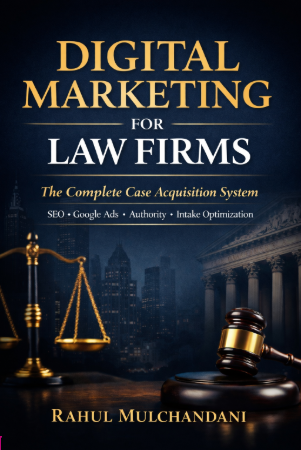
Written by: Rahul Mulchandani
Founder, Digital Marketing Strategist and
Author of "Digital Marketing For Lawyers" Book
Written by: Rahul Mulchandani
Founder, Digital Marketing Strategist and Author of "Digital Marketing For Lawyers" Book
Table of Contents
SEO for mass tort law firms requires a different strategy than traditional local law firm SEO because mass tort firms compete nationally and must build authority around specific litigations rather than local legal services. Mass tort campaigns often involve national competition, rapidly evolving litigation, strict intake requirements, and highly valuable cases that can generate significant revenue for participating firms. Ranking for terms related to pharmaceutical injuries, defective medical devices, environmental contamination, and product liability requires a sophisticated search strategy built around authority, trust, and speed.
Analyze this SEO for mass tort law firms for Lawyers content with AI tools:
ChatGPT Perplexity Grok Google AI ClaudeMost mass tort firms compete against national plaintiff firms, legal publishers, lead generation companies, and large legal marketing agencies. Winning organic visibility demands more than publishing generic legal content. Firms must establish topical authority, demonstrate genuine litigation experience, and create comprehensive resources that satisfy both Google’s Helpful Content system and prospective claimants.
This guide explains how mass tort law firms can build sustainable organic visibility, attract qualified claimants, and generate consistent case acquisition opportunities through modern SEO.
What Is SEO for Mass Tort Law Firms?
SEO for mass tort law firms refers to the process of improving a firm’s visibility in organic search results to attract individuals harmed by defective drugs, dangerous products, toxic exposure, or other large-scale injuries.
Unlike local personal injury SEO, mass tort SEO frequently targets prospective clients across multiple states or nationwide.
Common mass tort categories include:
Defective pharmaceutical litigation
Medical device litigation
Environmental contamination claims
Consumer product liability
Toxic exposure lawsuits
Camp Lejeune claims
PFAS contamination litigation
Talcum powder lawsuits
Hernia mesh litigation
Roundup lawsuits
Mass tort SEO campaigns generally combine:
National SEO
Local SEO
Content marketing
Digital PR
Technical SEO
Conversion optimization
Because legal content falls under Google’s “Your Money or Your Life” (YMYL) standards, firms must demonstrate exceptionally strong E-E-A-T signals to rank competitively.
How Mass Tort SEO Differs From Traditional Law Firm SEO
Mass tort SEO differs significantly from standard local legal SEO.
| Factor | Mass Tort SEO | Traditional Local SEO |
|---|---|---|
| Geographic Targeting | National | Local |
| Competition Level | Extremely high | Moderate |
| Search Demand | Often seasonal | Consistent |
| Content Depth | Extensive | Moderate |
| Importance of News Content | Very high | Moderate |
| Need for Rapid Publishing | Critical | Less critical |
For example, when new multidistrict litigation (MDL) emerges, firms that publish authoritative content quickly often gain significant ranking advantages.
Why SEO Matters for Mass Tort Practices
Paid advertising remains important for many mass tort campaigns, but SEO frequently delivers the strongest long-term return on investment.
Organic Search Produces High-Value Cases
Mass tort cases can generate substantial revenue over several years.
Consequently, even a small increase in qualified organic inquiries can produce significant financial returns.
Firms ranking on page one for competitive searches such as:
Ozempic lawsuit lawyer
PFAS lawsuit attorney
Hernia mesh lawsuit
Roundup cancer lawyer
can generate substantial intake volume without paying for every click.
SEO Reduces Dependence on Paid Advertising
Mass tort PPC campaigns often experience extremely high costs.
Competitive keywords frequently exceed $100 to $300 per click.
Organic visibility provides a sustainable acquisition channel that continues generating leads long after content publication.
Search Visibility Builds Credibility
Potential claimants frequently research their injuries extensively before contacting counsel.
Individuals may review:
Medical information
Litigation updates
Settlement projections
Attorney credentials
Case qualifications
Comprehensive SEO content allows firms to educate prospects while simultaneously demonstrating expertise.
Google Rewards Experience and Authority
Google’s Search Quality Evaluator Guidelines specifically emphasize expertise and trust for legal websites.
Mass tort firms should demonstrate:
Litigation experience
MDL participation
Trial experience
Attorney credentials
Published legal analysis
Media appearances
Websites lacking clear expertise signals frequently struggle to compete against established national firms.
Understanding Mass Tort Search Intent
Search intent drives successful SEO campaigns.
Mass tort prospects enter the search process at different stages.
Understanding these stages helps firms develop content that converts.
Transactional Intent
These searchers actively seek representation.
Examples include:
PFAS lawsuit attorney
Roundup lawyer near me
Ozempic lawsuit law firm
Talcum powder attorney
These pages should prioritize:
Intake forms
Qualification criteria
Attorney experience
Case timelines
Strong calls-to-action
Informational Intent
Potential claimants often begin by researching health concerns.
Examples include:
Can Ozempic cause gastroparesis?
What is PFAS contamination?
Is Roundup linked to cancer?
What qualifies for a talcum powder lawsuit?
Informational content helps firms attract prospects early in the decision cycle.
Litigation Status Intent
Mass tort claimants frequently seek case updates.
Examples include:
Roundup lawsuit update 2026
Camp Lejeune settlement news
Hernia mesh MDL update
Publishing regular litigation updates can generate significant traffic and improve topical authority.
Qualification Intent
Many prospective claimants search specifically to determine eligibility.
Examples include:
Do I qualify for a PFAS lawsuit?
Who qualifies for Ozempic litigation?
Camp Lejeune eligibility requirements
Dedicated qualification pages often convert exceptionally well.
Get More Clients for Your Law Firm
Stop losing potential cases to competitors. Let’s build a strategy that brings you consistent, high-quality leads.
Keyword Research for Mass Tort SEO
Keyword research for mass tort campaigns extends beyond search volume.
Firms should prioritize terms based on:
Claim value.
Litigation maturity.
Search intent.
Competition level.
Conversion potential.
Essential Keyword Categories
Primary Commercial Keywords
Examples:
Mass tort lawyer
PFAS attorney
Talcum powder lawyer
Roundup lawsuit attorney
Symptom and Injury Keywords
Examples:
Non-Hodgkin lymphoma Roundup
Ozempic stomach paralysis
Hernia mesh complications
These keywords often capture claimants before they realize legal remedies exist.
Litigation Update Keywords
Examples:
PFAS lawsuit update
Camp Lejeune settlement update
Talcum powder trial news
Eligibility Keywords
Examples:
Who qualifies for a Roundup lawsuit?
Am I eligible for a PFAS lawsuit?
Recommended SEO Tools
Experienced legal marketers typically use:
Tool | Valuable Feature |
Semrush | Keyword Magic Tool |
Ahrefs | Keywords Explorer |
Google Search Console | Query performance reports |
AlsoAsked | Question discovery |
Google Trends | Emerging litigation trends |
Semrush Topic Research | Content ideation |
Google Trends is particularly valuable for identifying emerging mass tort opportunities before competitors react.
For example, sudden increases in search volume surrounding new pharmaceutical litigation often indicate early SEO opportunities.
Competitor Gap Analysis
Use Ahrefs’ Content Gap report or Semrush’s Keyword Gap tool to identify keywords competitors rank for that your firm does not.
This frequently reveals overlooked opportunities capable of producing highly qualified traffic.
Building a Mass Tort Content Strategy
Content is the foundation of successful SEO for mass tort law firms. Unlike local practice areas where a handful of service pages may generate meaningful results, mass tort SEO requires extensive topical coverage.
Google increasingly rewards websites demonstrating topical authority. Following multiple Helpful Content updates, thin pages targeting isolated keywords rarely perform well in competitive legal markets.
The most successful mass tort firms build comprehensive content ecosystems around each active litigation.
Create Dedicated Mass Tort Content Hubs
Each active mass tort should have its own content hub.
For example, an Ozempic litigation hub may include:
Core Commercial Pages
Ozempic Lawsuit Lawyer
Ozempic Mass Tort Attorney
Ozempic MDL Overview
Supporting Informational Content
Can Ozempic Cause Gastroparesis?
Ozempic Side Effects Explained
Symptoms of Stomach Paralysis
How Ozempic Lawsuits Work
Ozempic Litigation Timeline
Qualification Content
Who Qualifies for an Ozempic Lawsuit?
Required Medical Records for Ozempic Claims
Ozempic Lawsuit Eligibility Criteria
Litigation Updates
Ozempic Lawsuit Update 2026
Recent Court Decisions in the Ozempic MDL
Latest Bellwether Trial Developments
Internal linking should connect every article back to the primary commercial page.
This silo architecture strengthens topical relevance and distributes authority throughout the cluster.
Publish Litigation Updates Frequently
One of the biggest SEO advantages available to mass tort firms is timely litigation reporting.
Prospective claimants routinely search for:
settlement updates
MDL developments
bellwether trial outcomes
newly filed lawsuits
Publishing regular updates allows firms to capture highly engaged visitors.
A practical publishing schedule includes:
Monthly litigation updates.
Major court decision summaries.
Bellwether trial coverage.
Settlement announcements.
Regulatory developments.
Many national firms update active litigation pages weekly.
Cover the Entire Claimant Journey
Most mass tort websites focus exclusively on hiring intent.
However, prospective claimants typically move through several stages.
Stage 1: Medical Research
Examples:
Is Ozempic dangerous?
Does Roundup cause cancer?
Stage 2: Legal Awareness
Examples:
Can I sue after using Roundup?
Is there a PFAS lawsuit?
Stage 3: Qualification
Examples:
Do I qualify for a Roundup claim?
How much evidence is needed?
Stage 4: Attorney Selection
Examples:
Best PFAS lawyer
Mass tort attorney near me
Content should address every stage.
This full-funnel strategy significantly increases organic visibility.
Use First-Hand Experience to Strengthen E-E-A-T
Mass tort firms often publish generic summaries copied from publicly available information.
This rarely creates sustainable rankings.
Instead, incorporate:
Attorney commentary.
Insights from active litigation.
Court observations.
Strategic analysis.
Practical claimant guidance.
Example:
Rather than simply summarizing an MDL order, explain:
“Based on our experience reviewing pharmaceutical injury claims, claimants should preserve pharmacy records, treatment histories, and physician documentation immediately because these records frequently become central evidence during intake.”
This type of guidance demonstrates genuine experience.
Develop Content for Emerging Torts
Google rewards freshness, particularly for rapidly developing litigation.
Firms should actively monitor:
FDA recalls.
FDA safety communications.
Judicial Panel on Multidistrict Litigation (JPML) filings.
MDL creation announcements.
Product recalls.
Consumer Product Safety Commission notices.
Early publication often produces significant ranking advantages before competition intensifies.
Tools such as Google Alerts, Feedly, and Semrush Sensor help identify emerging opportunities.
On-Page SEO Best Practices for Mass Tort Law Firms
Even exceptional content will struggle without proper on-page optimization.
Mass tort SEO requires careful alignment between search intent, page structure, and conversion objectives.
Optimize Title Tags Strategically
Title tags remain one of Google’s strongest on-page relevance signals.
Recommended structure:
Primary Keyword + Benefit + Brand
Examples:
Ozempic Lawsuit Lawyer | Free Case Review
Roundup Cancer Attorney | National Mass Tort Lawyers
PFAS Lawsuit Attorney | Nationwide Representation
Keep titles between 50 and 60 characters whenever possible.
Write Conversion-Focused Meta Descriptions
Meta descriptions influence click-through rate.
Include:
Primary keyword.
Qualification language.
Strong call-to-action.
Example:
“Learn whether you qualify for an Ozempic lawsuit. Speak with experienced mass tort attorneys handling claims nationwide.”
Although meta descriptions are not direct ranking factors, improved CTR often correlates with stronger organic performance.
Use Proper Heading Structures
Mass tort pages should follow a logical hierarchy.
Example:
H1: Ozempic Lawsuit Lawyer
H2: Who Qualifies for an Ozempic Lawsuit?
H2: Ozempic Side Effects
H2: Current Litigation Status
H2: How Much Compensation Is Available?
H2: Speak With an Attorney
Clear structure improves both user experience and search engine understanding.
Implement Advanced Internal Linking
Internal links remain significantly underutilized by law firms.
Every article should link to:
Primary mass tort pages.
Related litigation updates.
Qualification resources.
Attorney profiles.
FAQ pages.
Anchor text should remain descriptive.
Example:
“Learn more about our PFAS lawsuit attorneys.”
Avoid excessive generic anchors such as “click here.”
Add Structured Data
Schema markup helps search engines better understand legal content.
Recommended schema types include:
Schema Type | Use Case |
Article | All educational pages |
FAQPage | FAQ sections |
BreadcrumbList | Content hubs |
LegalService | Service pages |
Author Schema | Attorney profiles |
Attorney author schema is particularly valuable for demonstrating expertise.
Include:
Name.
Bar admissions.
Professional affiliations.
Practice areas.
Author biography.
Optimize for Featured Snippets
Mass tort searches frequently trigger featured snippets.
Structure content to answer questions directly.
Example:
What Is a PFAS Lawsuit?
A PFAS lawsuit is a legal claim filed by individuals alleging injuries or damages caused by exposure to per- and polyfluoroalkyl substances, often linked to contaminated drinking water, firefighting foam, or industrial exposure.
Definitions positioned immediately beneath headings frequently perform well.
Improve Engagement Signals
Google evaluates user satisfaction through numerous signals.
Enhance engagement by incorporating:
Videos.
Infographics.
Timelines.
Interactive eligibility tools.
Expandable FAQs.
Case qualification checklists.
Longer engagement often correlates with improved rankings.
E-E-A-T for Mass Tort Law Firms
Because legal websites fall under Google’s YMYL framework, E-E-A-T plays an outsized role in rankings.
Mass tort firms competing nationally cannot ignore these signals.
Demonstrate Experience
Google increasingly rewards first-hand experience.
Demonstrate experience through:
Active case participation.
Representative matters.
Litigation commentary.
Attorney insights.
Court observations.
Avoid anonymous content whenever possible.
Strengthen Attorney Author Profiles
Every substantive article should include:
Attorney byline.
Credentials.
Bar admissions.
Litigation experience.
Speaking engagements.
Published works.
Detailed author pages strengthen trust.
Build Authoritative Mentions
External authority remains crucial.
Seek mentions from:
National media outlets.
Legal publications.
Medical publications.
Industry associations.
Professional organizations.
Digital PR campaigns frequently produce both brand visibility and high-authority backlinks.
Maintain Transparent Trust Signals
Mass tort websites should clearly display:
Office information.
Attorney contact details.
Privacy policies.
Editorial policies.
Case evaluation disclosures.
Transparency supports both user trust and search visibility.
National SEO Architecture for Mass Tort Law Firms
Unlike local personal injury practices, mass tort firms frequently pursue nationwide visibility.
Website architecture therefore becomes critical.
Recommended Site Structure
Example:
/mass-torts/
/mass-torts/ozempic-lawsuit/
/mass-torts/roundup-lawsuit/
/mass-torts/pfas-lawsuit/
/mass-torts/camp-lejeune-lawsuit/
Each litigation page should contain supporting subpages.
Example:
/mass-torts/ozempic-lawsuit/eligibility/
/mass-torts/ozempic-lawsuit/settlement-updates/
/mass-torts/ozempic-lawsuit/side-effects/
This structure helps Google understand relationships between topics.
Multi-State SEO Considerations
Many firms create state-specific pages.
Examples:
California PFAS Lawyer
Texas Roundup Attorney
Florida Camp Lejeune Lawyer
However, avoid doorway pages.
Google specifically discourages low-value location pages created solely for rankings.
Each location page should include:
State-specific legal considerations.
Jurisdictional information.
Local statutes.
Court procedures.
Relevant attorney admissions.
Unique value is essential.
Local SEO Still Matters
Even national firms benefit from strong local authority.
Optimize:
Google Business Profiles.
State office pages.
Local citations.
Reviews.
Regional backlinks.
Many mass tort claimants still search for attorneys near their location.
Combining local authority with national content frequently produces the strongest overall SEO performance.
Digital PR as a National Ranking Strategy
Digital PR has become one of the most effective link acquisition strategies for mass tort firms.
Examples include:
Publishing original legal research.
Analyzing litigation trends.
Commenting on FDA actions.
Releasing settlement analyses.
Conducting claimant surveys.
These campaigns often generate links from highly authoritative publications.
High-authority backlinks remain among Google’s strongest ranking signals.
A single placement from a major news publication can substantially improve overall domain authority.
Technical SEO for Mass Tort Websites
Technical SEO forms the foundation of every successful mass tort SEO campaign. Even exceptional content can struggle to rank if search engines cannot efficiently crawl, index, and understand your website.
Mass tort websites often contain hundreds or even thousands of pages covering multiple litigations, legal updates, FAQs, and location pages. Without a strong technical framework, significant ranking opportunities can be lost.
Prioritize Crawlability and Indexation
Search engines must easily discover and index critical pages.
Common technical issues affecting mass tort websites include:
Orphan pages.
Broken internal links.
Duplicate content.
Redirect chains.
Incorrect canonical tags.
Noindex errors.
Use tools such as:
Tool | Primary Use |
Google Search Console | Indexing and coverage reports |
Screaming Frog | Full website crawl audits |
Sitebulb | Technical SEO visualization |
Ahrefs Site Audit | Ongoing issue monitoring |
Semrush Site Audit | Site health reporting |
Within Google Search Console, regularly review the Pages Report to identify excluded URLs, crawl anomalies, and indexing problems.
Optimize Core Web Vitals
Google continues to use page experience signals as ranking considerations.
Recommended benchmarks include:
Metric | Recommended Target |
Largest Contentful Paint (LCP) | Under 2.5 seconds |
Interaction to Next Paint (INP) | Under 200 ms |
Cumulative Layout Shift (CLS) | Under 0.1 |
Mass tort websites often become slow because they contain:
Excessive tracking scripts.
Uncompressed images.
Heavy chat widgets.
Video embeds.
Multiple third-party marketing tools.
Compress images, enable browser caching, implement a content delivery network (CDN), and remove unnecessary scripts.
Platforms such as Cloudflare, NitroPack, and WP Rocket frequently improve page speed significantly.
Manage Duplicate Content Carefully
Mass tort firms often create multiple pages targeting similar topics.
For example:
Ozempic lawsuit page.
Ozempic settlement page.
Ozempic eligibility page.
Ozempic side effects page.
Content overlap can occur easily.
To minimize duplication:
Define unique search intent for every page.
Use canonical tags correctly.
Consolidate thin pages.
Expand overlapping articles with unique information.
Google’s Helpful Content guidance increasingly discourages low-value, repetitive content.
XML Sitemaps and Structured Navigation
Large mass tort websites should maintain separate XML sitemaps for:
Service pages.
Blog content.
Litigation updates.
Attorney profiles.
Video content.
This segmentation improves crawl efficiency.
Submit updated sitemaps through Google Search Console whenever significant new content is published.
Mobile-First Optimization
Google primarily uses mobile-first indexing.
Mass tort prospects frequently research claims using smartphones immediately after seeing news reports or medical information.
Mobile pages should provide:
Fast loading times.
Large clickable buttons.
Simple navigation.
Sticky contact options.
Short intake forms.
Poor mobile usability often directly reduces conversion rates.
Link Building for Mass Tort Law Firms
Backlinks remain among Google’s strongest ranking signals.
However, mass tort SEO requires authoritative, relevant links rather than sheer volume.
A few high-quality legal and media links typically outperform hundreds of low-quality directory submissions.
Digital PR Campaigns
Digital PR has become one of the most effective link-building strategies for mass tort firms.
Examples include:
Original Legal Research
Examples:
Analysis of mass tort filing trends.
Settlement outcome studies.
Product recall databases.
Geographic claimant studies.
Original data frequently attracts journalists.
Attorney Commentary
Reporters regularly seek legal insight regarding:
FDA recalls.
Product safety issues.
Significant verdicts.
New multidistrict litigation.
Platforms such as HARO alternatives, Qwoted, and Featured can help attorneys secure media opportunities.
Litigation News Analysis
Publishing comprehensive analyses of:
Bellwether trials.
MDL developments.
Federal court decisions.
can attract citations from legal publications and industry media.
Authoritative Legal Directories
Although directory links alone will not drive rankings, authoritative legal citations remain useful.
Recommended sources include:
Avvo.
Justia.
FindLaw.
Martindale-Hubbell.
Super Lawyers.
Consistency across these platforms supports trust and local authority.
Strategic Guest Contributions
Contributing articles to:
Legal publications.
Healthcare publications.
Industry associations.
Consumer safety organizations.
can generate authoritative backlinks while strengthening brand visibility.
Avoid low-quality guest posting networks.
Google’s spam policies increasingly target manipulative link schemes.
Local and National SEO Strategies for Mass Tort Firms
Mass tort SEO frequently requires balancing national visibility with local authority.
Firms ignoring either component often miss substantial opportunities.
National SEO Strategy
National campaigns should focus on:
Litigation-specific content hubs.
Nationwide service pages.
Extensive informational content.
Digital PR.
Strong backlink acquisition.
National rankings typically depend heavily on domain authority and topical depth.
Firms competing nationally often publish dozens of articles surrounding each active litigation.
Local SEO Strategy
Many prospective claimants still search locally.
Examples include:
PFAS lawyer near me.
Mass tort attorney in Dallas.
Roundup lawyer Chicago.
Local SEO remains essential.
Google Business Profile Optimization
Optimize:
Primary categories.
Services.
Business descriptions.
Weekly posts.
Photos.
Q&A content.
Primary categories may include:
Personal Injury Attorney.
Law Firm.
Trial Attorney.
Citation Consistency
Maintain consistent NAP information across:
Google Business Profile.
Legal directories.
Local business listings.
State bar profiles.
Citation management tools such as BrightLocal and Whitespark simplify ongoing maintenance.
Multi-Office SEO
Firms operating multiple offices should create unique location pages.
Avoid duplicating identical content across cities.
Each location page should include:
Office-specific attorney information.
Local court information.
State-specific legal considerations.
Community involvement.
Unique testimonials.
Google specifically discourages doorway pages created solely for rankings.
Measuring SEO Success for Mass Tort Campaigns
Successful mass tort SEO campaigns focus on business outcomes rather than vanity metrics.
A top ranking means little if qualified claimants never contact the firm.
Essential SEO KPIs
Monitor:
Visibility Metrics
Organic impressions.
Keyword rankings.
Share of voice.
Featured snippet ownership.
Traffic Metrics
Organic sessions.
Engaged sessions.
Returning visitors.
Traffic by litigation.
Conversion Metrics
Qualified leads.
Case evaluations.
Phone calls.
Form submissions.
Revenue Metrics
Signed claimants.
Cost per acquisition.
Estimated case value.
Revenue generated.
Recommended Analytics Stack
Most sophisticated mass tort firms utilize:
Platform | Primary Function |
Google Analytics 4 | User behavior tracking |
Google Search Console | Organic performance |
Google Tag Manager | Event implementation |
CallRail | Call attribution |
Looker Studio | Reporting dashboards |
Lawmatics | Intake and CRM tracking |
Google Analytics 4’s attribution reports help identify content contributing to conversions.
Mass tort claimants frequently interact with multiple pages before converting.
Benchmark Performance Expectations
Although results vary, experienced legal marketers frequently target:
KPI | Typical Benchmark |
Organic CTR | 3%–10% |
Landing page conversion rate | 5%–15% |
Bounce rate | Under 60% |
Engagement rate | Above 50% |
Highly qualified mass tort landing pages often outperform traditional legal pages because claimants are actively seeking representation.
Common SEO Mistakes Mass Tort Law Firms Make
Several recurring mistakes limit SEO performance.
Publishing Thin Content
Mass tort pages containing only 500 words rarely compete.
Comprehensive resources consistently outperform shallow pages.
Ignoring E-E-A-T
Anonymous content without attorney oversight frequently struggles under Google’s YMYL standards.
Always demonstrate expertise.
Overlooking Emerging Litigation Opportunities
Many firms wait months before publishing content regarding new litigations.
Early movers often secure significant ranking advantages.
Creating Duplicate Location Pages
Near-identical city pages create substantial quality risks.
Every location page should provide unique value.
Focusing Exclusively on Rankings
Rankings matter, but revenue matters more.
Measure signed cases, not just keyword positions.
Neglecting Conversion Optimization
Traffic alone does not generate clients.
Strong calls-to-action, simple intake forms, and rapid response systems significantly improve performance.
Emerging Trends in Mass Tort SEO
Mass tort SEO continues evolving rapidly.
Forward-thinking firms should monitor several important developments.
AI Search Optimization
Google AI Overviews increasingly influence legal search behavior.
Content optimized for AI visibility generally includes:
Direct answers.
Comprehensive FAQs.
Attorney-authored insights.
Original analysis.
Video SEO
Video increasingly appears within legal search results.
Recommended formats include:
Litigation updates.
Eligibility explanations.
Attorney commentary.
Settlement discussions.
Publishing videos on YouTube and embedding them within litigation pages can improve engagement.
First-Party Data Collection
Privacy regulations continue limiting third-party tracking.
Mass tort firms should prioritize collecting:
Email subscribers.
Webinar registrations.
Download requests.
Consultation inquiries.
First-party audiences support long-term marketing initiatives.
Interactive Experiences
Interactive tools frequently improve both engagement and conversion.
Examples include:
Case qualification quizzes.
Settlement calculators.
Eligibility checkers.
Exposure assessment tools.
These assets often increase time on page and lead generation.
Next Steps
Begin by auditing your existing mass tort website. Identify active litigations, evaluate content gaps, review technical SEO issues, and analyze current rankings. Next, prioritize high-value torts and build comprehensive content hubs around those cases. Ensure every page demonstrates genuine attorney expertise, includes strong conversion elements, and aligns with claimant search intent. Finally, implement robust tracking through Google Analytics 4, Search Console, CallRail, and your CRM so you can measure SEO success based on signed claimants and case revenue rather than rankings alone.
Frequently Asked Questions
What is SEO for mass tort law firms?
SEO for mass tort law firms is the process of improving organic search visibility to attract qualified claimants involved in nationwide product liability, pharmaceutical, or toxic exposure litigation.
Why is SEO important for mass tort attorneys?
SEO helps mass tort attorneys generate long-term case acquisition opportunities, reduce dependence on expensive PPC campaigns, and build authority in competitive national markets.
How long does mass tort SEO take to produce results?
Most firms begin seeing meaningful SEO improvements within 6 to 12 months, although emerging litigations may generate results faster.
What content works best for mass tort SEO?
Litigation updates, eligibility guides, medical condition content, settlement information, FAQs, and comprehensive lawsuit pages typically perform best.
Should mass tort firms focus on local SEO?
Yes. Even national firms benefit from strong local SEO because many claimants search for attorneys near their location.
How important is E-E-A-T for mass tort websites?
E-E-A-T is critical because legal content falls under Google’s YMYL standards. Attorney authorship, experience, and trust signals strongly influence rankings.
What tools are best for mass tort SEO?
Google Search Console, Google Analytics 4, Semrush, Ahrefs, Screaming Frog, CallRail, and Lawmatics are among the most valuable tools.
Can mass tort firms rank nationally through SEO?
Yes. Firms can achieve national visibility by building topical authority, acquiring authoritative backlinks, and publishing comprehensive litigation content.
How often should mass tort firms publish content?
Active mass tort campaigns should ideally publish new content or litigation updates at least several times per month.
What metrics should mass tort firms track?
Key metrics include organic traffic, qualified leads, conversion rates, signed claimants, cost per acquisition, and revenue generated from SEO.
🚀 Get Free Consultation
Our Latest Posts
-
 How We Generate Signed Cases for Lawyers: 7 Proven Strategies That Deliver Real Results
 -
 Case Study: Multi-City Personal Injury SEO Success – New Mexico
 -
 Case Study: Personal Injury Lawyer in Texas
 -
 Lawyer SEO: The Complete Guide to Optimizing Law Firm Websites for Clients and Rankings
 -
 Why Lawyer Switch to Us
Updated on
Get In Touch with Us!
other way to contact us
Office Email
rahul@webkeydigital.com
Office Phone
+1 503-303-8639
Office Location
8 The Green STE A, Dover, Kent , Delaware 19901