
Workers Comp Lead Generation
The Ultimate Guide for Law Firms

Written by: Rahul Mulchandani
Founder, Digital Marketing Strategist and
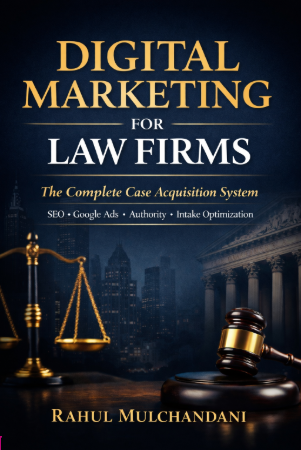
Author of "Digital Marketing For Lawyers" Book
Written by: Rahul Mulchandani
Founder, Digital Marketing Strategist and Author of "Digital Marketing For Lawyers" Book
Table of Contents
Workers comp lead generation has become one of the most competitive disciplines in legal marketing. In many markets, workers’ compensation firms compete not only against established local practices, but also against large personal injury brands, lead aggregators, referral networks, and aggressive advertisers willing to pay premium costs for case inquiries.
Analyze this Workers comp lead generation for Lawyers content with AI tools:
ChatGPT Perplexity Grok Google AI ClaudeGenerating more leads is not the challenge. Generating qualified workers’ compensation leads consistently, profitably, and ethically is the real objective.
Firms that succeed rarely rely on a single channel. They build integrated systems that combine local SEO, Google Ads, intake optimisation, reputation management, educational content, and rigorous tracking. They understand the difference between volume and quality. More importantly, they understand how injured workers actually search, evaluate attorneys, and decide whom to contact.
This guide explains how experienced legal marketers approach workers comp lead generation in 2026. You’ll learn how each channel works, where firms waste budget, what benchmarks matter, and how to build a sustainable pipeline that compounds over time instead of depending entirely on referrals or rising ad spend. Many firms also partner with a law firm seo agency to improve search visibility, strengthen lead generation systems, and create a predictable flow of qualified workers’ compensation enquiries.
What Is Workers Comp Lead Generation?
Workers comp lead generation is the process of attracting, qualifying, and converting injured workers into consultations for a workers’ compensation law firm.
A lead becomes valuable only when it aligns with the firm’s intake criteria. Someone downloading a return-to-work checklist may help future marketing efforts, but a worker recently denied benefits and seeking legal representation has immediate case value.
Workers’ compensation lead generation typically involves:
Local search visibility
Paid advertising
Educational content
Google Business Profile optimisation
Intake systems
Review acquisition
Referral development
Conversion rate optimisation
Call handling and qualification
Many firms make the mistake of treating these activities independently. In reality, they function as a single acquisition ecosystem.
For example:
A prospect might first discover your article explaining why wage replacement benefits stopped unexpectedly. Two weeks later they see your Google Ads remarketing campaign. They compare your reviews against competitors before finally submitting a consultation request.
Without attribution systems, firms often underestimate the influence of earlier touchpoints.
Lead Generation Versus Lead Buying
Some workers’ compensation firms purchase leads through third-party providers.
The appeal is obvious:
Immediate inquiries
Predictable volume
Reduced setup requirements
However, purchased leads introduce challenges:
| Factor | Owned Lead Generation | Purchased Leads |
|---|---|---|
| Exclusivity | High | Often shared |
| Long-term Cost | Declines over time | Remains fixed |
| Brand Equity | Builds continuously | Minimal |
| Lead Quality Control | Strong | Limited |
| Dependence Risk | Low | High |
| Asset Creation | Yes | No |
Experienced firms generally prioritise owned channels while using purchased leads selectively to supplement demand gaps.
Why Workers’ Compensation Firms Need a Dedicated Lead Strategy
Workers’ compensation clients behave differently from many other legal consumers.
Their motivations, urgency, and concerns shape how they search.
Common realities include:
They Often Search After an Employer Conflict
The injury itself may not trigger legal research.
Instead, prospective clients begin searching when:
Benefits are denied.
Employers dispute the injury.
Wage payments stop.
Medical treatment authorisations are rejected.
Return-to-work disputes emerge.
This means firms should target problem-aware searches rather than only broad attorney keywords.
Examples include:
“workers comp denied surgery”
“employer says injury wasn’t work related”
“temporary disability payments stopped”
“can I choose my own doctor workers comp”
These informational searches frequently convert into consultations.
Trust Is More Important Than Aggressive Advertising
Workers’ compensation claimants are often anxious about:
Job security
Financial instability
Medical treatment access
Employer retaliation
Generic slogans rarely address these concerns.
Content that demonstrates practical experience tends to outperform purely promotional messaging.
For example, explaining what happens during an independent medical examination often creates more trust than promising to “fight aggressively.”
Local Competition Is Intensifying
Many personal injury firms increasingly target workers’ compensation cases through:
Expanded practice pages
Broad-match Google Ads campaigns
Multi-location SEO strategies
Aggressive review generation
As a result, dedicated workers’ comp firms benefit from emphasising niche expertise throughout their marketing.
Google’s Search Quality Evaluator Guidelines consistently reward evidence of experience and expertise in YMYL (Your Money or Your Life) topics.
Workers’ compensation clearly falls into that category.
Understanding Workers Comp Search Intent
Search intent drives lead quality.
Firms focused solely on search volume often attract traffic that never becomes revenue.
The highest-performing campaigns map content and advertising to intent stages.
Informational Intent
Users seek understanding.
Examples:
What benefits can I receive?
How long do workers comp settlements take?
What happens after a denied claim?
Can I be fired after filing workers comp?
Goals:
Build trust.
Capture early-stage users.
Develop remarketing audiences.
Establish topical authority.
Recommended assets:
Long-form guides
FAQs
Checklists
Video explainers
Commercial Investigation Intent
Users compare options.
Examples:
Best workers comp lawyer near me
Workers compensation attorney reviews
Do I need a workers comp attorney
Goals:
Demonstrate credibility.
Highlight outcomes.
Showcase reviews.
Reduce hesitation.
Recommended assets:
Attorney profiles
Case studies
Comparison content
Review sections
Transactional Intent
Users are ready to contact a firm.
Examples:
workers comp attorney near me
workers compensation lawyer free consultation
work injury lawyer
Goals:
Generate consultations.
Maximise conversion rates.
Remove friction.
Recommended assets:
Dedicated landing pages
Click-to-call functionality
Intake forms
Live chat
Navigational Intent
Users already know the firm.
Examples:
Smith & Jones workers comp lawyers
ABC Law reviews
Goals:
Control brand perception.
Reinforce trust.
Increase contact completion.
Recommended assets:
Branded SERP optimisation
Google Business Profile
Review responses
Strong homepage messaging
The Hidden Opportunity: Mid-Funnel Searches
Most firms ignore intent phrases such as:
“workers comp settlement offer too low”
“workers comp hearing lawyer”
“can workers comp stop benefits”
These keywords often have:
Lower CPCs
Less SEO competition
Higher urgency
Better qualification
Because the searcher has already encountered problems within the claims process, they frequently convert at stronger rates than broad informational visitors.
Get More Clients for Your Law Firm
Stop losing potential cases to competitors. Let’s build a strategy that brings you consistent, high-quality leads.
The Highest-Performing Lead Generation Channels
No single channel dominates indefinitely.
The strongest workers comp practices diversify acquisition sources.
Channel Comparison
| Channel | Speed | Sustainability | Typical Cost | Lead Intent |
|---|---|---|---|---|
| Local SEO | Slow | Excellent | Moderate | High |
| Google Ads | Fast | Moderate | High | Very High |
| Google Business Profile | Medium | Excellent | Low | Very High |
| Organic Content | Slow | Excellent | Moderate | Mixed |
| Reviews | Medium | Excellent | Low | High |
| Referrals | Slow | Excellent | Low | High |
| Purchased Leads | Immediate | Weak | High | Variable |
Local SEO
Local SEO remains one of the strongest long-term investments.
Why?
Because workers’ compensation searches often include local modifiers or trigger map results automatically.
Examples:
workers comp attorney
work injury lawyer near me
workers compensation lawyer Chicago
Google frequently displays the Map Pack before traditional organic listings.
Firms appearing prominently gain disproportionate click share.
Google Ads
Google Ads provides immediate visibility.
Legal CPCs remain among the highest in digital advertising.
Workers’ compensation terms commonly range from approximately $40 to well above $150 per click depending on geography and competition.
The upside:
Users searching these terms often intend to hire quickly.
Organic Content
Educational content helps firms capture prospects earlier.
Effective topics include:
Claim timelines
Appeals processes
Independent medical examinations
Settlement expectations
Employer retaliation concerns
These articles support both SEO and remarketing efforts.
Reviews
Review volume alone does not win.
Patterns matter.
Prospects evaluate:
Recency
Specificity
Responsiveness
Mention of workers’ compensation experiences
Detailed reviews discussing communication and outcomes influence conversion behaviour significantly more than generic praise.
Building a Workers Comp SEO System That Generates Cases
SEO success rarely comes from publishing random blog posts.
High-performing firms build structured topical systems.
Create Practice Area Hubs
Instead of isolated content, organise pages around themes.
Example architecture:
Workers’ Compensation Hub
→ Denied Claims
→ Settlements
→ Appeals
→ Medical Benefits
→ Temporary Disability
→ Permanent Disability
→ Employer Retaliation
→ Death Benefits
This internal linking structure strengthens topical authority.
It also mirrors how injured workers progress through claims.
Optimise for Local Intent
Every core page should include:
City references where appropriate
Jurisdiction-specific guidance
Local office details
Attorney credentials
Unique introductions
Avoid duplicate location pages with swapped city names.
Google increasingly recognises thin local content.
Leverage Google Search Console
Many firms overlook one of the most powerful opportunities available.
Review queries with:
Impressions above 500
Average positions between 5–15
High-intent language
These pages often require only:
Additional FAQs
Improved headings
Stronger internal links
Better title tags
Small improvements can dramatically increase consultations.
Focus on Experience Signals
Google’s Helpful Content systems increasingly reward demonstrated experience.
Practical examples include:
Attorneys explaining hearing preparation.
Case scenarios illustrating denied claims.
Videos discussing local procedures.
Jurisdiction-specific examples.
Experience cannot easily be replicated by generic AI-generated content.
The firms investing in authentic expertise gain a meaningful competitive advantage.
Using Google Ads to Accelerate Workers Comp Lead Growth
Google Ads remains indispensable for firms seeking immediate lead generation.
However, workers’ compensation campaigns require disciplined execution.
The difference between profitability and waste often comes down to structure.
Build Campaigns Around Intent Clusters
Avoid combining all keywords into one campaign.
Instead, segment by intent.
Example:
Campaign 1:
Workers Compensation Lawyer
Campaign 2:
Denied Workers Comp Claims
Campaign 3:
Settlement Questions
Campaign 4:
Branded Searches
Campaign 5:
Competitor Terms (where ethically permissible)
This approach improves:
Ad relevance
Quality Scores
Budget control
Performance analysis
Use Match Types Strategically
Broad Match:
Useful when paired with strong negative keywords and smart bidding.
Phrase Match:
Provides balance between scale and control.
Exact Match:
Excellent for high-value terms.
Many successful firms allocate budgets across all three while continuously refining search terms.
Negative Keywords Matter More Than Most Firms Realise
Common exclusions include:
jobs
adjuster
training
classes
forms
PDF
salary
certification
Review the Search Terms Report weekly.
Irrelevant clicks compound quickly in legal advertising.
Align Landing Pages With Ads
A denied-claims ad should not direct traffic to a generic homepage.
Instead, create pages that mirror intent.
Include:
Specific headlines
Relevant FAQs
Consultation CTAs
Attorney credibility indicators
Mobile-first forms
Click-to-call options
Message match consistently improves conversion performance.
Google Business Profile: The Local Lead Generation Engine Most Firms Underuse
For workers’ compensation firms, Google Business Profile (GBP) is often the highest-return marketing asset outside branded search.
Prospects who find your profile are frequently deep into the decision phase. They’ve already decided they likely need legal help. Now they’re comparing attorneys.
A well-optimised profile can generate phone calls, direction requests, website visits, and consultation inquiries without additional ad spend.
Why GBP Matters for Workers’ Compensation Firms
Workers’ compensation searches frequently trigger local intent even when users don’t include city modifiers.
Examples include:
workers comp attorney
work injury lawyer
workers compensation lawyer
Google interprets these as local queries and prioritises Map Pack results.
In many markets, the top three map listings receive more engagement than traditional organic results beneath them.
Core GBP Optimisation Elements
Select the Right Primary Category
Your primary category significantly influences ranking potential.
Most dedicated firms should use:
Personal Injury Attorney
Secondary categories may include:
Attorney
Trial Attorney
Law Firm
Avoid selecting irrelevant categories simply because competitors do so.
Category dilution rarely helps.
Complete Every Relevant Field
Many firms leave sections incomplete.
Complete:
Services
Business description
Appointment links
Hours
Accessibility information
Website URLs
Phone numbers
The Services section presents an overlooked opportunity.
Include service-specific entries such as:
Workers’ compensation claims
Denied workers’ compensation benefits
Appeals
Workplace injury representation
Settlement negotiations
Use Photos Strategically
Generic stock photography rarely improves trust.
Instead, upload:
Attorney headshots
Office interiors
Exterior signage
Team photos
Community involvement images
Profiles updated regularly tend to appear more active and credible.
Build a Review Acquisition Process
Reviews influence both rankings and conversions.
Focus on consistency.
Instead of requesting reviews sporadically, integrate requests into your case closure process.
Ask clients to mention specifics such as:
Communication quality
Responsiveness
Workers’ compensation experience
Guidance through hearings
Outcome satisfaction
Specificity improves credibility.
Respond to Every Review
Responses demonstrate professionalism.
Prospective clients read them.
Maintain confidentiality while acknowledging feedback professionally.
Example themes include:
Appreciation for trust placed in the firm
Commitment to client communication
Recognition of positive experiences
Review responses also create additional relevance signals through naturally occurring service language.
Conversion Rate Optimisation: Turning Traffic Into Consultations
Traffic without conversions is expensive visibility.
Workers’ compensation firms frequently focus heavily on acquisition while neglecting the user experience that determines whether visitors contact the firm.
Improving conversion rates often produces larger gains than increasing traffic.
What Good Conversion Rates Look Like
Benchmarks vary by geography and traffic source.
However, many firms see:
| Traffic Source | Typical Conversion Range |
|---|---|
| Organic Search | 3%–8% |
| Google Ads | 5%–12% |
| Branded Search | 10%–20% |
| Local Landing Pages | 4%–10% |
High-performing firms consistently test improvements.
Prioritise Mobile Experiences
Workers’ compensation prospects frequently search from mobile devices.
They may be:
At home recovering
In waiting rooms
Speaking with family members
Researching immediately after employer disputes
Mobile friction destroys conversions.
Audit for:
Click-to-call visibility
Form usability
Button spacing
Load speed
Font readability
Place Calls-to-Action Where They Matter
Many firms hide CTAs until the end of lengthy pages.
Instead, include consultation prompts:
Above the fold
Mid-page
After objection-handling sections
At article conclusions
Examples:
Schedule a free consultation
Speak with a workers’ compensation attorney
Request a case review
The goal is accessibility rather than pressure.
Reduce Intake Friction
Long forms discourage submissions.
Limit initial forms to essential fields:
Name
Phone number
Email
Brief case description
Additional information can be gathered during follow-up.
Build Trust Signals Into Every Page
Workers’ compensation prospects evaluate credibility quickly.
Trust elements include:
Attorney experience
Bar admissions
Awards
Client testimonials
Case outcomes
Media appearances
Years practicing workers’ compensation law
Avoid overwhelming visitors.
Strategic placement works best.
Intake Systems: The Hidden Growth Lever
Many firms believe lead generation ends when the phone rings.
In reality, intake quality often determines profitability.
Improving intake performance can increase signed cases without increasing marketing spend.
Common Intake Failures
Examples include:
Calls going unanswered
Delayed responses
Poor qualification
Lack of empathy
Failure to schedule consultations
No follow-up procedures
A prospective client denied benefits rarely waits indefinitely.
If one firm does not respond, another will.
Speed to Contact Matters
The first few minutes after an inquiry are critical.
Strong intake teams aim to:
Answer live whenever possible.
Return missed calls rapidly.
Contact form submissions quickly.
Schedule consultations immediately.
Delays reduce conversion probability.
Train Intake Around Workers’ Compensation Concerns
Staff should understand common situations.
Examples include:
Denied treatment authorisations
Retaliation fears
Lost wage concerns
Hearing schedules
Employer disputes
Empathy combined with process knowledge builds confidence.
Use Structured Qualification
Questions might include:
When did the injury occur?
Was the claim reported?
Have benefits been denied?
Is there a hearing scheduled?
Have you spoken with another attorney?
Structured intake improves consistency.
Implement Follow-Up Sequences
Not every prospect converts immediately.
Use:
Email reminders
Follow-up calls
Consultation confirmations
Appointment reminders
Many signed cases result from persistent yet respectful follow-up.
Tracking and Attribution: Measuring What Actually Produces Cases
The firms growing fastest understand their numbers.
They track consultations, signed cases, and cost efficiency by channel.
Without attribution, budget decisions become guesswork.
Metrics That Matter
Avoid focusing solely on vanity metrics.
Track:
Leads generated
Qualified consultations
Signed cases
Cost per lead
Cost per signed case
Conversion rates
Call duration
Source attribution
Traffic alone means little.
Configure Conversion Tracking Properly
At minimum, track:
Phone Calls
Track:
Call source
Duration thresholds
Call outcomes
Longer conversations often correlate with stronger lead quality.
Form Submissions
Monitor:
Source channel
Landing page
Device type
Patterns reveal optimisation opportunities.
Use CRM Integration
A CRM bridges marketing and revenue.
Instead of stopping at leads, connect campaigns to outcomes.
Questions become easier to answer:
Which keywords produce retained clients?
Which landing pages generate signed cases?
Which campaigns attract poor-fit inquiries?
The answers reshape strategy.
Build a Monthly Scorecard
Review:
| Metric | Goal |
|---|---|
| Leads | Growth trend |
| Consultation Rate | Improvement |
| Signed Cases | Stability |
| Cost per Signed Case | Declining |
| Review Growth | Consistent |
| GBP Interactions | Increasing |
| Organic Visibility | Expanding |
Consistent review prevents small problems from becoming major losses.
Common Workers Comp Lead Generation Mistakes
Even sophisticated firms repeat avoidable errors.
Chasing Volume Instead of Quality
More leads do not necessarily mean more revenue.
Poor-fit inquiries consume staff resources.
Focus on signed-case outcomes.
Ignoring Mid-Funnel Content
Firms often target only:
workers comp lawyer
work injury attorney
Meanwhile, competitors capture prospects earlier through educational content.
These relationships compound over time.
Sending All Traffic to the Homepage
Homepages rarely satisfy every search intent.
Intent-specific pages outperform generic destinations.
Neglecting Intake Training
Marketing cannot compensate for weak intake processes.
A missed call equals a lost opportunity.
Treating Reviews as Passive Outcomes
Reviews require systems.
The firms earning them consistently gain competitive advantages.
Failing to Measure Retained Cases
Cost per lead is incomplete.
Cost per retained client offers the clearest picture of performance.
Real-World Workers’ Compensation Lead Generation Scenarios
Theory matters less than execution.
These examples illustrate how experienced firms solve practical challenges.
Scenario 1: The Established Referral Firm
Challenge:
A long-standing workers’ compensation practice relied heavily on physician and attorney referrals.
Referrals slowed.
Approach:
Built practice-area content hubs.
Optimised Google Business Profile.
Introduced review requests.
Added consultation tracking.
Outcome:
The firm diversified acquisition sources and reduced referral dependence.
Scenario 2: The Competitive Metro Market
Challenge:
Google Ads costs exceeded profitability.
Approach:
Shifted budget toward denied-claim campaigns.
Expanded negative keywords.
Developed intent-matched landing pages.
Improved intake response times.
Outcome:
Higher-quality consultations offset reduced click volume.
Scenario 3: The Multi-Office Expansion
Challenge:
New offices struggled to gain traction.
Approach:
Created unique local pages.
Acquired jurisdiction-specific reviews.
Expanded GBP optimisation.
Produced city-focused educational resources.
Outcome:
Local visibility improved without relying exclusively on paid advertising.
Current Best Practices and Emerging Trends
Workers comp lead generation continues evolving.
Several trends deserve close attention.
Experience-Driven Content
Google increasingly rewards authentic expertise.
Attorney insights outperform generic summaries.
AI-Assisted Research With Human Oversight
AI can accelerate outlines and topic discovery.
However, experienced review remains essential for YMYL legal content.
First-Party Data Growth
Email lists and remarketing audiences provide resilience against platform volatility.
Video Integration
Short videos addressing common workers’ compensation questions improve trust and engagement.
Reputation as a Competitive Moat
As advertising costs rise, reviews and brand reputation become increasingly valuable differentiators.
Firms that operationalise reputation management today create durable advantages tomorrow.
What to Do Next
If your workers’ compensation lead generation strategy feels inconsistent, resist the urge to overhaul everything simultaneously.
Start by auditing the fundamentals. Review your intake process, analyse where current cases originate, evaluate your Google Business Profile, and identify the highest-intent pages already attracting traffic. Then prioritise the bottleneck limiting growth most severely.
For some firms, that bottleneck is visibility. For others, it’s intake responsiveness or conversion performance. Fix the constraint closest to revenue first, measure the impact, and build systematically. Sustainable lead generation rarely comes from one breakthrough tactic. It comes from executing the right fundamentals exceptionally well and refining them continuously over time.
Frequently Asked Questions
How much should a law firm spend on workers comp lead generation?
Most workers’ compensation firms invest between $3,000 and $15,000 per month, depending on competition and growth goals. Track cost per signed case, not just cost per lead, to determine the right budget.
Is SEO or Google Ads better for workers comp lead generation?
Both are valuable. Google Ads generates immediate leads, while SEO builds long-term visibility and lower acquisition costs. The strongest firms use both together.
How long does workers comp SEO take to generate leads?
Most firms begin seeing meaningful improvements within 4–12 months, depending on competition, website authority, and the consistency of their SEO efforts.
What keywords convert best for workers comp lead generation?
High-performing keywords often include:
- workers comp attorney near me
- workers comp hearing lawyer
- workers comp denied claim attorney
- workers comp settlement offer too low
Mid-funnel problem-based searches frequently convert better than broad terms.
Should workers' compensation firms buy leads?
Purchased leads can provide short-term volume but often come with shared prospects and inconsistent quality. Owned channels like SEO and GBP typically produce stronger long-term ROI.
How important are Google reviews?
Extremely important. Reviews influence both local rankings and client trust. Aim for a steady flow of recent, detailed reviews that reference clients’ experiences.
What conversion rate should workers comp landing pages achieve?
Typical benchmarks range from 3–8% for organic traffic and 5–12% for Google Ads traffic, although results vary by market and intent.
How can firms improve intake conversion rates?
Answer calls promptly, train intake staff on workers’ compensation issues, simplify scheduling, and follow up consistently with prospective clients.
Should workers' compensation firms create educational content?
Yes. Educational articles build trust, support SEO, and attract prospects earlier in the decision-making process before they contact a lawyer.
How should multi-location firms approach lead generation?
Create unique location pages, optimise each Google Business Profile separately, collect local reviews, and track performance by office.
What metrics matter most?
Focus on:
- Qualified leads
- Consultations
- Signed cases
- Cost per retained client
- Conversion rates
These metrics provide a clearer picture of marketing performance than traffic alone.
What is the biggest mistake firms make?
Prioritising lead volume over lead quality. More inquiries do not always translate into more profitable workers’ compensation cases.
🚀 Get Free Consultation
Our Latest Posts
-
 How We Generate Signed Cases for Lawyers: 7 Proven Strategies That Deliver Real Results
 -
 Case Study: Multi-City Personal Injury SEO Success – New Mexico
 -
 Case Study: Personal Injury Lawyer in Texas
 -
 Lawyer SEO: The Complete Guide to Optimizing Law Firm Websites for Clients and Rankings
 -
 Why Lawyer Switch to Us
Updated on
Get In Touch with Us!
other way to contact us
Office Email
rahul@webkeydigital.com
Office Phone
+1 503-303-8639
Office Location
8 The Green STE A, Dover, Kent , Delaware 19901