
Tax Lawyer PPC
The Ultimate Guide to High-Value Client Acquisition

Written by: Rahul Mulchandani
Founder, Digital Marketing Strategist and
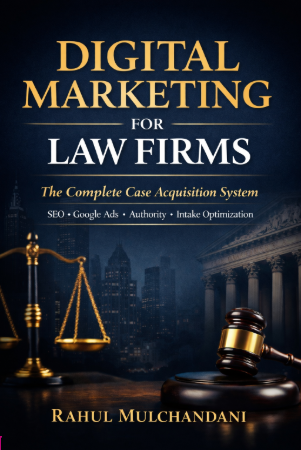
Author of "Digital Marketing For Lawyers" Book
Written by: Rahul Mulchandani
Founder, Digital Marketing Strategist and Author of "Digital Marketing For Lawyers" Book
Table of Contents
Tax Lawyer PPC remains one of the most effective digital marketing channels for tax attorneys seeking qualified, high-value clients. When individuals face IRS audits, tax debt problems, payroll tax disputes, offshore disclosure issues, or tax fraud investigations, they rarely spend months researching their options. Most need legal help immediately. This urgency creates a significant opportunity for tax law firms that appear at the top of Google search results at the exact moment prospects are searching.
Analyze this Tax Lawyer PPC for Lawyers content with AI tools:
ChatGPT Perplexity Grok Google AI ClaudeUnlike SEO, which often requires six to twelve months to produce substantial organic visibility, PPC allows tax lawyers to place their services directly in front of potential clients within hours of launching a campaign. The challenge is that tax law is one of the most competitive legal advertising categories online. Many firms compete aggressively for the same high-intent keywords, driving click costs well above those seen in many other practice areas.
Success with Tax Lawyer PPC requires more than simply creating a Google Ads account and selecting a few keywords. Profitable campaigns depend on understanding search intent, structuring campaigns correctly, creating persuasive ads, optimizing landing pages, tracking conversions accurately, and continuously refining performance using real data.
This guide explains how experienced legal marketers build tax lawyer PPC campaigns that consistently generate consultations and signed cases while maintaining a profitable return on investment. Many tax law firms also partner with a law firm seo agency to strengthen organic visibility, reduce long-term dependence on paid advertising, and create a more sustainable client acquisition strategy.
What Is Tax Lawyer PPC?
Tax Lawyer PPC refers to paid advertising campaigns designed to generate leads and consultations for tax attorneys through search engines and digital advertising platforms. The most common platform is Google Ads, where law firms bid on keywords related to tax law services.
When someone searches for terms such as:
- Tax attorney near me
- IRS audit lawyer
- Tax debt attorney
- Tax litigation lawyer
- Tax fraud defense attorney
- Offer in compromise lawyer
Google evaluates advertisers competing for those searches and determines which ads appear based on several factors.
Many law firm owners assume the highest bidder automatically wins. That is not how Google’s advertising auction works.
Google evaluates:
- Maximum bid
- Ad relevance
- Expected click-through rate
- Landing page experience
- Quality Score
- Historical account performance
A tax law firm with highly relevant advertisements and strong landing pages can often outrank competitors that are spending more money.
This creates opportunities for firms that focus on campaign quality rather than simply increasing budgets.
The Difference Between PPC and SEO for Tax Attorneys
Many tax lawyers compare PPC and SEO as though they are competing strategies.
In reality, they serve different purposes.
SEO focuses on earning unpaid organic rankings through content creation, local SEO, authority building, technical optimization, and user experience improvements.
PPC provides immediate visibility through paid placements.
Consider the following scenario:
A tax attorney launches a new office in Dallas.
If the firm relies entirely on SEO, meaningful rankings for highly competitive keywords may take months to achieve.
With PPC, the same firm can begin appearing for searches like “Dallas tax attorney” or “IRS lawyer Dallas” on the same day the campaign launches.
The strongest legal marketing programs use both channels together.
SEO builds long-term authority and lowers dependency on advertising over time.
PPC generates immediate opportunities while organic visibility grows.
Where Tax Lawyer PPC Ads Appear
Most tax law firms focus on Google Search campaigns because search traffic demonstrates the highest commercial intent.
However, tax lawyer advertising can appear in several locations across Google’s ecosystem.
Google Search Results
These are the text ads displayed above organic listings when users search for legal services.
This placement typically produces the highest conversion rates because users are actively seeking help.
Google Maps
Location-based campaigns can support visibility within map results, particularly when combined with strong local SEO efforts and an optimized Google Business Profile.
YouTube Advertising
Video campaigns can educate prospects about tax controversies, IRS procedures, and tax debt solutions before directing them to consultation pages.
Display Remarketing
Remarketing campaigns allow tax attorneys to reconnect with website visitors who did not convert during their first visit.
A potential client may visit a tax debt page today but wait several weeks before contacting an attorney.
Remarketing helps keep the firm visible during that decision-making period.
Why PPC Matters for Tax Law Firms
Tax law clients often face situations that require immediate action.
An individual receiving an IRS audit notice typically does not want to spend months comparing dozens of attorneys.
The same is true for taxpayers facing wage garnishments, tax liens, bank levies, or criminal tax investigations.
Urgent legal needs create ideal conditions for PPC advertising.
Get More Clients for Your Law Firm
Stop losing potential cases to competitors. Let’s build a strategy that brings you consistent, high-quality leads.
Why PPC Matters for Tax Law Firms
Tax law clients often face situations that require immediate action.
An individual receiving an IRS audit notice typically does not want to spend months comparing dozens of attorneys.
The same is true for taxpayers facing wage garnishments, tax liens, bank levies, or criminal tax investigations.
Urgent legal needs create ideal conditions for PPC advertising.
High Commercial Intent Creates Better Leads
Search intent plays a major role in legal marketing performance.
Someone searching:
“What is an IRS audit?”
is usually gathering information.
Someone searching:
“IRS audit attorney near me”
is often ready to schedule a consultation.
The second search has substantially greater commercial value.
PPC allows tax attorneys to target these high-intent searches directly.
Instead of waiting for prospects to discover a website organically, firms can place their services in front of potential clients exactly when legal assistance becomes necessary.
Faster Client Acquisition
Many law firms underestimate the time required to build organic visibility.
Google’s Helpful Content systems and quality guidelines reward authoritative content, but earning trust and rankings takes time.
PPC shortens that timeline dramatically.
A properly configured campaign can generate qualified phone calls within hours.
For newer firms, expanding firms, or firms entering competitive markets, PPC often provides the fastest path to client acquisition.
Tax Law Cases Often Justify Higher Acquisition Costs
Not every legal practice area supports expensive advertising.
Tax law often does.
A single retained client may generate substantial legal fees depending on the complexity of the matter.
Examples include:
| Tax Matter | Typical Revenue Potential |
|---|---|
| IRS Audit Defense | $3,000 – $15,000+ |
| Offer In Compromise | $5,000 – $20,000+ |
| Tax Litigation | $10,000 – $100,000+ |
| Criminal Tax Defense | $20,000 – $250,000+ |
| Business Tax Controversy | $15,000 – $500,000+ |
Because case values can be significant, firms can often sustain higher advertising costs while remaining profitable.
The key is ensuring campaigns generate qualified consultations rather than low-quality inquiries.
Geographic Targeting Creates Efficiency
One of PPC’s biggest advantages is precision targeting.
A tax law firm serving only clients in California does not need to spend money attracting visitors from New York or Florida.
Google Ads allows firms to target:
Specific cities
Metropolitan areas
Counties
States
ZIP codes
Radius-based geographic zones
This level of targeting helps control spending and improve lead quality.
Many tax law firms also create separate campaigns for individual markets, allowing budgets and messaging to be customized based on local competition and search behavior.
Understanding Tax Law Search Intent
One of the most important concepts in Tax Lawyer PPC is search intent.
Not all keywords represent the same level of readiness.
Understanding intent allows firms to allocate budgets more effectively and improve conversion rates.
Transactional Searches
Transactional keywords typically produce the highest-quality leads.
Examples include:
Tax lawyer near me
IRS attorney consultation
Tax debt attorney
Tax fraud lawyer
Tax litigation attorney
Users searching these terms are actively seeking representation.
These keywords generally deserve higher bids because they are closest to generating revenue.
Problem-Aware Searches
These prospects recognize a problem but may not yet know which solution they need.
Examples include:
IRS audit help
Wage garnishment assistance
Stop IRS levy
Tax debt settlement options
These searches often perform well when paired with educational landing pages that explain legal options while encouraging consultations.
Informational Searches
Informational keywords attract prospects earlier in the buying journey.
Examples include:
What triggers an IRS audit
How does tax court work
Tax fraud penalties
Offer in compromise requirements
These users may not convert immediately.
However, they can become valuable prospects through remarketing campaigns and follow-up content strategies.
Understanding the differences between these intent levels allows tax attorneys to create smarter PPC campaigns and allocate budgets where they generate the strongest return.
Building a Tax Lawyer PPC Strategy
A successful Tax Lawyer PPC campaign begins long before the first advertisement goes live. Many law firms lose significant portions of their advertising budgets because they focus on keywords and bids before developing a clear acquisition strategy.
Experienced legal marketers start by identifying three critical factors:
Which tax law services generate the highest revenue?
Which services produce the highest profit margins?
Which services are most likely to convert into retained clients?
The answers should determine campaign priorities.
For example, a firm generating substantial revenue from tax litigation and criminal tax defense may allocate larger budgets toward those practice areas than lower-value consultation matters.
Google Ads should support business objectives, not simply generate website traffic.
Define Your Ideal Tax Law Client
One of the biggest mistakes tax attorneys make is attempting to attract everyone.
Different tax law clients have different needs, urgency levels, and case values.
Common tax law client segments include:
Individual Tax Debt Clients
These prospects are typically searching for:
IRS payment plans
Tax debt settlement
Offer in compromise assistance
Wage garnishment relief
Their primary concern is financial relief.
IRS Audit Representation Clients
These individuals are often highly motivated because they face deadlines and potential penalties.
Their searches typically include:
IRS audit lawyer
Tax audit attorney
Audit defense attorney
Business Tax Clients
Business owners often seek assistance with:
Payroll tax disputes
Trust fund recovery penalties
Corporate tax controversies
State tax disputes
These matters frequently generate higher case values.
Criminal Tax Defense Clients
These are often among the highest-value matters a tax law firm handles.
Searches may include:
Tax fraud lawyer
Criminal tax attorney
IRS investigation defense lawyer
These prospects often require immediate legal intervention.
Establish Campaign Goals Before Launch
Every campaign should have measurable objectives.
Common PPC goals include:
| Goal | Measurement |
|---|---|
| Lead Generation | Contact forms submitted |
| Consultation Requests | Scheduled consultations |
| Phone Calls | Qualified inbound calls |
| Signed Clients | Retained cases |
| Revenue Growth | Total fees generated |
Many firms mistakenly optimize for leads.
The best-performing tax law campaigns optimize for retained clients.
A campaign generating 30 leads that produces 15 signed cases is often far more valuable than one generating 100 low-quality inquiries.
Understanding the Tax Lawyer PPC Funnel
Successful campaigns recognize that prospects enter at different stages of the decision-making process.
Top of Funnel
These users are researching.
Examples:
What happens during an IRS audit
Tax debt options
Tax court process
The primary goal is education.
Middle of Funnel
These users recognize a problem and are evaluating solutions.
Examples:
IRS audit help
Tax debt attorney
Offer in compromise lawyer
The goal is building trust and demonstrating expertise.
Bottom of Funnel
These users are ready to hire.
Examples:
Tax lawyer near me
Tax attorney consultation
IRS lawyer today
The goal is generating immediate contact.
Most tax law firms generate their strongest PPC ROI by focusing the majority of budget on bottom-of-funnel searches while using remarketing to nurture prospects from earlier stages.
Keyword Research for Tax Lawyers
Keyword research determines who sees your ads and how efficiently your budget is spent.
The highest-performing campaigns are built around search intent rather than search volume alone.
Many firms waste thousands of dollars targeting broad terms that generate traffic but few qualified consultations.
Using Google Keyword Planner Effectively
Google Ads Keyword Planner remains one of the most valuable PPC research tools available.
Experienced advertisers use it for:
Search volume analysis
CPC estimates
Geographic demand insights
Keyword expansion opportunities
Competitive forecasting
Pay special attention to commercial-intent phrases rather than informational searches.
A keyword with 200 monthly searches and strong buyer intent often outperforms a keyword with 5,000 informational searches.
High-Intent Tax Lawyer Keywords
These keywords typically demonstrate strong hiring intent.
Core Tax Attorney Terms
Tax attorney
Tax lawyer
Tax law firm
Tax attorney near me
Tax lawyer consultation
IRS Representation Keywords
IRS attorney
IRS lawyer
IRS audit lawyer
IRS audit attorney
IRS tax attorney
Tax Debt Resolution Keywords
Tax debt lawyer
Tax settlement attorney
Tax debt relief attorney
IRS payment plan lawyer
Offer in compromise attorney
Litigation Keywords
Tax litigation lawyer
Tax court attorney
Federal tax litigation lawyer
Tax dispute attorney
Criminal Tax Defense Keywords
Tax fraud attorney
Criminal tax lawyer
IRS criminal investigation attorney
Tax evasion defense lawyer
These keywords often produce some of the highest-quality leads in tax law advertising.
Location-Based Keywords
Local intent significantly increases conversion rates.
Examples include:
Chicago tax attorney
Dallas IRS lawyer
Miami tax debt attorney
Los Angeles tax litigation lawyer
Even firms that serve clients nationally often benefit from location-specific campaign structures because they allow more precise bidding and messaging.
Long-Tail Keywords Often Convert Better
Many advertisers focus only on broad, high-volume keywords.
However, long-tail searches frequently produce stronger conversion rates.
Examples:
IRS audit attorney for small business
Lawyer for payroll tax problems
Tax attorney for offshore accounts
IRS levy defense attorney
Tax fraud lawyer consultation
These searches reveal specific needs and often indicate stronger purchase intent.
Competitor Keyword Research
Tools such as:
Semrush
Ahrefs
SpyFu
allow firms to identify keywords competitors are targeting.
Useful reports include:
Paid Keywords Report
Advertising Research Report
Competitor Position Tracking
Keyword Gap Analysis
These insights often reveal opportunities competitors are overlooking.
Campaign Structure Best Practices
Campaign structure directly impacts Quality Score, click-through rates, conversion rates, and overall profitability.
One of the most common mistakes in legal PPC is placing dozens of unrelated keywords into a single campaign.
Google rewards relevance.
Better organization almost always produces better performance.
Service-Based Campaign Structure
The most effective structure typically separates campaigns by practice area.
Campaign: IRS Audit Defense
Ad Groups:
IRS audit attorney
IRS audit lawyer
Audit representation lawyer
Dedicated landing page:
IRS Audit Defense Services
Campaign: Tax Debt Resolution
Ad Groups:
Tax debt lawyer
Tax settlement attorney
IRS debt attorney
Dedicated landing page:
Tax Debt Relief Services
Campaign: Tax Litigation
Ad Groups:
Tax litigation lawyer
Tax court attorney
Tax controversy attorney
Dedicated landing page:
Tax Litigation Representation
Campaign: Criminal Tax Defense
Ad Groups:
Tax fraud lawyer
Criminal tax attorney
IRS criminal investigation attorney
Dedicated landing page:
Criminal Tax Defense
This structure improves ad relevance and landing page alignment.
Why Tight Ad Groups Matter
Google evaluates how closely related:
Keywords
Ads
Landing pages
are to one another.
For example:
Keyword:
“IRS audit lawyer”
Ad:
“IRS Audit Attorney – Experienced Audit Defense”
Landing Page:
IRS Audit Defense Service Page
This alignment increases Quality Score and often lowers cost per click.
Geographic Campaign Segmentation
Firms operating in multiple markets should consider separate campaigns for each location.
Example:
Campaign 1:
New York Tax Attorney
Campaign 2:
Chicago Tax Attorney
Campaign 3:
Los Angeles Tax Attorney
Benefits include:
Better budget control
Market-specific bidding
Localized ad copy
More accurate reporting
This approach is especially useful in highly competitive metropolitan markets.
Google Ads Settings and Bidding Strategies
Campaign settings have a major impact on performance.
Many tax law firms unknowingly limit results through poor configuration choices.
Search Network Only
For most tax lawyer campaigns, start with:
Google Search Network only
Avoid automatically including Display Network traffic during initial campaign launches.
Display traffic often introduces lower-intent visitors and can distort performance data.
Location Targeting Settings
A frequently overlooked setting is Google’s location option.
Choose:
“Presence: People in or regularly in your targeted locations”
Avoid:
“Presence or interest”
unless national targeting is intentional.
This prevents wasted spend from users outside service areas.
Ad Scheduling
Review call-answering availability.
If staff only answer calls during business hours, consider prioritizing bids during those periods.
Many firms discover:
Higher contact rates
Better lead quality
Lower wasted spend
through strategic ad scheduling.
Smart Bidding Strategies
Maximize Conversions
Useful during early campaign growth.
Requires accurate conversion tracking.
Target CPA
Best when campaigns have established conversion history.
Google attempts to generate conversions at a target acquisition cost.
Target ROAS
Typically more suitable when revenue tracking is available through CRM integrations.
Manual CPC
Can still be useful during testing phases, although most mature legal campaigns now rely on automated bidding systems supported by strong conversion data.
Negative Keywords and Budget Protection
Negative keywords are among the highest-impact optimizations available in Tax Lawyer PPC.
Unfortunately, they are also one of the most neglected.
Without negatives, campaigns often pay for irrelevant clicks.
Common Tax Lawyer Negative Keywords
Examples include:
Free
Jobs
Salary
Training
Certification
Course
School
CPA
Accountant
Tax preparer
Tax software
TurboTax
H&R Block
IRS forms
Tax calculator
These searches rarely indicate a need for legal representation.
Building Negative Keyword Lists
Effective PPC managers regularly review:
Google Ads → Search Terms Report
This report shows the actual searches triggering advertisements.
Many optimization opportunities emerge from this data.
Examples might include:
tax lawyer salary
become a tax attorney
free IRS tax forms
accountant for taxes
Adding negatives prevents future budget waste.
Budget Allocation by Practice Area
Not every tax law service deserves equal investment.
Example allocation:
| Practice Area | Budget Allocation |
|---|---|
| Tax Debt Resolution | 30% |
| IRS Audit Defense | 25% |
| Tax Litigation | 20% |
| Criminal Tax Defense | 15% |
| Remarketing | 10% |
The ideal distribution depends on:
- Historical profitability
- Lead quality
- Competition levels
- Case values
- Firm capacity
The most successful firms review budget allocation monthly and adjust spending based on actual signed-case performance rather than lead volume alone.
Landing Pages That Convert Tax Law Leads
Many tax law firms invest heavily in Google Ads but fail to achieve strong returns because their landing pages are not designed for conversion. A common mistake is directing paid traffic to the firm’s homepage. While a homepage may provide a general overview of services, it rarely matches the specific intent of someone searching for a particular tax law issue.
A user searching for “IRS audit attorney” wants information about audit defense. A prospect searching for “tax fraud lawyer” expects to see content addressing criminal tax concerns. The closer the landing page aligns with the searcher’s intent, the more likely they are to contact the firm.
Google also evaluates landing page experience as part of Quality Score. Better landing pages can improve ad performance while reducing advertising costs.
Essential Elements of a High-Converting Tax Lawyer Landing Page
A Clear and Specific Headline
The headline should immediately confirm that the visitor has arrived at the right place.
Examples include:
IRS Audit Defense Attorneys Ready to Protect Your Rights
Experienced Tax Debt Lawyers Helping Clients Resolve IRS Problems
Criminal Tax Defense Attorneys for Serious Federal Tax Matters
Generic headlines often reduce conversions because they fail to address the user’s specific concern.
Strong Trust Signals
Tax law clients are often dealing with significant financial or legal consequences. They need confidence before making contact.
Effective trust signals include:
Attorney credentials
State bar memberships
Years of experience
Tax litigation experience
Professional certifications
Published case results where ethically permissible
Client testimonials
Media mentions
Trust indicators should appear above the fold whenever possible.
Multiple Contact Options
Different prospects prefer different communication methods.
Offer:
Click-to-call buttons
Contact forms
Consultation request forms
Live chat
Appointment scheduling tools
Many legal marketers find that mobile visitors convert most frequently through phone calls, while desktop users often prefer forms.
Fast Page Speed
Google’s Core Web Vitals continue to influence user experience assessments.
Tax law landing pages should prioritize:
Fast load times
Mobile responsiveness
Compressed images
Efficient hosting
Clean code
Even a one-second improvement in load speed can positively affect conversion rates.
Ad Copy Optimization for Tax Lawyer PPC
Effective ad copy does more than generate clicks. It attracts qualified prospects while discouraging irrelevant traffic.
The goal is not maximum clicks.
The goal is maximum qualified consultations.
Components of a Strong Tax Lawyer PPC Ad
Headline One: Service Focus
Examples:
IRS Audit Attorney
Tax Debt Relief Lawyer
Tax Fraud Defense Attorney
This tells searchers exactly what service is offered.
Headline Two: Unique Value Proposition
Examples:
Speak With A Lawyer Today
Former IRS Experience
Free Initial Consultation
This differentiates the firm from competitors.
Headline Three: Call To Action
Examples:
Call Now
Schedule Consultation
Get Legal Help Today
Clear calls to action improve click-through rates.
Using Responsive Search Ads
Google now prioritizes Responsive Search Ads (RSAs).
Advertisers provide multiple:
Headlines
Descriptions
Google then tests combinations automatically.
For tax lawyer campaigns, consider including:
Headlines
Tax Attorney Near You
IRS Tax Defense Lawyer
Stop Wage Garnishments
Experienced Tax Litigation Attorney
Tax Debt Relief Solutions
Descriptions
Protect your rights with experienced tax representation.
Get legal guidance for IRS audits, tax debt, and litigation.
Schedule a confidential consultation today.
Providing a wide range of relevant assets allows Google’s machine learning systems to identify top-performing combinations.
Ad Extensions That Improve Performance
Ad assets (formerly extensions) increase visibility and often improve click-through rates.
Recommended assets include:
Call Assets
Allow prospects to call directly from search results.
Sitelink Assets
Examples:
IRS Audit Defense
Tax Debt Relief
Tax Litigation
Consultation Request
Structured Snippets
Examples:
Services:
IRS Audits, Tax Debt Relief, Tax Litigation, Tax Fraud Defense
Location Assets
Particularly important for firms targeting local markets.
Conversion Tracking and Offline Conversions
One of the biggest differences between average campaigns and highly profitable campaigns is tracking accuracy.
Many law firms track only contact form submissions.
That approach ignores valuable data.
Essential Conversions to Track
Every tax lawyer PPC campaign should monitor:
Phone calls
Contact forms
Consultation requests
Live chat conversations
Appointment bookings
These conversions provide the foundation for optimization.
Enhanced Conversions
Google Ads’ Enhanced Conversions feature improves attribution by using first-party customer information in a privacy-compliant manner.
Benefits include:
Better conversion accuracy
Improved machine learning
Stronger bidding performance
For law firms competing in expensive legal markets, improved attribution can significantly impact campaign profitability.
Offline Conversion Tracking
This is where many sophisticated legal advertisers gain a competitive advantage.
Instead of optimizing toward leads, firms can optimize toward retained clients.
Examples:
Lead A:
Submitted contact form
Never hired firm
Lead B:
Submitted contact form
Signed $15,000 engagement
Without offline tracking, Google sees both as equal conversions.
With Offline Conversion Imports, Google learns which leads generate actual revenue.
This dramatically improves bidding quality over time.
CRM Integration
Popular legal CRMs include:
Clio Grow
Lawmatics
Lead Docket
PracticePanther
Filevine
Integrating PPC campaigns with CRM systems allows firms to track:
Lead quality
Consultation rates
Signed clients
Revenue
These metrics are far more valuable than simple lead counts.
Call Tracking Setup for Tax Attorneys
Phone calls remain one of the most important lead sources in legal marketing.
Tax law prospects often prefer immediate conversations, especially when facing urgent IRS actions.
Why Call Tracking Matters
Without call tracking, firms cannot accurately determine:
Which campaigns generate calls
Which keywords produce consultations
Which ads drive signed clients
This creates optimization blind spots.
Recommended Call Tracking Platforms
Popular options include:
CallRail
CallTrackingMetrics
Invoca
These platforms provide:
Dynamic number insertion
Call recording
Source attribution
Keyword tracking
Call scoring
Many successful tax law firms use call recordings to evaluate lead quality and improve intake processes.
Tracking Qualified Calls
Not every call should count as a conversion.
Examples of non-qualified calls:
Wrong numbers
Vendor inquiries
Existing clients
Recruiting inquiries
Many firms configure call tracking systems to count only calls lasting a minimum duration, such as 60 or 90 seconds.
This often improves campaign optimization accuracy.
Quality Score Optimization
Quality Score is one of the most misunderstood metrics in Google Ads.
Although it is not a direct KPI, it significantly influences:
Ad position
CPC
Visibility
Higher Quality Scores generally lead to lower acquisition costs.
Three Core Quality Score Factors
Expected Click-Through Rate
Google estimates how likely users are to click your ad.
Improve CTR by:
Writing compelling headlines
Matching keywords closely
Using ad assets effectively
Ad Relevance
Ads should closely match search intent.
Example:
Keyword:
IRS audit attorney
Ad:
IRS Audit Defense Lawyer – Experienced Tax Representation
Poor relevance often results in lower scores.
Landing Page Experience
Google evaluates:
Content relevance
Mobile usability
Load speed
User experience
Dedicated landing pages generally outperform generic pages.
Why Quality Score Matters in Tax Law PPC
Tax law keywords often command premium CPCs.
Improving Quality Score from 5 to 8 can substantially reduce acquisition costs while increasing visibility.
Over time, these savings can translate into thousands of dollars in additional advertising efficiency.
Advanced Remarketing and Performance Max Strategies
Once foundational search campaigns are profitable, firms can expand into more advanced advertising strategies.
Remarketing Campaigns
Most visitors do not convert during their first visit.
Remarketing allows firms to reconnect with previous visitors across:
Google Display Network
YouTube
Gmail
Discover
Example:
A visitor researches tax debt solutions today but does not contact the firm.
Remarketing advertisements keep the firm’s services visible during the decision-making process.
Audience Segmentation
Rather than remarketing to all visitors equally, segment audiences based on behavior.
Examples:
IRS Audit Visitors
Serve audit-specific messaging.
Tax Debt Visitors
Promote tax resolution consultations.
Consultation Form Abandoners
Encourage prospects to complete the contact process.
Personalized messaging often improves engagement.
Performance Max Campaigns
Performance Max campaigns use Google’s machine learning systems to advertise across multiple channels simultaneously.
These campaigns can appear on:
Search
YouTube
Gmail
Maps
Display
Discover
However, Performance Max works best when supported by:
Accurate conversion tracking
Sufficient conversion volume
Strong audience signals
Offline conversion imports
Many law firms launch Performance Max too early and struggle to evaluate performance.
Search campaigns should generally establish a reliable foundation first.
Common Tax Lawyer PPC Mistakes
Even experienced firms make mistakes that reduce campaign profitability.
Targeting Broad Keywords
Keywords such as:
Tax help
Tax advice
Tax services
often attract irrelevant traffic.
Specific legal-intent keywords usually perform better.
Ignoring Negative Keywords
Without regular negative keyword management, firms pay for clicks that never become clients.
Search Terms Reports should be reviewed weekly.
Sending Traffic to Homepages
Dedicated service pages almost always outperform general website pages.
Tracking Leads Instead of Clients
A campaign generating fewer but higher-quality leads may outperform a campaign generating large quantities of low-quality inquiries.
Revenue should remain the ultimate measurement.
Weak Intake Processes
Even strong PPC campaigns can fail if:
Calls go unanswered
Follow-up is delayed
Consultation scheduling is difficult
Lead management is part of PPC success.
Future Trends in Tax Lawyer PPC
The legal advertising landscape continues evolving rapidly.
Several trends are likely to shape future performance.
AI-Driven Campaign Management
Google continues expanding machine learning capabilities.
Strategies such as:
Target CPA
Maximize Conversions
Target ROAS
are becoming increasingly sophisticated.
Advertisers with stronger conversion data will benefit most.
First-Party Data Will Become More Important
Privacy regulations and browser changes continue reducing traditional tracking capabilities.
Law firms should prioritize:
CRM integration
Enhanced Conversions
Offline Conversion Imports
These systems provide critical optimization signals.
Increased Competition
Tax law remains a highly profitable legal niche.
Competition for premium keywords is expected to continue increasing.
Firms that invest in campaign quality, landing page optimization, and conversion tracking will maintain competitive advantages.
Greater Integration Between PPC and SEO
The most successful legal marketing programs increasingly use PPC and SEO together.
Search term reports frequently reveal:
New content opportunities
Emerging client concerns
High-converting keyword themes
These insights strengthen both channels.
Next Steps
If your tax law firm wants to improve PPC performance, begin with a thorough audit of your existing campaigns. Review keyword targeting, search intent alignment, conversion tracking, landing page quality, and intake processes before increasing ad spend. Implement call tracking, Enhanced Conversions, and CRM integration so campaign decisions are based on signed clients rather than lead volume alone. Once the foundation is established, expand through remarketing, advanced bidding strategies, and highly targeted service-specific campaigns. Firms that consistently optimize using real business outcomes rather than vanity metrics are typically the ones that achieve sustainable PPC profitability and long-term growth.
Frequently Asked Questions
What is Tax Lawyer PPC?
Tax Lawyer PPC is a paid advertising strategy that helps tax attorneys appear at the top of Google search results for high-intent keywords and generate qualified leads quickly.
How much does Tax Lawyer PPC cost?
Costs vary by location and competition. Tax law keywords often range from $20 to $150+ per click, making campaign optimization essential for profitability.
Is PPC better than SEO for tax lawyers?
PPC delivers immediate visibility and leads, while SEO builds long-term organic traffic. Most successful tax law firms use both strategies together.
What keywords work best for Tax Lawyer PPC?
High-intent keywords such as “tax attorney near me,” “IRS audit lawyer,” “tax debt attorney,” and “tax fraud lawyer” typically generate the best results.
Why are landing pages important for PPC campaigns?
Dedicated landing pages improve conversion rates by matching the user’s search intent and providing a clear path to contact the firm.
How can tax law firms reduce wasted ad spend?
Using negative keywords, refining audience targeting, and regularly reviewing search term reports can help eliminate irrelevant clicks.
What is Quality Score in Google Ads?
Quality Score measures ad relevance, expected click-through rate, and landing page experience. Higher scores can reduce advertising costs and improve rankings.
Should tax attorneys use Google Performance Max campaigns?
Performance Max can be effective once accurate conversion tracking and sufficient campaign data are in place.
How do tax lawyers track PPC success?
Successful firms track phone calls, form submissions, consultations, retained clients, and overall return on advertising investment.
How long does it take to see results from Tax Lawyer PPC?
Most campaigns can generate leads immediately after launch, though optimization typically improves performance over the first few months.
🚀 Get Free Consultation
Our Latest Posts
-
 How We Generate Signed Cases for Lawyers: 7 Proven Strategies That Deliver Real Results
 -
 Case Study: Multi-City Personal Injury SEO Success – New Mexico
 -
 Case Study: Personal Injury Lawyer in Texas
 -
 Lawyer SEO: The Complete Guide to Optimizing Law Firm Websites for Clients and Rankings
 -
 Why Lawyer Switch to Us
Updated on
Get In Touch with Us!
other way to contact us
Office Email
rahul@webkeydigital.com
Office Phone
+1 503-303-8639
Office Location
8 The Green STE A, Dover, Kent , Delaware 19901