
Securities Lawyer Website Design
The Ultimate Guide for Law Firms

Written by: Rahul Mulchandani
Founder, Digital Marketing Strategist and
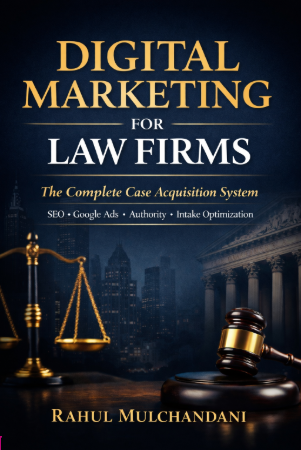
Author of "Digital Marketing For Lawyers" Book
Written by: Rahul Mulchandani
Founder, Digital Marketing Strategist and Author of "Digital Marketing For Lawyers" Book
Table of Contents
A securities lawyer website design must do far more than look professional. Securities law prospects are often sophisticated decision-makers—including investors, corporate executives, broker-dealers, investment advisers, and public companies—who conduct extensive due diligence before contacting a law firm. Your website must simultaneously establish authority, communicate trust, demonstrate expertise, and convert high-value visitors into qualified consultations.
Analyze this securities lawyer website design for Lawyers content with AI tools:
ChatGPT Perplexity Grok Google AI ClaudeIn competitive markets, a poorly designed securities law website can undermine even the strongest SEO and PPC campaigns. Google’s Helpful Content system, Search Quality Evaluator Guidelines, and E-E-A-T principles increasingly reward websites that demonstrate genuine expertise and provide exceptional user experiences. Firms handling SEC investigations, FINRA arbitration, securities fraud, and shareholder litigation need websites specifically engineered for both visibility and conversion.
This guide explains how securities lawyer website design works, the essential components every firm needs, and the specific design, UX, CRO, and SEO principles that drive measurable business growth. Many securities law firms also partner with a law firm seo agency to improve website performance, strengthen search visibility, and generate more qualified securities-related enquiries.
What Is Securities Lawyer Website Design?
Securities lawyer website design refers to the strategic planning, visual presentation, content architecture, technical implementation, and conversion optimization of websites created specifically for securities law firms.
Unlike general law firm websites, securities law websites must address a highly informed audience that often includes:
- Individual investors.
- Institutional investors.
- Corporate officers.
- Public companies.
- Registered investment advisers.
- Broker-dealers.
- Financial professionals.
- Executives facing regulatory scrutiny.
These visitors are rarely making impulsive decisions. Instead, they compare credentials, review attorney biographies, examine representative matters, and evaluate whether the firm possesses the specific expertise required for complex securities matters.
Effective securities law websites therefore combine:
- Professional visual design.
- Clear information architecture.
- Deep practice-area content.
- Strong trust indicators.
- High-converting user journeys.
- Technical SEO foundations.
Google classifies legal websites as Your Money or Your Life (YMYL) content. According to Google’s Search Quality Evaluator Guidelines, YMYL websites require especially strong demonstrations of expertise, experience, authority, and trustworthiness.
For securities firms, website design directly supports these E-E-A-T signals.
Why Website Design Matters for Securities Law Firms
Many firms underestimate the business impact of website design.
Design is not merely aesthetics.
It directly influences:
Lead quality.
Conversion rates.
SEO performance.
PPC efficiency.
User trust.
Client acquisition cost.
Securities Prospects Conduct Extensive Due Diligence
A personal injury prospect may contact several firms within hours.
A securities law prospect often spends days or weeks researching representation.
Visitors commonly review:
Attorney credentials.
SEC or FINRA experience.
Representative matters.
Industry publications.
Media appearances.
Case results.
Practice area depth.
A website that fails to communicate expertise quickly risks losing high-value opportunities.
Website Experience Influences PPC Costs
Google Ads incorporates landing page experience into Quality Score calculations.
Poor website usability often results in:
Higher cost-per-click.
Lower ad positions.
Reduced conversion rates.
A securities firm investing $30,000 per month in PPC can significantly reduce acquisition costs simply by improving landing page experience.
Website Quality Influences Organic Rankings
Google’s Helpful Content system rewards websites demonstrating:
Original expertise.
Comprehensive topical coverage.
Strong user experience.
Clear authorship.
Helpful content.
Securities firms publishing detailed practice-area resources supported by strong UX generally outperform thin-content competitors.
Understanding Securities Law User Intent
Website architecture should reflect how prospective clients search for legal services.
Most securities website visitors fall into four categories.
Crisis Intent
Examples:
Received SEC subpoena.
Responding to a Wells Notice.
Under SEC investigation.
These visitors require:
Immediate reassurance.
Fast contact options.
Prominent phone numbers.
Attorney accessibility.
Dedicated crisis-focused pages often produce the highest conversion rates.
Investor Recovery Intent
Examples:
Investment losses.
Broker misconduct.
Securities fraud claims.
Investors frequently want answers to:
Can losses be recovered?
Is arbitration required?
How long will the process take?
Pages should answer these questions directly.
Institutional Intent
Institutional visitors evaluate:
Regulatory experience.
National capabilities.
Attorney credentials.
Prior government service.
Industry knowledge.
Institutional users often spend considerably longer reviewing attorney biographies and representative matters.
Research Intent
Examples:
What is FINRA arbitration?
What is a Wells Notice?
SEC investigation process.
Educational content supports both SEO and lead nurturing.
Experienced legal marketers frequently create comprehensive resource centers specifically targeting informational searches.
Get More Clients for Your Law Firm
Stop losing potential cases to competitors. Let’s build a strategy that brings you consistent, high-quality leads.
Essential Website Architecture for Securities Firms
Website architecture influences both usability and SEO.
Most securities law firms benefit from a silo structure.
Recommended Primary Navigation
Home
About
Attorneys
Practice Areas
Results
Resources
Blog
Contact
Avoid overly complex navigation.
Users should reach any important page within three clicks.
Practice Area Architecture
Every major securities service deserves a dedicated page.
Examples include:
Securities Fraud
FINRA Arbitration
SEC Investigations
SEC Enforcement Defense
Investment Loss Recovery
Broker Misconduct
Insider Trading Defense
Shareholder Litigation
Securities Class Actions
Each practice page should contain:
Unique content.
Attorney experience.
Frequently asked questions.
Relevant representative matters.
Clear CTAs.
Thin pages created solely for SEO rarely perform well in 2026.
Resource Center Architecture
Resource hubs support topical authority.
Suggested content categories include:
Content Hub | Example Topics |
SEC Defense | Wells Notices, subpoenas, investigations |
FINRA Arbitration | Arbitration process, timelines, damages |
Investor Recovery | Unsuitable investments, churning, fraud |
Securities Litigation | Shareholder rights, derivative actions |
This structure strengthens internal linking and topical relevance.
Homepage Design Best Practices
The homepage must communicate credibility immediately.
Users should understand within five seconds:
What the firm does.
Who the firm serves.
Why the firm is qualified.
How to make contact.
Above-the-Fold Essentials
Recommended homepage elements include:
Clear headline.
Supporting subheadline.
Attorney imagery.
Phone number.
Primary CTA.
Trust indicators.
Example Headline
National Securities Lawyers Representing Investors, Executives, and Financial Professionals
Example Subheadline
“Experienced counsel in SEC investigations, FINRA arbitration, securities fraud litigation, and investment loss recovery.”
Primary Calls-to-Action
Examples:
Schedule a Confidential Consultation.
Speak With a Securities Attorney.
Request a Case Evaluation.
CTAs should remain visible throughout the website.
Sticky headers frequently improve conversion rates, particularly on mobile devices.
Hero Images Matter
Avoid generic stock imagery whenever possible.
Instead, use:
Professional attorney photography.
Office photography.
Team imagery.
Speaking engagements.
Media appearances.
Authentic imagery supports E-E-A-T and trust far more effectively than generic stock photos.
Trust Signals That Influence Securities Law Website Conversions
Trust is the foundation of every successful securities lawyer website. Unlike many consumer legal services, securities matters frequently involve substantial financial losses, regulatory investigations, and sophisticated corporate stakeholders. Prospective clients often compare several firms before making contact.
A website must therefore demonstrate authority immediately.
Google’s Search Quality Evaluator Guidelines specifically identify legal websites as Your Money or Your Life (YMYL) content. Strong trust signals support both user confidence and Google’s assessment of expertise, experience, authority, and trustworthiness.
Attorney Credentials Should Be Prominent
Attorney biographies are among the highest-visited pages on most securities law firm websites.
Prospective clients routinely evaluate:
Former SEC experience.
Former federal prosecutor roles.
FINRA arbitration experience.
Securities litigation background.
Trial experience.
Academic credentials.
Bar admissions.
Do not hide these qualifications deep within the website.
Important credentials should appear:
On the homepage.
On practice area pages.
Within attorney profile summaries.
Near calls-to-action.
For example:
Former SEC Enforcement Attorneys Representing Executives and Financial Institutions Nationwide
Such positioning immediately establishes subject-matter expertise.
Designing High-Converting Attorney Biography Pages
Attorney biographies frequently outperform practice pages in both engagement and conversions.
Many law firms underinvest in biography pages despite their importance.
Essential Biography Components
Professional Photography
Invest in professional photography rather than relying on informal headshots.
Photography should communicate:
Credibility.
Professionalism.
Approachability.
Documentary-style office photography often performs particularly well.
Detailed Experience Sections
Include specific experience such as:
SEC investigations handled.
FINRA arbitrations represented.
Securities fraud matters litigated.
Government service history.
Specificity consistently outperforms generic statements.
Instead of:
“Extensive securities experience.”
Use:
“Represented broker-dealers, investment advisers, and public company executives in SEC investigations and FINRA arbitration proceedings.”
Publications and Speaking Engagements
Include:
Law review articles.
Industry publications.
Conference presentations.
Media appearances.
Webinars.
Thought leadership strengthens both trust and E-E-A-T.
Representative Matters
Provide anonymized examples when permitted.
Examples:
Represented public company executive during SEC investigation.
Recovered significant investor losses through FINRA arbitration.
Defended broker-dealers in regulatory proceedings.
Always comply with applicable state bar advertising rules.
Trust Elements Every Securities Law Website Needs
Professional Recognition
Display recognitions such as:
Chambers USA.
Best Lawyers.
Super Lawyers.
Martindale-Hubbell AV Preeminent.
Benchmark Litigation.
Badges should support—not overwhelm—the user experience.
Media Mentions
Prominently feature appearances in publications such as:
Bloomberg.
The Wall Street Journal.
Reuters.
Law360.
Media logos function as third-party validation.
Testimonials and Reviews
Client testimonials remain powerful conversion assets.
Testimonials should emphasize:
Communication.
Responsiveness.
Legal knowledge.
Strategic guidance.
Include legally required disclaimers where necessary.
Case Results and Representative Matters
Results pages often rank among the highest-converting pages.
Effective results pages include:
Matter summaries.
Industry context.
Outcome descriptions.
Practice area categorization.
Searchable filtering functionality can improve usability substantially.
Conversion Rate Optimization for Securities Law Websites
Website traffic alone does not generate clients.
Conversion optimization determines whether visitors become consultations.
Most legal websites convert between 3% and 8%.
Well-optimized securities law websites frequently exceed 10%.
Even small improvements significantly reduce client acquisition costs.
For example:
Increasing conversion rates from 5% to 8% reduces effective cost per lead by approximately 38%.
Calls-to-Action: Placement and Messaging
Calls-to-action should appear throughout the website.
Recommended placements include:
Hero sections.
Mid-content areas.
Sidebar modules.
Sticky headers.
Footer sections.
Avoid generic CTAs.
Instead of:
Contact Us
Use:
Schedule a Confidential Consultation.
Discuss Your SEC Investigation.
Speak With a Securities Attorney.
Request a Case Evaluation.
Contextual CTAs consistently outperform generic messaging.
Lead Capture Features That Increase Conversions
Short Consultation Forms
Long forms often reduce submissions.
Recommended fields include:
Field | Required |
Name | Yes |
Yes | |
Phone | Yes |
Brief Matter Description | Yes |
Additional qualifying questions should occur during intake.
Most firms experience higher completion rates using forms containing four to six fields.
Click-to-Call Functionality
Many prospects—particularly those facing SEC investigations—prefer immediate conversations.
Essential features include:
Sticky mobile phone buttons.
Click-to-call links.
Persistent header phone numbers.
Response speed matters.
Research across legal marketing consistently demonstrates that contacting leads within five minutes substantially improves conversion rates.
Live Chat and AI Chat
Modern law firm websites increasingly use:
Smith.ai
Ngage
Drift
Intercom
AI-assisted chat can qualify prospects outside business hours.
However, firms should monitor conversations carefully to ensure compliance with legal advertising and confidentiality requirements.
Online Scheduling
Self-service scheduling reduces friction.
Popular solutions include:
Calendly.
Clio Scheduler.
Lawmatics Scheduler.
Online scheduling is especially effective for informational consultations and investor recovery matters.
Designing Practice Area Pages for Maximum Conversions
Every securities practice area should have a dedicated page.
Examples include:
SEC Investigations.
FINRA Arbitration.
Securities Fraud.
Investment Loss Recovery.
Insider Trading Defense.
Shareholder Litigation.
Practice pages should follow a consistent framework.
Recommended Page Structure
Hero Section
Clear headline.
Primary CTA.
Supporting trust indicators.
Overview Section
Explain:
The legal issue.
Who may need representation.
Immediate next steps.
Attorney Experience Section
Highlight relevant expertise.
Representative Matters Section
Demonstrate practical experience.
Frequently Asked Questions
Answer common concerns.
FAQ sections also create opportunities for FAQPage schema implementation.
Conversion Section
Include:
Consultation forms.
Phone numbers.
Scheduling options.
Internal Linking Strategy for Securities Websites
Internal linking is frequently overlooked.
Strong internal linking improves:
User engagement.Crawl efficiency.Topical authority.Conversion pathways.
Examples:

A page discussing SEC subpoenas should internally link to:
SEC Investigations.Wells Notices.Attorney biographies.Contact page.
Similarly, FINRA arbitration content should link to:Broker misconduct pages.Investment loss recovery pages.Relevant attorney profiles.
Contextual internal links outperform generic "learn more" links.

Anchor text should clearly describe destination pages.
Real-World Example: Improving Conversion Rates Through UX
A mid-sized securities litigation firm experienced substantial paid traffic but disappointing lead generation.
Initial metrics:
Metric | Before Optimization |
Conversion Rate | 4.2% |
Bounce Rate | 71% |
Average Session Duration | 1:14 |
After redesign, the firm implemented:
- Dedicated practice pages.
- Sticky consultation buttons.
- Simplified intake forms.
- Expanded attorney biographies.
- Media logos and recognitions.
- Improved page speed.
Ninety days later:
Metric | After Optimization |
Conversion Rate | 8.9% |
Bounce Rate | 49% |
Average Session Duration | 3:06 |
The largest improvements came from strengthening trust signals and reducing friction during the consultation process.
Content Design Considerations for E-E-A-T
Design and content must work together.
Google increasingly rewards websites demonstrating firsthand expertise.
Securities law firms should clearly identify:
- Article authors.
- Attorney contributors.
- Editorial review processes.
- Publication dates.
- Updated dates.
Recommended author elements include:
- Professional headshot.
- Biography summary.
- Practice focus.
- Bar admissions.
- Linked attorney profile.
Author transparency strengthens both user trust and search visibility.
Additionally, practice pages should answer specific user questions rather than relying on thin promotional copy.
Comprehensive educational content supports Google’s Helpful Content system while improving conversion opportunities.
Mobile-First Design for Securities Law Websites
Mobile-first design is no longer optional for securities law firms. Google uses mobile-first indexing, meaning it primarily evaluates the mobile version of a website when determining rankings. In addition, a growing percentage of legal website traffic now originates from smartphones and tablets.
While institutional decision-makers may still conduct extensive research on desktop devices, many prospects initially discover firms through mobile search, paid advertising, email links, or referrals.
A securities lawyer website must deliver a seamless experience across every device.
Essential Mobile Design Principles
Prioritize Readability
Users should never need to pinch or zoom.
Recommended standards include:
Font size of at least 16px.
Adequate line spacing.
High contrast text.
Short paragraphs for scannability.
Simplify Navigation
Complex mega menus often perform poorly on mobile.
Instead, use:
Collapsible navigation menus.
Clear practice area organization.
Sticky navigation bars.
Prominent search functionality.
Visitors should be able to access critical pages—such as attorney profiles or SEC investigation services—in just a few taps.
Optimize Calls-to-Action for Mobile
Every important page should include:
Click-to-call buttons.
Sticky consultation buttons.
Mobile-friendly forms.
Simplified contact options.
Large touch targets improve usability and reduce friction.
Google recommends touch elements be sufficiently spaced to avoid accidental clicks.
Core Web Vitals and Performance Optimization
Page speed significantly affects both search rankings and conversion rates.
Google’s Core Web Vitals continue to serve as important page experience signals.
The three primary metrics include:
Metric | Recommended Threshold |
Largest Contentful Paint (LCP) | Under 2.5 seconds |
Interaction to Next Paint (INP) | Under 200 milliseconds |
Cumulative Layout Shift (CLS) | Under 0.1 |
Largest Contentful Paint (LCP)
LCP measures how quickly the main content becomes visible.
Common causes of poor LCP include:
Oversized hero images.
Unoptimized videos.
Slow hosting environments.
Excessive JavaScript.
Recommended solutions:
Compress images using WebP.
Implement CDN services.
Upgrade hosting infrastructure.
Delay non-essential scripts.
Interaction to Next Paint (INP)
INP evaluates overall page responsiveness.
High INP scores often result from:
Heavy JavaScript frameworks.
Excessive third-party scripts.
Poor server response times.
Law firm websites frequently suffer from excessive tracking scripts, chat tools, and marketing integrations.
Regular script audits are essential.
Cumulative Layout Shift (CLS)
Unexpected layout shifts frustrate users.
Common causes include:
Images without dimensions.
Dynamic content insertion.
Delayed font loading.
Establishing proper image dimensions and reserving space for embedded content typically resolves CLS problems.
Technical SEO Foundations for Securities Lawyer Websites
Strong design cannot compensate for poor technical SEO.
Every securities law website should include a solid technical foundation.
Secure Website Architecture
HTTPS encryption is mandatory.
Google has considered HTTPS a ranking signal for years, and legal websites handling confidential information must provide secure browsing experiences.
Security best practices include:
SSL certificates.
Web application firewalls.
Regular software updates.
Multi-factor authentication for administrators.
Structured Data Implementation
Schema markup helps search engines better understand website content.
Recommended schema types include:
LegalService Schema
Important properties:
Firm name.
Address.
Telephone number.
Area served.
Practice areas.
Attorney Schema
Use attorney-specific schema where appropriate.
Include:
Name.
Credentials.
Alumni information.
Professional memberships.
FAQPage Schema
FAQ sections frequently appear on:
Practice pages.
Resource articles.
SEC investigation guides.
Article Schema
Educational content should include:
Author.
Date published.
Date modified.
Publisher.
XML Sitemaps and Crawl Optimization
Every website should maintain:
XML sitemap.
HTML sitemap.
Optimized robots.txt file.
Google Search Console should monitor:
Crawl errors.
Indexation issues.
Core Web Vitals.
Security concerns.
Accessibility Best Practices for Securities Law Websites
Accessibility improves usability for all visitors.
It also reduces legal risk.
Although accessibility standards continue evolving, securities law firms should strive to align with WCAG 2.2 guidelines.
Essential Accessibility Features
Proper Heading Structure
Use:
One H1 per page.
Logical H2 and H3 hierarchy.
Screen readers rely heavily on heading organization.
Image Alternative Text
Attorney photographs, diagrams, and informational graphics should contain descriptive alt text.
Examples:
Good Alt Text
“Attorney John Smith speaking at securities litigation conference.”
Poor Alt Text
“image1.jpg”
Keyboard Navigation
Users should be able to navigate the website without a mouse.
Sufficient Color Contrast
Text must remain easily readable across devices.
Accessible Forms
Forms should include:
Labels.
Error messaging.
Keyboard support.
Screen-reader compatibility.
Accessibility should be incorporated during design—not retrofitted later.
Content Design and SEO Integration
Content and design should operate as a unified system.
The most successful securities websites combine:
Exceptional user experiences.
Comprehensive educational content.
Strong internal linking.
Clear conversion pathways.
Content Hubs Build Topical Authority
Google increasingly rewards topical depth.
Securities law firms should develop content hubs around major practice areas.
Example:
SEC Investigations Hub
Supporting articles may include:
What Is an SEC Subpoena?
Wells Notice Explained.
SEC Enforcement Timeline.
Preparing for SEC Testimony.
Responding to SEC Document Requests.
This silo structure strengthens internal linking and demonstrates expertise.
Author Transparency Supports E-E-A-T
Every substantive article should identify:
Author.
Reviewer.
Last updated date.
Attorney-reviewed content generally performs better in YMYL industries.
Common Securities Lawyer Website Design Mistakes
Even sophisticated firms often make avoidable mistakes.
Overusing Generic Stock Photography
Stock images rarely establish trust.
Authentic attorney and office photography consistently performs better.
Hiding Attorney Credentials
Credentials should be visible immediately.
Users should not need to search extensively for attorney experience.
Weak Calls-to-Action
Examples of weak CTAs:
Submit.
Learn More.
Contact Us.
Stronger examples include:
Schedule a Confidential Consultation.
Discuss Your SEC Matter.
Speak With Securities Counsel.
Poor Practice Area Segmentation
Combining multiple services onto a single page dilutes both SEO relevance and user experience.
Dedicated pages perform substantially better.
Slow Website Speed
Research consistently demonstrates that slow websites experience:
Higher bounce rates.
Lower conversion rates.
Reduced PPC efficiency.
Ignoring Analytics
Without analytics, firms cannot improve performance.
Essential tools include:
Tool | Purpose |
Google Analytics 4 | User behavior analysis |
Google Search Console | SEO monitoring |
Microsoft Clarity | Session recordings and heatmaps |
Hotjar | User interaction analysis |
CallRail | Call attribution |
Measuring Success: Key Website Metrics
Website success extends beyond traffic.
Important metrics include:
Metric | Recommended Benchmark |
Conversion Rate | 5%–10%+ |
Bounce Rate | Under 55% |
Mobile Load Speed | Under 3 Seconds |
Average Session Duration | Over 2 Minutes |
Organic Traffic Growth | Consistent monthly growth |
Core Web Vitals | Pass all thresholds |
Additionally, firms should monitor:
Consultation requests.
Call volume.
Qualified lead rates.
Cost per acquisition.
Signed client rates.
CRM integration through platforms such as Lawmatics, Clio Grow, or HubSpot provides full-funnel visibility.
Trust Elements Every Securities Law Website Needs
Professional Recognition
Display recognitions such as:
Chambers USA.
Best Lawyers.
Super Lawyers.
Martindale-Hubbell AV Preeminent.
Benchmark Litigation.
Badges should support—not overwhelm—the user experience.
Media Mentions
Prominently feature appearances in publications such as:
Bloomberg.
The Wall Street Journal.
Reuters.
Law360.
Media logos function as third-party validation.
Testimonials and Reviews
Client testimonials remain powerful conversion assets.
Testimonials should emphasize:
Communication.
Responsiveness.
Legal knowledge.
Strategic guidance.
Include legally required disclaimers where necessary.
Case Results and Representative Matters
Results pages often rank among the highest-converting pages.
Effective results pages include:
Matter summaries.
Industry context.
Outcome descriptions.
Practice area categorization.
Searchable filtering functionality can improve usability substantially.
Conversion Rate Optimization for Securities Law Websites
Website traffic alone does not generate clients.
Conversion optimization determines whether visitors become consultations.
Most legal websites convert between 3% and 8%.
Well-optimized securities law websites frequently exceed 10%.
Even small improvements significantly reduce client acquisition costs.
For example:
Increasing conversion rates from 5% to 8% reduces effective cost per lead by approximately 38%.
Calls-to-Action: Placement and Messaging
Calls-to-action should appear throughout the website.
Recommended placements include:
Hero sections.
Mid-content areas.
Sidebar modules.
Sticky headers.
Footer sections.
Avoid generic CTAs.
Instead of:
Contact Us
Use:
Schedule a Confidential Consultation.
Discuss Your SEC Investigation.
Speak With a Securities Attorney.
Request a Case Evaluation.
Contextual CTAs consistently outperform generic messaging.
Lead Capture Features That Increase Conversions
Short Consultation Forms
Long forms often reduce submissions.
Recommended fields include:
Field | Required |
Name | Yes |
Yes | |
Phone | Yes |
Brief Matter Description | Yes |
Additional qualifying questions should occur during intake.
Most firms experience higher completion rates using forms containing four to six fields.
Click-to-Call Functionality
Many prospects—particularly those facing SEC investigations—prefer immediate conversations.
Essential features include:
Sticky mobile phone buttons.
Click-to-call links.
Persistent header phone numbers.
Response speed matters.
Research across legal marketing consistently demonstrates that contacting leads within five minutes substantially improves conversion rates.
Live Chat and AI Chat
Modern law firm websites increasingly use:
Smith.ai
Ngage
Drift
Intercom
AI-assisted chat can qualify prospects outside business hours.
However, firms should monitor conversations carefully to ensure compliance with legal advertising and confidentiality requirements.
Online Scheduling
Self-service scheduling reduces friction.
Popular solutions include:
Calendly.
Clio Scheduler.
Lawmatics Scheduler.
Online scheduling is especially effective for informational consultations and investor recovery matters.
Designing Practice Area Pages for Maximum Conversions
Every securities practice area should have a dedicated page.
Examples include:
SEC Investigations.
FINRA Arbitration.
Securities Fraud.
Investment Loss Recovery.
Insider Trading Defense.
Shareholder Litigation.
Practice pages should follow a consistent framework.
Recommended Page Structure
Hero Section
Clear headline.
Primary CTA.
Supporting trust indicators.
Overview Section
Explain:
The legal issue.
Who may need representation.
Immediate next steps.
Attorney Experience Section
Highlight relevant expertise.
Representative Matters Section
Demonstrate practical experience.
Frequently Asked Questions
Answer common concerns.
FAQ sections also create opportunities for FAQPage schema implementation.
Conversion Section
Include:
Consultation forms.
Phone numbers.
Scheduling options.
Internal Linking Strategy for Securities Websites
Internal linking is frequently overlooked.
Strong internal linking improves:
User engagement.Crawl efficiency.Topical authority.Conversion pathways.
Examples:

A page discussing SEC subpoenas should internally link to:
SEC Investigations.Wells Notices.Attorney biographies.Contact page.
Similarly, FINRA arbitration content should link to:Broker misconduct pages.Investment loss recovery pages.Relevant attorney profiles.
Contextual internal links outperform generic "learn more" links.

Anchor text should clearly describe destination pages.
Real-World Example: Improving Conversion Rates Through UX
A mid-sized securities litigation firm experienced substantial paid traffic but disappointing lead generation.
Initial metrics:
Metric | Before Optimization |
Conversion Rate | 4.2% |
Bounce Rate | 71% |
Average Session Duration | 1:14 |
After redesign, the firm implemented:
- Dedicated practice pages.
- Sticky consultation buttons.
- Simplified intake forms.
- Expanded attorney biographies.
- Media logos and recognitions.
- Improved page speed.
Ninety days later:
Metric | After Optimization |
Conversion Rate | 8.9% |
Bounce Rate | 49% |
Average Session Duration | 3:06 |
The largest improvements came from strengthening trust signals and reducing friction during the consultation process.
Content Design Considerations for E-E-A-T
Design and content must work together.
Google increasingly rewards websites demonstrating firsthand expertise.
Securities law firms should clearly identify:
- Article authors.
- Attorney contributors.
- Editorial review processes.
- Publication dates.
- Updated dates.
Recommended author elements include:
- Professional headshot.
- Biography summary.
- Practice focus.
- Bar admissions.
- Linked attorney profile.
Author transparency strengthens both user trust and search visibility.
Additionally, practice pages should answer specific user questions rather than relying on thin promotional copy.
Comprehensive educational content supports Google’s Helpful Content system while improving conversion opportunities.
Mobile-First Design for Securities Law Websites
Mobile-first design is no longer optional for securities law firms. Google uses mobile-first indexing, meaning it primarily evaluates the mobile version of a website when determining rankings. In addition, a growing percentage of legal website traffic now originates from smartphones and tablets.
While institutional decision-makers may still conduct extensive research on desktop devices, many prospects initially discover firms through mobile search, paid advertising, email links, or referrals.
A securities lawyer website must deliver a seamless experience across every device.
Essential Mobile Design Principles
Prioritize Readability
Users should never need to pinch or zoom.
Recommended standards include:
Font size of at least 16px.
Adequate line spacing.
High contrast text.
Short paragraphs for scannability.
Simplify Navigation
Complex mega menus often perform poorly on mobile.
Instead, use:
Collapsible navigation menus.
Clear practice area organization.
Sticky navigation bars.
Prominent search functionality.
Visitors should be able to access critical pages—such as attorney profiles or SEC investigation services—in just a few taps.
Optimize Calls-to-Action for Mobile
Every important page should include:
Click-to-call buttons.
Sticky consultation buttons.
Mobile-friendly forms.
Simplified contact options.
Large touch targets improve usability and reduce friction.
Google recommends touch elements be sufficiently spaced to avoid accidental clicks.
Core Web Vitals and Performance Optimization
Page speed significantly affects both search rankings and conversion rates.
Google’s Core Web Vitals continue to serve as important page experience signals.
The three primary metrics include:
Metric | Recommended Threshold |
Largest Contentful Paint (LCP) | Under 2.5 seconds |
Interaction to Next Paint (INP) | Under 200 milliseconds |
Cumulative Layout Shift (CLS) | Under 0.1 |
Largest Contentful Paint (LCP)
LCP measures how quickly the main content becomes visible.
Common causes of poor LCP include:
Oversized hero images.
Unoptimized videos.
Slow hosting environments.
Excessive JavaScript.
Recommended solutions:
Compress images using WebP.
Implement CDN services.
Upgrade hosting infrastructure.
Delay non-essential scripts.
Interaction to Next Paint (INP)
INP evaluates overall page responsiveness.
High INP scores often result from:
Heavy JavaScript frameworks.
Excessive third-party scripts.
Poor server response times.
Law firm websites frequently suffer from excessive tracking scripts, chat tools, and marketing integrations.
Regular script audits are essential.
Cumulative Layout Shift (CLS)
Unexpected layout shifts frustrate users.
Common causes include:
Images without dimensions.
Dynamic content insertion.
Delayed font loading.
Establishing proper image dimensions and reserving space for embedded content typically resolves CLS problems.
Technical SEO Foundations for Securities Lawyer Websites
Strong design cannot compensate for poor technical SEO.
Every securities law website should include a solid technical foundation.
Secure Website Architecture
HTTPS encryption is mandatory.
Google has considered HTTPS a ranking signal for years, and legal websites handling confidential information must provide secure browsing experiences.
Security best practices include:
SSL certificates.
Web application firewalls.
Regular software updates.
Multi-factor authentication for administrators.
Structured Data Implementation
Schema markup helps search engines better understand website content.
Recommended schema types include:
LegalService Schema
Important properties:
Firm name.
Address.
Telephone number.
Area served.
Practice areas.
Attorney Schema
Use attorney-specific schema where appropriate.
Include:
Name.
Credentials.
Alumni information.
Professional memberships.
FAQPage Schema
FAQ sections frequently appear on:
Practice pages.
Resource articles.
SEC investigation guides.
Article Schema
Educational content should include:
Author.
Date published.
Date modified.
Publisher.
XML Sitemaps and Crawl Optimization
Every website should maintain:
XML sitemap.
HTML sitemap.
Optimized robots.txt file.
Google Search Console should monitor:
Crawl errors.
Indexation issues.
Core Web Vitals.
Security concerns.
Accessibility Best Practices for Securities Law Websites
Accessibility improves usability for all visitors.
It also reduces legal risk.
Although accessibility standards continue evolving, securities law firms should strive to align with WCAG 2.2 guidelines.
Essential Accessibility Features
Proper Heading Structure
Use:
One H1 per page.
Logical H2 and H3 hierarchy.
Screen readers rely heavily on heading organization.
Image Alternative Text
Attorney photographs, diagrams, and informational graphics should contain descriptive alt text.
Examples:
Good Alt Text
“Attorney John Smith speaking at securities litigation conference.”
Poor Alt Text
“image1.jpg”
Keyboard Navigation
Users should be able to navigate the website without a mouse.
Sufficient Color Contrast
Text must remain easily readable across devices.
Accessible Forms
Forms should include:
Labels.
Error messaging.
Keyboard support.
Screen-reader compatibility.
Accessibility should be incorporated during design—not retrofitted later.
Content Design and SEO Integration
Content and design should operate as a unified system.
The most successful securities websites combine:
Exceptional user experiences.
Comprehensive educational content.
Strong internal linking.
Clear conversion pathways.
Content Hubs Build Topical Authority
Google increasingly rewards topical depth.
Securities law firms should develop content hubs around major practice areas.
Example:
SEC Investigations Hub
Supporting articles may include:
What Is an SEC Subpoena?
Wells Notice Explained.
SEC Enforcement Timeline.
Preparing for SEC Testimony.
Responding to SEC Document Requests.
This silo structure strengthens internal linking and demonstrates expertise.
Author Transparency Supports E-E-A-T
Every substantive article should identify:
Author.
Reviewer.
Last updated date.
Attorney-reviewed content generally performs better in YMYL industries.
Common Securities Lawyer Website Design Mistakes
Even sophisticated firms often make avoidable mistakes.
Overusing Generic Stock Photography
Stock images rarely establish trust.
Authentic attorney and office photography consistently performs better.
Hiding Attorney Credentials
Credentials should be visible immediately.
Users should not need to search extensively for attorney experience.
Weak Calls-to-Action
Examples of weak CTAs:
Submit.
Learn More.
Contact Us.
Stronger examples include:
Schedule a Confidential Consultation.
Discuss Your SEC Matter.
Speak With Securities Counsel.
Poor Practice Area Segmentation
Combining multiple services onto a single page dilutes both SEO relevance and user experience.
Dedicated pages perform substantially better.
Slow Website Speed
Research consistently demonstrates that slow websites experience:
Higher bounce rates.
Lower conversion rates.
Reduced PPC efficiency.
Ignoring Analytics
Without analytics, firms cannot improve performance.
Essential tools include:
Tool | Purpose |
Google Analytics 4 | User behavior analysis |
Google Search Console | SEO monitoring |
Microsoft Clarity | Session recordings and heatmaps |
Hotjar | User interaction analysis |
CallRail | Call attribution |
Measuring Success: Key Website Metrics
Website success extends beyond traffic.
Important metrics include:
Metric | Recommended Benchmark |
Conversion Rate | 5%–10%+ |
Bounce Rate | Under 55% |
Mobile Load Speed | Under 3 Seconds |
Average Session Duration | Over 2 Minutes |
Organic Traffic Growth | Consistent monthly growth |
Core Web Vitals | Pass all thresholds |
Additionally, firms should monitor:
Consultation requests.
Call volume.
Qualified lead rates.
Cost per acquisition.
Signed client rates.
CRM integration through platforms such as Lawmatics, Clio Grow, or HubSpot provides full-funnel visibility.
Case Study: Securities Law Website Redesign
A national securities litigation firm redesigned its website to improve lead generation and organic visibility.
Initial Challenges
Generic corporate design.
Thin practice area pages.
Poor mobile usability.
Slow load speeds.
Limited attorney information.
Average metrics:
Metric | Before Redesign |
Conversion Rate | 3.8% |
Organic Traffic | Baseline |
Bounce Rate | 68% |
Mobile Speed Score | 42 |
Redesign Strategy
The firm implemented:
Dedicated practice area silos.
Expanded attorney biographies.
Improved internal linking.
Professional photography.
Core Web Vitals optimization.
FAQ sections on practice pages.
Mobile-first redesign.
Results After Six Months
Metric | After Redesign |
Conversion Rate | 8.4% |
Organic Traffic | +61% |
Bounce Rate | 47% |
Mobile Speed Score | 88 |
The most significant gains resulted from improved user experience, stronger E-E-A-T signals, and deeper practice-area content.
Next Steps
Begin by auditing your existing website from both a user and search engine perspective. Review site speed, mobile usability, attorney biography depth, practice-area coverage, and conversion pathways. Next, analyze Core Web Vitals in Google Search Console and identify friction points using Microsoft Clarity or Hotjar session recordings. Prioritize improvements that directly influence trust and conversions, such as professional photography, stronger attorney credentials, and dedicated practice-area pages. Securities law firms that combine exceptional user experience, technical SEO, and persuasive conversion design consistently outperform competitors in both rankings and client acquisition.
Frequently Asked Questions
What is the average CPC for criminal defense PPC keywords in 2026?
Average CPC for criminal defense keywords ranges from $45 to $150 in 2026, with DUI and serious felony terms in competitive cities often exceeding $100. Misdemeanor defense in smaller markets runs lower, around $45–$75. Focus less on raw CPC and more on cost per signed case—many profitable firms operate comfortably at $150–$400 CPL when they achieve 7–12% conversion rates and retain cases valued over $5,000.
How do I ensure my criminal defense PPC ads comply with state bar and Google rules?
Follow ABA Model Rule 7.1: keep every ad truthful and avoid guarantees or “best lawyer” claims. Google treats criminal defense as a sensitive category, so focus copy on legal services, not specific crimes (e.g., “Drug Charge Defense” instead of naming substances). Have a licensed attorney review all ads and landing pages. Respond quickly to disapprovals with licensing proof to prevent account suspension.
Should I use exact match, phrase match, or broad match for criminal defense keywords?
Start with exact and phrase match for better control and higher Quality Scores. Once you have 30+ conversions per ad group, introduce broad match with Smart Bidding and a strong negative keyword list. This combination usually delivers the best ROI in criminal defense while minimizing wasted spend.
What negative keywords should every criminal defense PPC campaign include?
Add at campaign level: free, pro bono, public defender, legal aid, DIY, self-representation, jobs, salary, internship, law school, and “how much does a lawyer cost”. Review the Search Terms report weekly and keep expanding the list. Strong negatives routinely reduce CPL by 20–30%.
Do I need separate landing pages for each criminal charge type?
Yes. Dedicated pages for DUI, drug crimes, assault, white-collar, etc. dramatically improve relevance and conversion rates—often by 40% or more. Each page should match the exact search query in the headline and include charge-specific details.
How important is 24/7 call answering for criminal defense PPC?
Extremely important. Arrests happen around the clock, and night/weekend calls convert at much higher rates when answered live. Use call tracking with dynamic number insertion and route urgent calls to on-call staff. Firms answering 90%+ of calls within 60 seconds routinely hit 15–20% click-to-call rates.
What conversion rate should I expect from criminal defense PPC?
Expect 7–12% click-to-lead and 1.5–3.5% click-to-client overall. Top campaigns with charge-specific pages and strong mobile CTAs reach 15–25% click-to-call. If you’re below 7%, check page speed and above-the-fold phone placement first.
How do I calculate true ROI for criminal defense PPC?
Divide total ad spend by revenue from cases attributed to PPC (use offline conversion import from your CRM). Track both direct and assisted conversions. Many firms achieve strong ROI once CPL stays under $400 and average case value exceeds $5,000.
Can I run Performance Max campaigns for criminal defense?
Use cautiously. Traditional Search campaigns give better control and easier compliance. Reserve Performance Max for remarketing or reach expansion only after your Search campaigns are optimized and fully compliant.
How often should I optimize my criminal defense PPC campaigns?
Review weekly: pause low-CTR keywords, add negatives, adjust bids, and refresh ad copy. Do a deeper audit every 30 days. Use Google Ads Editor for efficient bulk updates.
Should criminal defense firms bid on their own brand name in PPC?
Yes, with a small budget. Brand terms have low CPC and high Quality Score. It protects your traffic from competitors and lets you control the messaging. Direct brand clicks to a strong “Why Choose Us” page.
What tools beyond Google Ads do criminal defense lawyers need for PPC?
Use CallRail or WhatConverts for call tracking/recording, Google Ads Editor for bulk management, Semrush/Ahrefs for keyword research, and Clio or PracticePanther for offline conversion tracking. These tools turn clicks into measurable case revenue.
🚀 Get Free Consultation
Our Latest Posts
-
 How We Generate Signed Cases for Lawyers: 7 Proven Strategies That Deliver Real Results
 -
 Case Study: Multi-City Personal Injury SEO Success – New Mexico
 -
 Case Study: Personal Injury Lawyer in Texas
 -
 Lawyer SEO: The Complete Guide to Optimizing Law Firm Websites for Clients and Rankings
 -
 Why Lawyer Switch to Us
Updated on
Get In Touch with Us!
other way to contact us
Office Email
rahul@webkeydigital.com
Office Phone
+1 503-303-8639
Office Location
8 The Green STE A, Dover, Kent , Delaware 19901