
Real Estate PPC
The Ultimate Guide for 2026

Written by: Rahul Mulchandani
Founder, Digital Marketing Strategist and
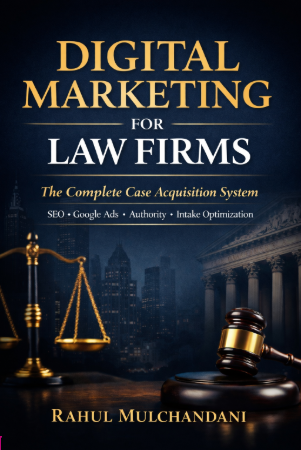
Author of "Digital Marketing For Lawyers" Book
Written by: Rahul Mulchandani
Founder, Digital Marketing Strategist and Author of "Digital Marketing For Lawyers" Book
Table of Contents
Real estate PPC for lawyers delivers immediate, high-intent traffic to your firm when potential clients search for help with property transactions, landlord-tenant disputes, closings, zoning issues, or commercial leases. A skilled law firm SEO agency structures these campaigns to maximize ROI while ensuring full compliance with state bar rules.
Analyze this Real estate PPC for Lawyers content with AI tools:
ChatGPT Perplexity Grok Google AI ClaudeUnlike SEO, which builds slowly, pay-per-click advertising puts your firm at the top of Google results within hours, targeting buyers, sellers, developers, and investors actively seeking legal representation.
For real estate law firms, PPC stands out because client journeys often involve urgency—imminent closings, contract disputes, or regulatory hurdles—where speed to visibility matters. With average CPCs for legal keywords ranging from $20–$55 (higher in competitive metros), a disciplined approach focused on quality score, negative keywords, and conversion-aligned landing pages turns ad spend into predictable case flow rather than wasted clicks.
This guide equips law firm owners and marketing leads with tactical execution details, compliance guardrails, platform-specific configurations, and benchmarks tailored to real estate practice. Expect concrete setups that outperform generic legal PPC advice. Many firms also work with a Law Firm Seo Agency to build long-term organic visibility alongside PPC campaigns, creating a more sustainable and cost-effective client acquisition strategy.
What Is Real Estate PPC and Why It Matters for Law Firms
Real estate PPC involves bidding on search terms related to property law services so your ads appear when users query Google (and sometimes Bing or other networks). You pay only when someone clicks. For lawyers, this primarily means Google Ads Search campaigns, supplemented by Local Services Ads (LSAs) and remarketing.
It matters for real estate attorneys because transactional and dispute-driven searches signal strong intent. A homeowner facing a title defect or a landlord dealing with eviction needs a lawyer now, not after months of SEO ranking. PPC captures this demand immediately.
Real estate law sits in a medium-to-high competition tier compared to personal injury. CPCs are lower than PI but still demand efficiency—expect $20–$55 per click in many markets, with potential for strong ROI when CPL stays under $150–$300 depending on case value.
Why it outperforms generic business PPC: Legal prospects have high lifetime value and specific pain points (e.g., “real estate lawyer near me” or “commercial lease dispute attorney”). Proper setup leverages Google’s auction system, where Quality Score (relevance + landing page experience + expected CTR) lowers your CPC and improves ad position.
How Real Estate PPC Works: Platforms and Mechanics
Google Ads dominates. You create campaigns, ad groups, and keywords. Google runs an auction based on bid, Quality Score, and ad rank. Top positions go to the highest effective bids.
Key platforms for real estate lawyers:
- Google Search Ads: Text ads on SERPs for queries like “property closing attorney [city]”.
- Local Services Ads (LSAs): Pay-per-lead format at the very top of results. Real estate lawyers qualify for Google Screened badges. You pay only for validated leads (calls/texts), not clicks. This is often the highest-ROI channel for local practices.
- Remarketing: Show ads to past site visitors across Google Display, YouTube, or Gmail.
- Microsoft Ads (Bing): Lower competition, often 30-50% cheaper CPCs; good for older demographics in real estate.
Mechanics specific to legal: Strict ad policies require accurate representation of services. No guarantees of outcomes. LSAs require background checks, licensing verification, and ongoing compliance.
Keyword Research and Strategy for Real Estate Lawyers
Start with Google Keyword Planner (in Google Ads) using the “Refine Keywords” filter to prioritize legal intent. Combine with Semrush or Ahrefs for competitor gap analysis.
Core keyword categories:
- Transactional: “real estate lawyer near me”, “real estate attorney [city]”, “property closing lawyer”.
- Dispute-focused: “landlord tenant lawyer”, “eviction defense attorney”, “boundary dispute lawyer”.
- Commercial: “commercial real estate attorney”, “lease negotiation lawyer”.
- Long-tail: “what to expect in a real estate closing [state]”, “title defect lawyer help”.
Use phrase and exact match primarily. Broad match modifier or Smart Bidding with strong negatives for discovery.
Negative keywords are critical: Exclude “jobs”, “salary”, “school”, “how to become”, “free”, “DIY”, realtor/agent terms (unless you handle broker disputes), and non-legal property searches.
Gap-filling insight: Real estate lawyers often overlook geo-modifiers combined with service specifics like “short sale attorney [city]” or “HOA dispute lawyer”. These have lower competition and higher conversion because they signal complex transactions.
Get More Clients for Your Law Firm
Stop losing potential cases to competitors. Let’s build a strategy that brings you consistent, high-quality leads.
Campaign Structure and Setup Best Practices
Structure for control and relevance:
- One campaign per major service line (e.g., Residential Transactions, Commercial Leases, Disputes).
- Ad groups by keyword theme or location.
- Dedicated ad copy and landing pages per group.
Key settings:
- Location targeting: Radius around your office(s) or specific counties where you practice.
- Device bid adjustments: Often +20-30% on mobile for call-heavy searches.
- Ad scheduling: Align with business hours or peak search times (evenings/weekends for homeowners).
- Conversion tracking: Set up Google Ads conversion tracking + Google Tag Manager for form submits, calls, and chat.
Use Maximize Conversions or Target CPA bidding once you have 15-30 conversions. For new accounts, start with Manual CPC to gather data.
Ad Copy, Extensions, and Compliance
Ad copy principles: Headline 1 includes primary keyword. Focus on benefits, trust, and urgency (e.g., “Experienced Real Estate Attorney – Protect Your Property Deal”). Include location for local searches.
Extensions to use:
- Call extensions (critical for mobile).
- Sitelink extensions to specific service pages.
- Location extensions tied to GBP.
- Structured snippets for services (e.g., “Services: Closings, Leases, Disputes”).
Compliance essentials: Follow state bar rules—no guarantees, no misleading claims. Disclose “attorney advertising” where required. Google policies prohibit unsubstantiated claims. For LSAs, maintain clean client feedback and licensing.
Real-world scenario: A mid-sized firm bidding on “real estate closing attorney” saw CTR jump 40% after adding call extensions and location-specific sitelinks, while maintaining bar-compliant language.
Landing Pages That Convert Real Estate Leads
Never send traffic to the homepage. Create dedicated pages for each major ad group.
Must-have elements:
- Headline matching ad intent (e.g., “Real Estate Closing Lawyers in [City]”).
- Clear value proposition above the fold: Problem → Solution → Proof.
- Trust signals: Bar admissions, years of experience, case results (anonymized), client testimonials specific to real estate.
- Prominent CTAs: “Schedule Free Consultation”, phone click-to-call, intake form with 3-4 fields max.
- Mobile-optimized with fast load times (Core Web Vitals compliant).
- Schema markup for LocalBusiness and FAQ.
Conversion rate benchmark: Aim for 10-20%+ on well-optimized real estate legal landing pages (higher than general legal averages).
Include specifics like “What Happens at Closing” checklists or “Common Title Issues” to build authority and reduce bounce rate.
Bidding Strategies, Budgeting, and Optimization
Start with $3,000–$8,000+/month depending on market size and goals (8–20 cases/month realistic in many areas).
Bidding evolution:
- Early: Manual CPC with aggressive testing.
- Scaled: AI Smart Bidding (Maximize Conversion Value) with target ROAS.
- Factor in Quality Score: Target 7+/10 by tight ad groups and relevant pages.
Monitor Search Terms report weekly. Add negatives aggressively. Test ad variations with Responsive Search Ads.
Tracking, Analytics, and ROI Measurement
Implement:
- Google Ads conversion tracking for calls, forms, and chats.
- CallRail or similar for accurate call attribution.
- Google Analytics 4 for behavior flow and micro-conversions.
- CRM integration (e.g., Clio) to tie leads to closed cases.
Key metrics and targets:
- CTR: 6-10%+ for legal.
- Conversion rate: 10%+ on landing pages.
- CPL: Under $200-300 for viable ROI.
- ROAS: Track to case value (real estate matters often justify higher spend).
Review weekly: Impression share, lost IS (budget/rank), and Quality Score.
Common Mistakes Real Estate Law Firms Make
- Sending traffic to generic homepages → high bounce, low Quality Score.
- Broad match without negatives → wasted budget on irrelevant traffic.
- Ignoring LSAs → missing top-of-page pay-per-lead opportunity.
- Poor compliance hygiene → ad disapprovals or account suspension.
- No dedicated landing pages or slow follow-up (leads go cold fast in competitive markets).
- Failing to segment commercial vs. residential campaigns.
Avoid by auditing campaigns quarterly and using specialized legal PPC management when internal resources lack depth.
Emerging Trends and Future-Proofing Your PPC
In 2026, AI-driven bidding and Performance Max campaigns (with strong asset groups) are standard, but Search remains king for high-intent legal. Video ads on YouTube for educational content (e.g., “Real Estate Closing 101”) build remarketing audiences.
Privacy changes push first-party data and CRM-based audience lists. Voice/search intent evolution favors conversational long-tail keywords.
Next steps: Audit your current Google Ads account against the structures above. Set up or optimize one service-specific campaign this week, focusing on high-intent keywords and a dedicated landing page. Track the first 50 clicks for insights, then scale winners while layering in LSAs. Consistent testing and compliance will compound results faster than any single tactic.
Frequently Asked Questions
What is the average CPC for real estate PPC keywords for lawyers?
Real estate law keywords typically range from $20–$55 per click, with “real estate attorney near me” and dispute terms often in the $25–$45 range in mid-to-large markets. This is lower than personal injury ($100+) but requires tight management. Factors include location competition, Quality Score (aim for 7+), and ad relevance. Use Google Keyword Planner for your specific geo and refine with historical account data. In practice, strong accounts achieve effective CPCs 20-30% below averages through negatives and landing page optimization. Budget at least $3k–$6k/month initially for testing.
Should real estate lawyers use Google Local Services Ads (LSAs)?
Yes—LSAs are frequently the highest-ROI channel for eligible real estate lawyers. You pay only for leads (calls/texts), appear above traditional ads with a Google Screened badge, and benefit from built-in trust. Qualification involves licensing verification and background checks. Optimize by maintaining high response rates and positive client feedback, as these influence ranking. Combine with Search Ads for broader coverage. Many firms see better CPL here than traditional PPC, especially for local transactional work like closings.
How do I structure Google Ads campaigns for real estate law?
Create separate campaigns for major practice areas (residential transactions, commercial, disputes). Use ad groups themed around keyword clusters (e.g., one for closings, one for landlord-tenant). Employ phrase/exact match, location targeting, and device adjustments. Each ad group needs tailored ads and a dedicated landing page. This improves Quality Score, lowers CPC, and allows precise bidding. Start with Search Network only, then expand to remarketing. Review Search Terms report weekly to refine.
What compliance rules apply to real estate lawyer PPC ads?
Ads must follow state bar ethics (no guarantees, accurate claims, proper disclosures) and Google policies. Avoid misleading language; include disclaimers where needed. For LSAs, maintain licensing and client satisfaction standards. Real estate-specific rules (e.g., fair housing) prohibit discriminatory implications. Work with agencies experienced in legal advertising to minimize disapprovals. Always have an attorney review copy. Non-compliance risks account suspension and bar issues.
What landing page elements convert best for real estate PPC?
Match the ad headline exactly, feature a prominent phone CTA and short intake form above the fold, include real estate-specific trust signals (years handling closings, testimonials from similar cases), and provide value like checklists. Keep load time under 3 seconds. Use clear, benefit-focused copy addressing pain points (e.g., “Avoid Costly Title Issues”). Test variations; aim for 10%+ conversion. Dedicated pages outperform homepages significantly.
How much budget do I need for real estate PPC?
$3,000–$8,000+ monthly depending on market competitiveness and goals. Smaller markets or focused campaigns can start lower ($1,500–$3k). Allocate across testing, scaling winners, and LSAs. Expect 8–20 qualified leads/cases per month with optimization. Track to case value—real estate matters often close at high enough retainers for strong ROI even at higher CPLs.
What are effective negative keywords for real estate lawyer campaigns?
Core list: free, DIY, how to, salary, jobs, school, realtor, agent (unless relevant), pro bono, “vs”, definitions, and non-legal property terms like “homes for sale”. Add location-irrelevant or competitor names as needed. Review Search Terms report regularly to expand the list. This prevents budget waste on low-intent traffic and improves relevance.
How do I measure ROI from real estate PPC?
Set up conversion tracking for calls, forms, and chats in Google Ads. Integrate with your CRM to attribute leads to closed cases and revenue. Calculate CPL, cost per qualified lead, and ROAS (revenue/ad spend). Monitor Quality Score, CTR, and conversion rate. Review monthly: aim for CPL that allows profitable case acquisition. Use UTM parameters for multi-channel visibility.
Is remarketing effective for real estate law firms?
Yes—remarketing keeps your firm top-of-mind during longer decision cycles (e.g., buyers evaluating multiple properties or ongoing disputes). Use dynamic ads showing specific services viewed. Segment audiences (site visitors, past lead form abandoners). Combine with video or display for trust-building. Remarketing often has lower CPC and higher conversion rates than cold traffic.
What bidding strategy works best for real estate PPC?
Start with Manual CPC for control and data collection. Transition to Maximize Conversions or Target CPA once you have sufficient conversion history (15–30+). For value-focused accounts, use Target ROAS. Adjust for device, location, and time. AI Smart Bidding excels with good data; monitor closely in competitive legal verticals.
How often should I optimize my real estate PPC campaigns?
Weekly minimum: review Search Terms, add negatives, test ad copy, check Quality Scores, and adjust bids. Deeper monthly audits for budget allocation, landing page performance, and new keyword opportunities. Quarterly strategy reviews against goals. Consistent optimization separates profitable campaigns from money-losers.
Can solo real estate lawyers succeed with PPC?
Yes, with focused budgets and tight targeting. Prioritize LSAs and high-intent long-tail keywords in your primary service area. Use dedicated landing pages and fast response systems (e.g., automated text replies). Many solos see strong results by dominating local searches without massive spend, but expect testing time. Consider specialist management for scaling.
🚀 Get Free Consultation
Our Latest Posts
-
 How We Generate Signed Cases for Lawyers: 7 Proven Strategies That Deliver Real Results
 -
 Case Study: Multi-City Personal Injury SEO Success – New Mexico
 -
 Case Study: Personal Injury Lawyer in Texas
 -
 Lawyer SEO: The Complete Guide to Optimizing Law Firm Websites for Clients and Rankings
 -
 Why Lawyer Switch to Us
Updated on
Get In Touch with Us!
other way to contact us
Office Email
rahul@webkeydigital.com
Office Phone
+1 503-303-8639
Office Location
8 The Green STE A, Dover, Kent , Delaware 19901