
LinkedIn Ads for Business Lawyers
The Ultimate Guide to Generating High-Value Corporate Clients in 2026

Written by: Rahul Mulchandani
Founder, Digital Marketing Strategist and
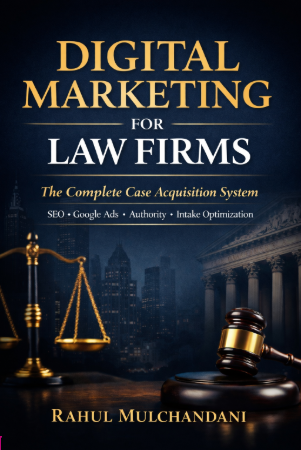
Author of "Digital Marketing For Lawyers" Book
Written by: Rahul Mulchandani
Founder, Digital Marketing Strategist and Author of "Digital Marketing For Lawyers" Book
Table of Contents
Business law firms rarely have a traffic problem. They have an access problem.
The decision-makers they need to reach—founders, CEOs, general counsel, CFOs, compliance directors, HR leaders, and business owners—aren’t searching Google every day for legal help. Most are busy running companies until a trigger event forces them to seek legal advice.
Analyze this Criminal defense PPC for Lawyers content with AI tools:
ChatGPT Perplexity Grok Google AI ClaudeThat’s exactly why LinkedIn Ads for Business Lawyers have become one of the most effective channels for generating high-value B2B legal opportunities.
Unlike search advertising, which captures existing demand, LinkedIn allows business law firms to proactively place their expertise in front of the precise people who influence legal purchasing decisions. Whether your firm focuses on corporate transactions, employment law, M&A, contract disputes, regulatory compliance, or commercial litigation, LinkedIn provides targeting capabilities unavailable on other advertising platforms.
However, most firms fail because they apply consumer-focused advertising principles to a business audience. They chase form submissions instead of relationships, optimise for cheap clicks instead of qualified conversations, and run generic campaigns that never resonate with executives.
This guide explains how experienced legal marketers actually use LinkedIn Ads to generate meaningful business opportunities, build authority among corporate audiences, and create a predictable pipeline of commercial legal work. Many firms also work with a Law Firm Seo Agency to strengthen organic visibility, support thought leadership efforts, and create multiple channels for attracting high-value business clients.
What Are LinkedIn Ads for Business Lawyers?
LinkedIn Ads for Business Lawyers refer to paid campaigns designed to promote legal services to business decision-makers using LinkedIn’s professional targeting capabilities.
Unlike Google Ads, which primarily capture active search intent, LinkedIn enables firms to target prospects based on professional characteristics such as:
Job title
Seniority level
Industry
Company size
Skills
Group memberships
Years of experience
Company growth indicators
Geographic location
This distinction fundamentally changes campaign strategy.
A managing partner at a corporate law firm isn’t attempting to persuade someone who has already decided to hire legal counsel. Instead, they are educating executives before a legal need becomes urgent.
Why This Matters
Consider two scenarios:
Scenario One:
A CEO searches Google for:
“business litigation lawyer near me”
Intent is immediate.
The prospect likely needs counsel now.
Scenario Two:
A CEO sees a LinkedIn ad titled:
“The Five Contract Clauses Costing Mid-Market Companies Millions in Avoidable Disputes.”
Intent is latent.
The legal need may emerge months later.
Yet the second scenario often leads to larger engagements because trust develops before competitors enter the conversation.
Where LinkedIn Fits Within Legal Marketing
LinkedIn typically supports:
Corporate law firms
Employment law practices serving employers
M&A lawyers
Franchise attorneys
Regulatory compliance firms
Commercial litigators
Intellectual property firms serving businesses
Outside general counsel practices
It tends to perform less effectively for highly urgent consumer matters such as personal injury or criminal defence.
Why LinkedIn Matters Specifically for Business Law Firms
Many lawyers dismiss LinkedIn because click costs appear expensive.
That perspective ignores how commercial legal buying decisions actually happen.
A $35 click seems expensive until compared with the lifetime value of a retained corporate client worth tens or hundreds of thousands of pounds or dollars annually.
Business Legal Services Have Longer Sales Cycles
Unlike consumer legal matters, corporate engagements often involve:
Multiple stakeholders
Procurement reviews
Internal approvals
Budget considerations
Existing outside counsel relationships
Risk assessments
The average timeline between awareness and engagement may span several months.
LinkedIn supports this journey exceptionally well because it facilitates repeated exposure.
A CFO may encounter:
A thought leadership ad.
A compliance checklist.
A webinar invitation.
A client case study.
A consultation offer.
By the time legal assistance becomes necessary, your firm already feels familiar.
Executive Attention Is Concentrated on LinkedIn
Decision-makers use LinkedIn differently from other social platforms.
They visit with a professional mindset.
They’re evaluating:
Industry trends
Regulatory updates
Leadership insights
Business opportunities
Risk mitigation strategies
Legal content aligned with these interests naturally performs better than overt service promotions.
Real Example
A mid-sized employment law firm serving employers launched:
HR compliance guide campaigns,
webinar registrations,
retargeting ads promoting consultations.
Consultation requests initially appeared modest.
However, CRM attribution later revealed that several six-figure employment advisory relationships originated from executives who engaged with educational content six to eight months earlier.
Without LinkedIn’s assisted attribution visibility, those opportunities would have been incorrectly credited elsewhere.
Understanding Business Lawyer Buyer Intent
One of the biggest mistakes legal marketers make is assuming all leads are ready to hire immediately.
Business audiences progress through identifiable stages.
Understanding these stages changes everything.
Stage 1: Problem Unaware
The prospect doesn’t recognise legal exposure.
Examples include:
Missing shareholder agreement protections,
outdated employment policies,
weak contract language,
compliance gaps.
Effective LinkedIn Content
Industry risk reports,
educational carousels,
trend analyses,
benchmarking studies.
Goal:
Create awareness.
Stage 2: Problem Aware
The prospect recognises a challenge.
Examples include:
Rapid expansion,
employee disputes,
regulatory changes,
upcoming acquisitions.
Effective Campaign Assets
Checklists,
legal audits,
webinars,
downloadable guides.
Goal:
Position the firm as a trusted advisor.
Stage 3: Solution Aware
The executive understands legal help is needed.
They begin evaluating providers.
Questions include:
Which firms understand our industry?
How responsive are they?
What experience do they have?
Have they solved similar issues?
Effective Campaign Assets
Case studies,
testimonials,
attorney profiles,
speaking engagements,
awards and recognitions.
Goal:
Build confidence.
Stage 4: Decision Ready
Now prospects are comparing firms.
This is where many marketers start.
Unfortunately, it’s the smallest audience segment.
Effective Assets
Consultation offers,
strategy sessions,
assessments,
direct outreach campaigns.
Goal:
Generate conversations.
Why Most Firms Waste Budget
Many campaigns target only Stage 4.
As a result:
audiences remain tiny,
CPCs rise,
competition intensifies,
volume suffers.
The firms generating the strongest ROI build campaigns across all four stages.
They educate first and sell later.
Get More Clients for Your Law Firm
Stop losing potential cases to competitors. Let’s build a strategy that brings you consistent, high-quality leads.
Choosing the Right LinkedIn Campaign Objectives
LinkedIn’s Campaign Manager offers several objectives.
Selecting the wrong one can destroy performance.
Brand Awareness
Designed to maximise reach.
Best for:
launching new practice areas,
entering new markets,
increasing visibility among executives.
Poor choice when immediate leads are expected.
Success Metrics
Track:
impressions,
reach,
frequency,
engagement rate.
Website Visits
Optimised for click generation.
Best used when promoting:
thought leadership articles,
service pages,
guides,
attorney bios.
However, traffic alone means very little.
Monitor:
engaged sessions,
time on page,
assisted conversions.
Google Analytics 4 should be configured to identify LinkedIn traffic quality.
Engagement Campaigns
These campaigns optimise for:
reactions,
comments,
shares,
follows.
Particularly effective for:
building attorney visibility,
amplifying webinars,
increasing trust signals.
Social proof generated through engagement often improves performance of future conversion campaigns.
Lead Generation
One of LinkedIn’s strongest features.
Lead Gen Forms allow users to submit information without leaving the platform.
Fields automatically populate from profile data.
Common fields include:
Name,
Email,
Company,
Job title.
Advantages
Reduced friction,
higher submission rates,
mobile-friendly experiences.
Limitations
Lead quality varies.
Many sophisticated firms use Lead Gen Forms only for mid-funnel assets and reserve consultation offers for dedicated landing pages.
Website Conversions
Often the strongest objective for mature firms.
Requires implementation of the LinkedIn Insight Tag.
Allows optimisation around:
consultation requests,
assessment bookings,
webinar registrations,
downloads.
Best Practice
Import offline conversion data from CRM systems such as:
HubSpot,
Salesforce,
Microsoft Dynamics.
Optimising toward retained matters rather than leads dramatically improves long-term campaign quality.
Building High-Converting Audience Targeting
LinkedIn’s greatest strength is precision.
Yet many law firms sabotage performance through overly restrictive audiences.
The goal isn’t perfect targeting.
It’s relevant scale.
Target by Job Function and Seniority
For most business law practices, strong starting points include:
Job Functions
Operations
Human Resources
Finance
Legal
Business Development
Entrepreneurship
Seniority Levels
Owner
Partner
Director
VP
CXO
These filters generally outperform job title targeting alone because they provide broader reach.
Use Company Size Strategically
Different legal offerings align with different business stages.
For example:
| Practice Area | Recommended Company Size |
|---|---|
| Startup Counsel | 1–50 employees |
| Employment Advisory | 51–500 employees |
| Commercial Contracts | 51–1,000 employees |
| M&A Services | 200+ employees |
| Outside General Counsel | 20–500 employees |
This alignment improves message relevance significantly.
Industry Targeting
Industry-specific campaigns routinely outperform generic legal campaigns.
Examples include:
Healthcare
Manufacturing
Technology
Financial Services
Construction
Hospitality
Executives respond more favourably when ads address challenges unique to their sector.
Compare:
Generic:
Protect your business from legal risk.
Industry-Specific:
How manufacturing employers can reduce wage-and-hour litigation exposure before 2027 compliance updates.
The second message demonstrates expertise immediately.
Matched Audiences
One of LinkedIn’s most underused capabilities.
Matched Audiences enable firms to target:
Website visitors,
CRM contact lists,
webinar attendees,
newsletter subscribers,
account lists.
These audiences often deliver the highest conversion rates because familiarity already exists.
For many firms, retargeting campaigns generate the strongest return on ad spend of the entire LinkedIn programme.
Crafting Offers That Executives Actually Respond To
One of the fastest ways to waste a LinkedIn budget is promoting a generic “Contact Us” message to cold audiences.
Business leaders rarely wake up wanting to schedule a consultation with a lawyer they’ve never interacted with before. They engage when the offer aligns with their current level of awareness and perceived risk.
The most effective LinkedIn offers create value before asking for commitment.
Top-of-Funnel Offers
These assets educate while positioning your firm as a trusted advisor.
Examples include:
Industry-specific compliance guides
Employment law updates
Contract risk checklists
Regulatory change summaries
Legal trend reports
Executive briefing documents
Example
Instead of:
Schedule a consultation with our corporate attorneys.
Use:
Download the 2026 Employment Compliance Checklist for Multi-State Employers.
The second offer addresses an identifiable problem and lowers resistance.
Mid-Funnel Offers
These are designed for prospects actively evaluating legal solutions.
Examples:
Webinar registrations
Legal risk assessments
Interactive compliance audits
Case study downloads
Industry roundtables
On-demand training sessions
Why Webinars Work
Business decision-makers often need internal justification before engaging outside counsel.
A webinar provides value while showcasing expertise.
Topics might include:
“Preparing Your Business for New Workplace Regulations”
“Contract Clauses Every SaaS Company Should Review Before Fundraising”
“Managing Employment Risk During Workforce Expansion”
Bottom-Funnel Offers
These should target warm audiences.
Examples:
Strategy sessions
Consultation requests
Executive briefings
Matter assessments
Discovery meetings
Retargeting audiences usually outperform cold traffic here.
The Trust Formula
High-performing business law campaigns typically follow this sequence:
Education → Engagement → Validation → Consultation
Skipping the first three stages often leads to disappointing results.
Budgeting and Cost Expectations
LinkedIn Ads cost more than many other digital channels.
That doesn’t automatically make them expensive.
The true measure is cost per qualified opportunity.
Typical LinkedIn Benchmarks for Business Law Firms
| Metric | Typical Range |
|---|---|
| CPC | $8–$25 |
| High-Competition CPC | $25–$45+ |
| Lead Gen Form CPL | $75–$250 |
| Webinar Registration CPL | $50–$150 |
| Consultation CPL | $200–$800 |
| Opportunity-to-Client Rate | 10–30% |
These figures vary based on:
Geography
Audience size
Industry competitiveness
Offer quality
Landing page effectiveness
Recommended Starting Budgets
Small Business Law Firms
Budget:
$2,000–$4,000 monthly.
Focus on:
One practice area
One audience segment
One lead magnet
Retargeting campaigns
Mid-Sized Firms
Budget:
$5,000–$10,000 monthly.
Allows:
Multiple audience tests
Webinar promotion
Content sequencing
CRM integration
Large Commercial Firms
Budget:
$10,000–$30,000+ monthly.
Supports:
Account-based marketing
Industry segmentation
Thought leadership campaigns
Advanced attribution models
Don’t Optimise for Cheap Leads
A $500 consultation cost that produces a six-figure client is profitable.
A $50 lead that never converts is not.
The objective should always be:
Cost per retained client.
Not cost per form submission.
Campaign Structures That Actually Work
Many firms launch one campaign targeting everyone.
Performance usually suffers.
Effective LinkedIn programmes are structured intentionally.
Campaign Structure Example
Campaign Group 1: Awareness
Audience:
Healthcare executives.
Objectives:
Brand awareness.
Assets:
Legal trend reports
Short educational videos
Thought leadership articles
Campaign Group 2: Consideration
Audience:
Engaged healthcare executives.
Objectives:
Website visits or engagement.
Assets:
Compliance checklists
Webinar invitations
Industry insights
Campaign Group 3: Conversion
Audience:
Retargeted visitors and engaged users.
Objectives:
Website conversions.
Assets:
Strategy sessions
Legal assessments
Consultation offers
Use Audience Expansion Carefully
LinkedIn’s Audience Expansion feature can improve scale.
However, for highly specialised legal campaigns, unrestricted expansion may dilute quality.
Best practice:
Enable expansion only after baseline performance has been established.
Creative Rotation
Ad fatigue develops quickly.
Rotate:
Headlines every 3–4 weeks
Images monthly
Offers quarterly
Testimonials periodically
Fresh creative often improves CTR without changing targeting.
Measuring ROI and Attribution
This is where most legal advertisers struggle.
If measurement stops at lead submissions, major opportunities are overlooked.
Business legal relationships develop over time.
Install the LinkedIn Insight Tag
The Insight Tag enables:
Conversion tracking
Website retargeting
Audience creation
Behavioural analysis
Without it, optimisation becomes guesswork.
Configure GA4 Properly
Track:
Engaged sessions
Landing page performance
Consultation completions
Assisted conversions
Returning users
Use UTM parameters consistently.
Example:
utm_source=linkedin
utm_medium=paid-social
utm_campaign=employment_webinar
Integrate CRM Data
This is often the biggest competitive advantage.
Platforms include:
HubSpot
Salesforce
Microsoft Dynamics
Zoho CRM
Track:
Lead → Opportunity → Proposal → Retained Client
This reveals true campaign profitability.
Metrics That Matter
Prioritise:
Qualified opportunities
Opportunity value
Client acquisition cost
Return on ad spend
Opportunity conversion rate
Pipeline contribution
Avoid obsessing over:
Likes
Impressions
Click volume
Vanity metrics rarely correlate with revenue.
Common Mistakes Business Law Firms Make
Selling Too Early
Cold audiences rarely convert directly.
Educate first.
Using Generic Messaging
Executives respond to specificity.
Speak to their industry and challenges.
Ignoring Retargeting
Retargeting often produces the highest ROI.
Neglecting it wastes previous engagement.
Measuring Only Lead Volume
Ten low-quality leads are less valuable than one retained client.
Track outcomes.
Over-Narrowing Audiences
Excessive targeting increases costs and restricts scale.
Start broader and refine gradually.
Failing to Align Landing Pages
Ad promises and landing page experiences must match.
If an ad promotes an employment checklist, the landing page should immediately deliver that asset.
Misalignment destroys conversion rates.
Emerging LinkedIn Advertising Trends for 2026
LinkedIn continues evolving.
The firms adapting early often gain significant advantages.
Account-Based Marketing (ABM)
ABM targets named organisations rather than broad demographics.
Business lawyers increasingly upload target company lists to influence key stakeholders.
Especially effective for:
M&A firms
Outside general counsel practices
Regulatory advisors
Employment counsel
AI-Assisted Creative Optimisation
LinkedIn’s AI tools increasingly recommend:
Headline variations
Audience suggestions
Creative combinations
Human oversight remains essential.
Legal nuance cannot be delegated entirely to automation.
Video-Led Thought Leadership
Short educational videos are outperforming static graphics in many B2B environments.
Topics include:
Regulatory updates
Employment changes
Contract pitfalls
Board governance insights
Authenticity often beats high production value.
First-Party Data Strategies
Privacy regulations continue reducing reliance on third-party data.
Firms building:
Newsletter audiences
Webinar databases
CRM segments
will maintain stronger targeting capabilities over time.
Many business law firms partner with a specialised law firm SEO agency to manage their broader digital marketing strategy, using LinkedIn Ads alongside SEO, content marketing, and conversion optimisation rather than treating each channel in isolation. This integrated approach allows firms to capture existing demand through organic search while simultaneously building relationships with executives who may not yet be actively seeking legal counsel. The result is a more resilient client acquisition strategy that generates both short-term opportunities and long-term pipeline growth.
Next Steps
If you’re considering LinkedIn Ads for your business law practice, resist the urge to launch a consultation campaign immediately.
Start by identifying your highest-value client profile. Determine the business problems that audience faces before they actively seek legal help. Create educational assets addressing those concerns, implement the LinkedIn Insight Tag, connect your CRM, and build campaigns that move prospects through awareness, consideration, and conversion stages.
The firms generating the strongest results on LinkedIn aren’t necessarily spending the most money. They’re aligning audience intent, content, and measurement more effectively than their competitors.
A well-structured LinkedIn programme can become one of the most reliable sources of high-value commercial legal opportunities in your marketing mix.
Frequently Asked Questions
How effective are LinkedIn Ads for Business Lawyers?
LinkedIn Ads can be highly effective for business lawyers because they target decision-makers based on professional characteristics rather than search behaviour alone. Unlike Google Ads, which capture existing intent, LinkedIn allows firms to influence executives before legal needs become urgent.
The platform performs especially well for corporate law, employment advisory, M&A, intellectual property, regulatory compliance, and outside general counsel services.
Success depends heavily on audience quality, educational offers, CRM integration, and long-term attribution tracking. Firms expecting immediate consultation requests from cold audiences often struggle. Those nurturing relationships through webinars, reports, and retargeting campaigns frequently generate stronger pipelines and higher-value matters.
Qualified opportunities—not clicks—should determine effectiveness.
What budget should business lawyers allocate to LinkedIn Ads?
Most firms should begin with a monthly budget between $2,000 and $5,000.
This provides enough spend to:
- Test audiences,
- evaluate messaging,
- build retargeting pools,
- optimise offers.
Mid-sized firms commonly invest between $5,000 and $10,000 monthly.
Large firms pursuing account-based strategies may spend substantially more.
The right budget depends on:
- client lifetime value,
- practice area economics,
- geographic competition,
- campaign maturity.
A single retained corporate client often justifies months of advertising investment.
Are LinkedIn Lead Gen Forms good for business law firms?
Yes, but context matters.
Lead Gen Forms reduce friction by auto-populating user information directly from LinkedIn profiles.
They often increase submission rates.
However, firms frequently discover that higher submission volume doesn’t always translate into stronger client quality.
Lead Gen Forms perform best when promoting educational assets such as:
- reports,
- webinars,
- checklists,
- compliance guides.
For consultations or strategic assessments, dedicated landing pages usually attract more serious prospects.
A hybrid approach often delivers optimal results.
How long does it take LinkedIn Ads to generate legal clients?
Unlike consumer legal advertising, LinkedIn campaigns often involve longer decision cycles.
Many business legal relationships develop over three to nine months.
Initial engagement may begin through educational content.
Subsequent touchpoints build familiarity and trust.
Eventually, a triggering event creates demand.
Firms should evaluate pipeline progression and assisted conversions rather than expecting immediate profitability within the first few weeks.
Patience and consistent optimisation are essential.
🚀 Get Free Consultation
Our Latest Posts
-
 How We Generate Signed Cases for Lawyers: 7 Proven Strategies That Deliver Real Results
 -
 Case Study: Multi-City Personal Injury SEO Success – New Mexico
 -
 Case Study: Personal Injury Lawyer in Texas
 -
 Lawyer SEO: The Complete Guide to Optimizing Law Firm Websites for Clients and Rankings
 -
 Why Lawyer Switch to Us
Updated on
Get In Touch with Us!
other way to contact us
Office Email
rahul@webkeydigital.com
Office Phone
+1 503-303-8639
Office Location
8 The Green STE A, Dover, Kent , Delaware 19901