
Family Law PPC
The Ultimate Guide to Attracting High-Value Clients

Written by: Rahul Mulchandani
Founder, Digital Marketing Strategist and
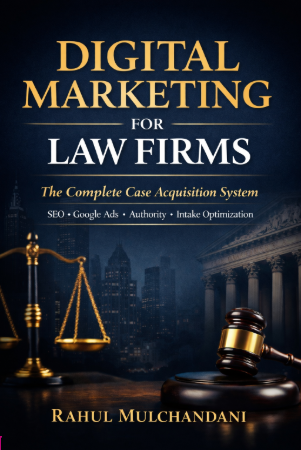
Author of "Digital Marketing For Lawyers" Book
Written by: Rahul Mulchandani
Founder, Digital Marketing Strategist and Author of "Digital Marketing For Lawyers" Book
Table of Contents
Family Law PPC (Pay-Per-Click) refers to targeted paid search campaigns that put your law firm at the top of search engines like Google for queries such as “divorce lawyer near me. When individuals face legal challenges related to family matters, such as divorce, child custody, or adoption, they often turn to search engines for immediate assistance.
Family Law PPC (Pay-Per-Click) becomes a critical strategy for law firms. PPC advertising places your firm directly in front of potential clients at their moment of greatest need, offering a direct and efficient path to client acquisition. This comprehensive guide will demystify Family Law PPC, providing you with the knowledge and strategies to create high-ranking, people-first campaigns that outperform competitors and drive significant ROI. Many family law firms also work with a law firm seo agency to strengthen organic visibility, reduce dependence on paid advertising, and create a sustainable long-term lead generation strategy.
What is PPC for Family Attorneys?
Family Law PPC refers to paid digital advertising campaigns specifically designed for family law firms, typically run on platforms like Google Ads. These advertisements appear prominently at the top of search engine results pages (SERPs) when potential clients search for terms related to family legal services, such as “divorce lawyer near me,” “child custody attorney,” or “family law firm”.
Unlike organic search engine optimization (SEO), where visibility is earned over time, PPC offers immediate exposure. Firms only pay when a user clicks on their ad, making it a highly targeted and potentially cost-effective method for generating qualified leads. The goal is to intercept individuals who are actively seeking legal assistance during what is often a highly emotional and critical period in their lives
Why Family Law Firms Need PPC
Family Law PPC provides a unique advantage for law firms by placing them directly in front of individuals who are actively searching for legal help. This immediate visibility and direct targeting capability make PPC an indispensable tool for client acquisition in the competitive legal landscape. Here are several compelling reasons why family law firms should leverage PPC:
Capture Clients at the Highest Point of Emotional Urgency
Family Law PPC allows firms to intercept individuals searching for family law services at the precise moment of their emotional tipping point. A search for “divorce lawyer near me” at 10 PM on a Sunday often indicates a serious incident or a firm decision to act. This targeted approach leads to higher call rates, faster decisions, and shorter sales cycles compared to other marketing channels
.
Family Law Keywords Signal Specific, Billable Case Types
Unlike broad legal searches, Family Law PPC keywords often reveal the specific nature and potential value of a case. For instance, a search for “high asset divorce attorney” signals a complex, high-value case that could involve substantial fees. Similarly, “emergency custody order lawyer” indicates an urgent matter requiring immediate legal counsel. Conversely, “uncontested divorce filing help” suggests a price-sensitive client seeking a flat-fee service
.
Family Law PPC specificity allows law firms to strategically bid on keywords that align with their ideal client profile, focusing resources on cases that are most profitable and manageable. Firms can adjust their bidding strategies to prioritize high-value case types and reduce expenditure on inquiries that historically yield lower returns or are more time-consuming.
It Generates Retainer Revenue, Not One-Off Transactions
Family law cases often involve ongoing legal services that extend over several months or even years, generating substantial retainer revenue. A single divorce case, for example, can involve 6 to 18 months of billable hours, with potential for additional post-divorce modifications, custody disputes, and enforcement actions. This can translate into $15,000 to $50,000 or more in lifetime fees from a single client acquired through PPC
.
This long-term client value means that even a higher cost-per-click (CPC) can be economically justifiable when measured against the average client lifetime value. The compounding ROI from these sustained client relationships makes PPC a highly attractive investment for family law practices
.
You Control Exactly Which Practice Areas Get Fed New Cases
One of the significant advantages of PPC is the ability to precisely control and adjust the flow of new cases to specific practice areas within the firm. If a firm has a surplus of divorce attorneys but a need for more custody lawyers, PPC campaigns can be quickly modified to pause divorce-related ads and increase spending on custody keywords
.
This level of granular control is nearly impossible with traditional marketing methods like SEO or referral networks. PPC allows firms to actively manage attorney utilization rates, ensuring that fee-earners remain productive and that the firm can adapt quickly to changing demands without overhiring or turning away valuable cases
.
Competitor Firms Cannot Block or Bury Your Visibility
In the realm of organic search, established firms with years of SEO investment and extensive backlink profiles can dominate search results, making it challenging for newer or smaller practices to gain visibility. PPC circumvents this barrier entirely. A new firm can appear above long-established competitors on Google through smart bidding and relevant ad copy, securing premium page-one real estate immediately
.
This is particularly crucial in saturated family law markets where aggregators like Avvo, FindLaw, and Justia often occupy the top organic spots. Paid search offers a reliable and immediate pathway to visibility, regardless of a firm’s age or existing online presence
.
Performance Data Directly Informs Your Wider Marketing Strategy
Running Google Ads provides invaluable data and insights beyond just lead generation. Search term reports reveal the exact language and queries potential clients use to describe their legal problems. This information can directly inform and enhance website copy, blog content, intake scripts, and consultation frameworks
.
For example, if searches like “what happens to the house in a divorce” generate high click volume, this indicates a significant content and SEO opportunity. Many family law firms view PPC as an isolated lead channel, but it is, in fact, a continuous source of real-time market research that can provide a competitive edge
.
Keyword & Semantic Strategy for Family Law PPC
An effective Family Law PPC campaign hinges on a robust keyword and semantic strategy. This involves not only identifying the main keywords but also understanding the broader semantic landscape to capture diverse search intent and build topical authority. The goal is to naturally integrate keywords and related terms throughout the ad copy and landing page content without forcing repetition or sounding unnatural
.
Main Keyword Integration: The primary keyword, such as “Family Law PPC,” should be prominently featured in the H1 title, introduction, multiple H2/H3 headings, and throughout the article at an optimal density. This ensures search engines understand the core topic of the content.
Semantic Variations and LSI Terms: Beyond the main keyword, incorporating Latent Semantic Indexing (LSI) terms and semantic variations is crucial. These are words and phrases conceptually related to the main keyword, helping to establish topical authority and capture a wider range of relevant searches. Examples for “Family Law PPC” might include “Google Ads for lawyers,” “legal marketing strategies,” “PPC for divorce attorneys,” or “client acquisition for family lawyers.”
Long-Tail Keywords: Targeting long-tail keywords, which are more specific and often question-based phrases, can attract highly qualified leads. These phrases typically have lower search volume but higher conversion rates due to their specificity. Examples include “how to set up Google Ads for family law firm” or “best PPC strategy for child custody cases.”
Relevant Entities: Identifying and incorporating relevant entities—such as specific laws, organizations, processes, tools, locations, or government bodies—further enhances the content’s authority and relevance. For Family Law PPC, this could involve mentioning specific legal statutes, bar associations, or relevant marketing platforms.
By meticulously researching and integrating these elements, firms can create PPC campaigns that resonate with search intent, improve ad relevance, and ultimately drive higher conversion rates.
Get More Clients for Your Law Firm
Stop losing potential cases to competitors. Let’s build a strategy that brings you consistent, high-quality leads.
Ad Targeting for Family Law Firms
Family Law PPC campaigns reach the most relevant audience when effective ad targeting is employed, maximizing your budget and lead quality. Precision targeting prevents wasted ad spend and connects your firm with individuals who are most likely to become clients.
Geographic and Radius Targeting
Family Law PPC geographic targeting is paramount for law firms. It is rarely advisable to target an entire state unless the firm has multiple physical offices distributed widely. Instead, focus on specific counties or draw a precise radius around your office locations. This ensures that ads are shown to potential clients within a manageable service area.
For firms specializing in high-net-worth divorce cases, Google’s advanced location options allow for targeting specific, affluent zip codes while excluding lower-income areas. This strategic approach ensures that ads are displayed only to users with the financial capacity to retain the firm’s specialized services
Household Income Targeting
Google Ads provides the capability to adjust bids based on the top percentage of household incomes within a given area. If a firm specializes in complex asset division, business valuations in divorce, or executive alimony, positive bid modifiers can be applied. For example, bidding 20% more for users in the top 10% or 20% income brackets ensures that ads are more likely to be shown to individuals who fit the firm’s ideal client demographic.
Dayparting and Ad Scheduling
Family Law PPC ad spend optimization requires understanding when potential clients search for legal services. Data often shows spikes in searches late at night or during lunch hours, when individuals might be discreetly researching legal options. Dayparting involves scheduling ads to run only during specific hours or days when the firm has the infrastructure to respond to leads.
Running ads for “emergency custody” over a weekend when the intake team is unavailable, for instance, can lead to wasted budget. Strategic ad scheduling ensures that every click has the potential to convert into a qualified lead by aligning ad visibility with operational capacity.
Crafting High-Converting Ad Copy
Family Law PPC success is essential when crafting compelling and empathetic ad copy. Given the emotional nature of family law matters, ads must convey trust, authority, and a sense of safety. The copy should directly address the pain points of potential clients while highlighting the firm’s ability to provide effective solutions.
Key elements of high-converting ad copy include:
- Emotional Resonance: Use language that acknowledges the emotional urgency and sensitivity of family law issues. Phrases like “Navigating Divorce with Compassion” or “Protecting Your Children’s Future” can resonate deeply.
- Clear Call to Action (CTA): Clearly instruct users on the next step, such as “Call for a Confidential Consultation,” “Get Your Free Case Evaluation,” or “Speak with an Attorney Now.”
- Unique Selling Proposition (USP): Highlight what makes your firm stand out. This could be specialized expertise (e.g., “High-Asset Divorce Specialists”), a particular approach (e.g., “Mediated Divorce Solutions”), or a strong track record.
- Trust Signals: Include elements that build trust, such as years of experience, client testimonials (if permissible), or awards. Mentioning “Experienced Family Law Attorneys” or “Award-Winning Legal Team” can enhance credibility.
- Location Specificity: For local searches, include the city or region in the ad copy (e.g., “Divorce Lawyer in [City Name]”).
- Ad Extensions: Utilize ad extensions (e.g., call extensions, site link extensions, structured snippet extensions) to provide additional information and increase ad visibility and click-through rates.
By combining these elements, ad copy can effectively capture the attention of high-intent searchers and encourage them to take the desired action.
Landing Page Optimization for Family Law PPC
Family Law PPC ads lead to the landing page, which becomes the next critical touchpoint. A highly optimized landing page is essential for converting clicks into leads. It must be relevant, user-friendly, and designed to build immediate trust and facilitate easy contact.
Key optimization strategies for family law landing pages include:
- Relevance to Ad Copy: The landing page content must directly align with the ad copy and the user’s search query. This ensures a seamless user experience and reinforces the message that the firm can address their specific needs.
- Clear Value Proposition: Immediately communicate the firm’s value and how it can solve the user’s problem. Use clear, concise headlines and subheadings.
- Strong Trust Indicators: Given the sensitive nature of family law, trust is paramount. Include attorney bios, client testimonials (if ethically permissible and anonymized), professional affiliations, and clear privacy statements. High-quality imagery of the legal team and office can also build credibility.
- Frictionless Contact Options: Make it easy for users to get in touch. Prominently display phone numbers (with click-to-call functionality on mobile), contact forms, and live chat options. Ensure forms are short and only request essential information.
- Mobile Responsiveness: A significant portion of searches occur on mobile devices. Landing pages must be fully responsive and load quickly on all devices to provide a positive user experience.
- Compelling Call to Action (CTA): Reinforce the CTA from the ad copy with clear, prominent buttons or links. Examples include “Schedule Your Consultation,” “Get Immediate Legal Help,” or “Start Your Case Review.”
- Discreet Design: Maintain a professional and discreet design that respects the sensitive nature of family law matters. Avoid overly aggressive or flashy elements.
- Tracking and Analytics: Implement robust tracking to monitor user behavior on the landing page, including form submissions, phone calls, and time on page. This data is crucial for continuous optimization and measuring conversion rates
.
Optimized landing pages can significantly improve conversion rates, turning valuable ad clicks into retained clients.
Budgeting and Cost Considerations
Family Law PPC campaigns require effective budgeting to maximize the return on investment (ROI). The cost of PPC for family law can vary significantly based on location, competition, and the specificity of keywords. Understanding these factors helps firms allocate resources wisely and achieve their client acquisition goals.
Key budgeting and cost considerations include:
- Cost Per Click (CPC): The average CPC for family law leads can range from $80 to $120 per lead, depending on the geographic location and competitive landscape.
High-value keywords in competitive markets will naturally have higher CPCs.
- Lead-to-Client Conversion Rate: A typical closing rate for family law PPC clients is around 10%.
This means that for every 10 leads generated, one might convert into a retained client. Understanding this ratio is vital for calculating the true cost per acquisition (CPA).
- Client Lifetime Value (CLTV): As family law cases often generate substantial retainer revenue over an extended period, the CLTV can be very high. This long-term value justifies a higher initial investment in PPC, as the ROI compounds over time.
- Monthly Budget Allocation: Firms should allocate a monthly budget that allows for sufficient ad impressions and clicks to generate a meaningful number of leads. It’s important to start with a realistic budget and scale up as campaign performance improves
- Geographic and Demographic Factors: Costs can vary by region. Highly populated and competitive areas will generally have higher CPCs. Targeting affluent demographics or specific zip codes can also influence costs.
- Ad Platform Fees: While Google Ads is the primary platform, firms might also consider other platforms like Facebook or Instagram for remarketing, which will add to the overall budget.
- Agency Fees: If working with a PPC agency, their management fees will be an additional cost. These fees typically range from a percentage of ad spend or a flat monthly fee.
Calculating ROI: To determine the ROI, firms should track the number of leads generated, the conversion rate from lead to client, the average revenue per client, and the total ad spend. A 10% closing rate, for example, could yield a 10x ROI if the client lifetime value is significantly higher than the cost per lead.
By carefully considering these budgeting factors, family law firms can develop a sustainable and profitable PPC strategy.
Critical Mistakes to Avoid and Best Practices
Family Law PPC campaigns require avoiding common pitfalls and adhering to best practices to ensure success. The sensitive nature of family law, combined with the competitive digital advertising landscape, demands a meticulous approach.
Critical Mistakes to Avoid:
- Broad Keyword Targeting: Bidding on overly broad keywords without understanding search intent can quickly deplete budgets with irrelevant clicks. For example, targeting “lawyer” instead of “divorce lawyer near me” will attract a wide range of non-family law inquiries.
- Ignoring Negative Keywords: Failing to implement a comprehensive negative keyword list is a major budget drain. Negative keywords prevent ads from showing for irrelevant searches (e.g., “free legal advice,” “DIY divorce forms”).
- Poor Landing Page Experience: Directing ad traffic to a generic homepage or an unoptimized landing page leads to high bounce rates and low conversion rates. Landing pages must be highly relevant, fast-loading, and user-friendly.
- Lack of Mobile Optimization: With a significant portion of searches occurring on mobile devices, non-mobile-responsive ads and landing pages will result in a poor user experience and lost leads.
- Inadequate Call Tracking: Not tracking phone calls as conversions means missing a crucial data point for measuring campaign effectiveness. Many family law leads prefer to call directly.
- Setting and Forgetting: PPC campaigns require continuous monitoring, optimization, and adjustment. Neglecting ongoing management will lead to diminishing returns.
- Ignoring Search Intent: Running campaigns with a “Personal Injury” mindset for family law can result in rejected ads, wasted budget, and a poor user experience due to misaligned messaging.
- Lack of Ethical Consideration: Family law involves sensitive personal matters. Ad copy and landing pages must be empathetic, discreet, and comply with all legal and ethical advertising guidelines.
Best Practices for Success:
- Hyper-Specific Keyword Research: Conduct thorough research to identify high-intent, long-tail keywords that signal specific family law needs.
- Comprehensive Negative Keyword List: Continuously update and expand your negative keyword list to filter out irrelevant traffic and protect your budget.
- Localized Targeting: Utilize precise geographic and radius targeting to reach potential clients within your service area.
- Compelling and Empathetic Ad Copy: Craft ad copy that addresses emotional urgency, builds trust, and includes a clear call to action.
- Optimized Landing Pages: Design dedicated landing pages that are highly relevant to the ad, mobile-responsive, and facilitate easy contact.
- Robust Conversion Tracking: Implement comprehensive tracking for all conversion types, including phone calls, form fills, and chat submissions.
- Continuous Monitoring and Optimization: Regularly review campaign performance data, make data-driven adjustments to bids, keywords, and ad copy, and A/B test different elements.
- Dayparting and Ad Scheduling: Schedule ads to run during hours when your firm can effectively respond to leads.
- Utilize Ad Extensions: Maximize ad visibility and provide additional information through various ad extensions.
- Focus on Client Lifetime Value: Understand that the long-term value of a family law client justifies the initial PPC investment.
By adhering to these best practices and avoiding common mistakes, family law firms can build highly effective and profitable PPC campaigns.
Industry Standards, Current Practices, and Emerging Trends
The landscape of Family Law PPC is continuously evolving, influenced by changes in search engine algorithms, technological advancements, and shifts in consumer behavior. Staying abreast of industry standards, current best practices, and emerging trends is vital for maintaining a competitive edge and ensuring long-term campaign success.
Current Practices and Standards:
- Hyper-Localization: Beyond basic geographic targeting, current practices emphasize hyper-local strategies, including targeting specific neighborhoods or even individual blocks, especially for firms serving niche local markets.
- Ethical Advertising: Strict adherence to legal advertising ethics and guidelines is a non-negotiable standard. This includes transparent messaging, avoiding misleading claims, and respecting client privacy.
- Data-Driven Optimization: Continuous analysis of performance data (CPC, CPA, conversion rates, CLTV) is standard. Decisions are increasingly made based on granular data insights rather than assumptions.
- Integrated Marketing Approach: PPC is rarely a standalone strategy. It is often integrated with SEO, content marketing, social media, and email marketing to create a cohesive and powerful digital presence.
- AI and Automation: The use of AI-powered bidding strategies and automation tools within platforms like Google Ads is becoming standard, allowing for more efficient budget allocation and real-time optimization.
Emerging Trends:
- Voice Search Optimization: With the rise of voice assistants, optimizing keywords for natural language queries (e.g., “Hey Google, find a divorce lawyer near me”) is an emerging trend. This requires a shift towards more conversational keyword strategies.
- Visual Search and Video Ads: As visual content gains prominence, video ads and optimization for visual search platforms could become more relevant for legal services, showcasing firm culture and attorney personalities.
- Enhanced Privacy Controls: Evolving privacy regulations (e.g., GDPR, CCPA) and browser changes (e.g., third-party cookie deprecation) will continue to impact targeting capabilities, requiring firms to adapt their data collection and utilization strategies.
- Personalized User Experiences: The trend towards highly personalized user experiences will extend to PPC, with ads and landing pages dynamically adjusting based on user behavior, demographics, and past interactions.
- Predictive Analytics: Leveraging predictive analytics to forecast client needs and market shifts will enable firms to proactively adjust their PPC strategies, anticipating demand rather than merely reacting to it.
- Multi-Platform Integration: Beyond Google Ads, integrating PPC efforts across various platforms (e.g., LinkedIn for professional networking, specialized legal directories with paid options) will become more sophisticated.
By embracing these trends and maintaining a commitment to ethical, data-driven practices, family law firms can ensure their PPC campaigns remain effective and future-proof.
Frequently Asked Questions
What is Family Law PPC?
Family Law PPC (Pay-Per-Click) refers to paid advertising campaigns specifically tailored for law firms specializing in family law. These campaigns typically run on search engines like Google Ads, where firms bid on keywords related to family legal services (e.g., “divorce attorney,” “child custody lawyer”). When a potential client searches for these terms, the firm’s ad appears at the top of the search results. The firm pays a fee each time their ad is clicked, making it a direct and efficient way to attract individuals actively seeking legal assistance for family matters.
How much does Family Law PPC cost?
The cost of Family Law PPC varies significantly based on several factors, including geographic location, the competitiveness of keywords, and the specific legal services being advertised. The average Cost Per Click (CPC) for family law leads can range from $80 to $120 or more per lead.
A firm’s overall monthly budget will depend on its client acquisition goals and the market’s competitiveness. While the initial investment can be substantial, the high Client Lifetime Value (CLTV) of family law cases often justifies these costs, leading to a strong return on investment over time.
Is PPC effective for family law firms?
Yes, PPC is highly effective for family law firms when implemented strategically. It allows firms to capture high-intent leads precisely when individuals are actively searching for legal help during emotionally urgent situations. Unlike organic SEO, PPC provides immediate visibility and allows for precise targeting of specific demographics and geographic areas. With optimized ad copy and landing pages, PPC can generate consistent, high-quality leads and a strong return on investment, making it one of the most powerful client acquisition tools available to family law practices
What kind of keywords should I target for Family Law PPC?
For Family Law PPC, it is crucial to target a mix of specific, high-intent keywords. This includes main keywords like “divorce lawyer [city],” “child custody attorney near me,” and “family law firm.” Additionally, incorporate semantic variations, Latent Semantic Indexing (LSI) terms, and long-tail keywords such as “high asset divorce attorney,” “emergency custody order lawyer,” or “how to file for divorce in [state].” It is equally important to use a comprehensive negative keyword list to filter out irrelevant searches like “free legal advice” or “DIY divorce forms,” ensuring your budget is spent on qualified leads
How can I improve my Family Law PPC conversion rates?
Improving Family Law PPC conversion rates involves optimizing both your ad campaigns and landing pages. Key strategies include crafting empathetic and compelling ad copy that addresses emotional urgency and includes a clear call to action. For landing pages, ensure they are highly relevant to the ad, mobile-responsive, fast-loading, and feature strong trust indicators (e.g., attorney bios, testimonials). Provide frictionless contact options like prominent phone numbers and short contact forms. Continuously monitor performance data, A/B test different elements, and refine your targeting and messaging based on insights to maximize conversions
What are the ethical considerations for Family Law PPC?
Ethical considerations are paramount in Family Law PPC. All advertising must be truthful, not misleading, and comply with the rules of professional conduct set by state bar associations. This includes avoiding sensational language, respecting client privacy, and ensuring that claims of expertise or results are accurate and verifiable. Ad copy and landing pages should maintain a professional and empathetic tone, acknowledging the sensitive nature of family law matters. Transparency about fees and services is also crucial to uphold ethical standards
How does Family Law PPC compare to SEO?
Family Law PPC and SEO (Search Engine Optimization) are both vital for online visibility but differ significantly. PPC provides immediate visibility by placing ads at the top of search results, with firms paying per click. It offers precise control over targeting and messaging and can generate leads quickly. SEO, on the other hand, focuses on earning organic rankings over time through content quality, backlinks, and technical optimization. While SEO builds long-term authority and trust, it takes longer to yield results. Many firms use a combination of both: PPC for immediate lead generation and SEO for sustainable, long-term growth and brand building
What is dayparting in Family Law PPC?
Dayparting in Family Law PPC refers to the strategy of scheduling your ads to run only during specific hours or days. This optimization technique is based on understanding when your target audience is most likely to search for legal services and when your firm has the capacity to respond to leads. For example, if your intake team is only available during business hours, you might schedule ads to run from 9 AM to 5 PM on weekdays. This prevents wasted ad spend on clicks that occur when no one is available to answer calls or respond to inquiries, thereby maximizing the efficiency of your PPC budget
Can I target high-net-worth clients with Family Law PPC?
Yes, you can effectively target high-net-worth clients with Family Law PPC through advanced targeting strategies. This involves utilizing Google Ads’ capabilities for geographic targeting (e.g., focusing on affluent zip codes or neighborhoods) and household income targeting (e.g., applying positive bid modifiers for users in the top income brackets). Additionally, crafting ad copy and landing page content that speaks directly to the complexities of high-asset divorce, business valuations, or executive alimony can attract this specific demographic, ensuring your campaigns reach individuals with the financial means to retain specialized legal services
What role do landing pages play in Family Law PPC?
Landing pages play a critical role in Family Law PPC as they are where potential clients arrive after clicking your ad. Their primary purpose is to convert ad clicks into leads. An effective landing page must be highly relevant to the ad copy and the user’s search query, providing immediate answers and building trust. Key elements include clear value propositions, strong trust indicators (attorney bios, testimonials), frictionless contact options (phone numbers, forms), and mobile responsiveness. A well-optimized landing page ensures a seamless user experience, reinforces the firm’s credibility, and significantly increases the likelihood of a conversion
🚀 Get Free Consultation
Our Latest Posts
-
 How We Generate Signed Cases for Lawyers: 7 Proven Strategies That Deliver Real Results
 -
 Case Study: Multi-City Personal Injury SEO Success – New Mexico
 -
 Case Study: Personal Injury Lawyer in Texas
 -
 Lawyer SEO: The Complete Guide to Optimizing Law Firm Websites for Clients and Rankings
 -
 Why Lawyer Switch to Us
Updated on
Get In Touch with Us!
other way to contact us
Office Email
rahul@webkeydigital.com
Office Phone
+1 503-303-8639
Office Location
8 The Green STE A, Dover, Kent , Delaware 19901