
Employment Lawyer Lead Generation
The Ultimate Guide for 2026

Written by: Rahul Mulchandani
Founder, Digital Marketing Strategist and
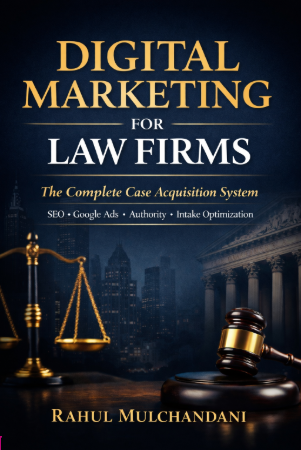
Author of "Digital Marketing For Lawyers" Book
Written by: Rahul Mulchandani
Founder, Digital Marketing Strategist and Author of "Digital Marketing For Lawyers" Book
Table of Contents
Employment lawyer lead generation demands a precise mix of high-intent search visibility, trust-building content, and ethical paid channels to convert distressed employees and HR professionals into retained clients. Unlike transactional practices, employment law searches often start with informational queries like “can I be fired for no reason” or “what is workplace retaliation” before escalating to “wrongful termination lawyer near me.” A skilled law firm SEO agency helps employment practices dominate competitive searches by blending organic authority with targeted PPC and Local Services Ads while maintaining strict state bar compliance.
Analyze this Employment lawyer lead generation for Lawyers content with AI tools:
ChatGPT Perplexity Grok Google AI ClaudeIn 2026, Google’s Helpful Content and E-E-A-T signals reward firms that demonstrate real expertise through in-depth resources, transparent case results (where permitted), and rapid response systems. Top performers combine organic authority with targeted PPC and Local Services Ads (LSAs) while maintaining strict state bar compliance. This guide delivers actionable frameworks that address the unique challenges of plaintiff-side and defense-side employment practices, including competitive keyword landscapes, privacy-sensitive client journeys, and measurable ROI.
In 2026, Google’s Helpful Content and E-E-A-T signals reward firms that demonstrate real expertise through in-depth resources, transparent case results (where permitted), and rapid response systems. Top performers combine organic authority with targeted PPC and Local Services Ads (LSAs) while maintaining strict state bar compliance. This guide delivers actionable frameworks that address the unique challenges of plaintiff-side and defense-side employment practices, including competitive keyword landscapes, privacy-sensitive client journeys, and measurable ROI. Many firms also partner with a Law Firm Seo Agency to strengthen organic visibility, improve lead quality, and support long-term growth beyond paid advertising.
What Is Employment Lawyer Lead Generation and Why It Matters
Employment lawyer lead generation encompasses all activities that identify, attract, and nurture potential clients facing workplace issues such as wrongful termination, discrimination (age, sex, disability, race), wage and hour violations (FLSA, overtime), harassment, retaliation, non-compete disputes, or unemployment appeals.
For law firms, it matters because employment cases often involve time-sensitive statutes of limitations (e.g., EEOC charges within 180-300 days) and high emotional stakes, making prospects research-heavy but conversion-ready once trust is established. Plaintiff-side leads can yield significant contingency fees, while defense-side work offers retainer stability for corporate clients.
Unlike generic lead gen, employment-specific efforts must navigate ethical advertising rules: no outcome guarantees, truthful claims only, and proper disclaimers per ABA Model Rule 7.2 and state bars. High-quality leads reduce no-show consultations and improve case acceptance rates. Firms excelling here report 3-5x ROI on marketing within 12-18 months through compounded organic traffic and efficient paid spend.
Understanding Search Intent in Employment Law
Employment law queries split into informational (early stage: “what counts as wrongful termination”), navigational (“employment lawyer near me”), and transactional (ready-to-hire: “file EEOC complaint lawyer [city]”). Generic articles overlook that many searches occur during crises, often on mobile during work breaks, requiring discreet, fast-loading experiences.
Key keyword clusters (2026 data):
- High-volume: “employment lawyer” (40k+ monthly), “wrongful termination” (14k+), “employment attorney near me.”
- Long-tail opportunities: “hostile work environment lawyer [city],” “overtime pay claim attorney,” “non-compete agreement enforceable [state].”
Use tools like Google Keyword Planner (with “Refine keywords” filter for legal intent) or Semrush’s Keyword Magic Tool to map these to practice sub-pages. Intent shifts by side: employees seek empathy and “rights explained simply”; employers/HR seek “defense strategies” and compliance audits.
Gap-filling insight: Track “People Also Ask” and AI Overviews in Google Search Console. Create content that directly answers these to earn featured snippets and reduce zero-click losses.
Local SEO and Google Business Profile Optimization
Most employment matters are jurisdiction-specific due to state labor laws and federal overlays. Local SEO drives Map Pack dominance for “near me” searches.
Optimization checklist:
- Primary GBP category: “Employment Attorney” or “Labor & Employment Lawyer.”
- Add all relevant services: Wrongful Termination, Discrimination Claims, Wage Disputes, etc.
- Post weekly updates on recent case wins (anonymized), legal alerts, or webinars.
- Collect and respond to reviews within 24 hours—Google favors active profiles. Aim for 4.8+ stars with 100+ reviews.
- Ensure NAP (Name, Address, Phone) consistency across 60+ citation sites like Yelp, Avvo, Justia, and state bar directories using tools like BrightLocal.
Multi-location firms: Create unique location pages with schema, localized content on state-specific laws (e.g., California’s AB 51 on non-competes), and separate GBPs.
Real scenario: A mid-sized plaintiff firm in Chicago optimized GBP photos (office, team, awards) and Q&A section for common questions, lifting local pack rankings from page 2 to top 3 within 90 days and increasing calls by 40%.
Get More Clients for Your Law Firm
Stop losing potential cases to competitors. Let’s build a strategy that brings you consistent, high-quality leads.
Content Marketing and Topical Authority for Employment Lawyers
Build authority by creating pillar content around core topics and clustering supporting articles. Google’s 2026 algorithms prioritize comprehensive, people-first resources that demonstrate E-E-A-T (Experience, Expertise, Authoritativeness, Trustworthiness).
Recommended content types:
- Ultimate guides: “Wrongful Termination in [State]: Rights, Deadlines, and Next Steps.”
- Comparison pieces: “At-Will Employment vs. Contract Protections.”
- Video explainers for YouTube and website embedding (transcripts boost SEO).
- Employee handbooks or checklist downloads gated behind forms.
Publish on your site first, then syndicate to LinkedIn, HR forums, and bar association publications. Author bios with credentials, years of experience, and bar admissions strengthen E-E-A-T.
Specific insight: Use Semrush Content Template or SurferSEO to analyze top-ranking pages for employment terms, then exceed them with original case studies (redacted), downloadable EEOC filing guides, and expert quotes from your attorneys. One firm generated 60+ leads/month from a single pillar page on retaliation claims by updating it quarterly with new regulations.
PPC and Paid Search Strategies That Convert
PPC delivers immediate leads but requires discipline due to legal CPCs ($25–$65+ for competitive terms; overall legal averages ~$6–$10).
Campaign structure best practices:
- Separate campaigns: Branded, Non-branded high-intent, Long-tail informational, Local Services Ads.
- Match types: Exact and Phrase for core terms; avoid broad to prevent irrelevant clicks.
- Bidding: Maximize Conversions or Target CPA, with bid adjustments for mobile (high volume) and location.
- Ad copy principles: Lead with empathy (“Facing Unfair Termination? Get Experienced Help”), include location, clear CTAs, and disclaimers. Use call extensions and location extensions.
- Negative keywords: Free templates, DIY advice terms, competitor names.
Landing page alignment: Dedicated pages per major practice area with trust signals (bar badges, verifiable results, intake forms). Implement Google Ads conversion tracking + call tracking (e.g., CallRail) for accurate attribution.
LSAs: Often lower cost-per-lead ($150–$300 range) with built-in verification. Ensure high review volume for better ad rank.
Budget allocation: Start with $3,000–$8,000/month depending on market size, testing for 30–60 days.
Conversion Optimization and Intake Systems
Leads die without frictionless intake. Employment prospects need confidentiality and speed.
Key elements:
- Prominent, persistent phone numbers and “Call Now” buttons.
- Simple forms (3–5 fields max) with conditional logic.
- 24/7 AI chat or receptionist (tools like Marlie.ai) for initial qualification.
- Dedicated intake team trained on empathy and urgency—respond to all leads within 5–15 minutes.
- Retargeting ads to website visitors who didn’t convert.
Core Web Vitals, mobile-first design, and accessibility (WCAG) directly impact rankings and conversions. Trust signals: Client testimonials (with permission), “Results May Vary” disclaimers, awards, and secure intake.
Common Mistakes Law Firms Make and How to Avoid Them
- Broad keyword targeting: Drains budget on low-intent traffic. Solution: Use negative keywords aggressively and focus on long-tail.
- Ignoring compliance: Guarantees or misleading claims lead to bar complaints. Solution: Review all copy against state rules; use legal marketing counsel if needed.
- Poor follow-up: Most firms contact once. Solution: Automated multi-touch sequences (email + SMS) with value (free initial consult checklists).
- Neglecting defense-side differentiation: Many focus only on plaintiff. Solution: Create separate funnels for corporate/HR clients via LinkedIn.
- No data tracking: Flying blind. Solution: Unified analytics (GA4 + GSC + CRM like Clio) with UTM parameters.
Measuring ROI and Scaling Lead Gen
Track cost-per-lead (target <$300–$500 for quality employment cases), consultation-to-retainer rate (aim 30–50%), and client lifetime value. Use Google Analytics 4 goals, call tracking, and CRM attribution.
Benchmarks: Organic leads often have higher close rates (40%+) but longer timelines; paid delivers faster volume. Scale by reinvesting in top-performing content clusters and expanding to adjacent services (e.g., benefits appeals).
Emerging Trends in 2026
AI-powered search (SGE/AI Overviews) demands content that answers complex queries directly. Voice search optimization for “OK Google, find employment lawyer near me.” Video content on TikTok/YouTube Shorts for younger workers. Privacy-first tracking post-cookies. Multi-channel attribution models.
Next Steps: Audit your current GBP and website for employment-specific pages and conversion elements this week. Run a keyword gap analysis in Semrush against top local competitors. Set up conversion tracking in Google Ads if not already active. Prioritize one high-volume practice area pillar page for creation or refresh. Measure baseline metrics now so you can track progress in 90 days. Consistent execution across these channels typically yields predictable case flow within 3–6 months.
Frequently Asked Questions
What are the most effective keywords for employment lawyer lead generation?
High-performing keywords include “employment lawyer near me,” “wrongful termination lawyer [city],” “workplace discrimination attorney,” and long-tail phrases like “how to prove retaliation at work [state].” Use Google Keyword Planner’s “Refine Keywords” for legal intent filtering and Semrush to identify low-competition clusters. Focus on intent: informational for top-of-funnel content, transactional for PPC landing pages. Monitor GSC for rising queries around new regulations (e.g., FTC non-compete ban updates). Firms targeting 50–100 specific terms per sub-practice area see stronger topical authority and lead quality than those chasing volume alone. Update keyword lists quarterly as search behavior evolves with economic conditions and labor law changes.
How much should an employment law firm budget for lead generation?
Expect $3,000–$10,000+/month initially, split 60/40 organic/paid in mature strategies. PPC CPCs for employment terms range $25–$65 in competitive markets; aim for cost-per-qualified-lead under $400–$600. LSAs often provide better economics. Allocate for content production ($1,000–$2,000 per pillar piece) and tools (analytics, tracking). ROI benchmarks: SEO investments yield 5x+ over 3 years. Start small, test for 60 days, then scale winners. Track everything in a CRM to calculate true client acquisition cost versus case value.
Is PPC worth it for employment lawyers compared to SEO?
Yes, for immediate leads while SEO builds. PPC excels for time-sensitive cases (e.g., impending deadlines) with precise targeting. SEO delivers higher-quality, lower-cost leads long-term but takes 6–12 months. Combine both: Use PPC data to inform SEO priorities. Many firms achieve 20–40% of leads from paid while organic compounds. Quality Score (relevance, landing page experience, CTR) keeps costs down—aim above 7/10. Always align ads to dedicated, fast-loading pages with clear intake.
How do I optimize my Google Business Profile for employment law leads?
Select accurate categories, list all services, add high-quality photos (office, team, events), and maintain weekly posts on legal updates. Answer every Q&A proactively. Encourage reviews with post-consultation requests (compliant language). Consistency in NAP across citations is critical. For plaintiff firms, emphasize empathy in descriptions; for defense, highlight corporate experience. Active profiles rank higher in Local Pack and LSAs.
What compliance issues should employment lawyers watch in lead gen?
Follow ABA Model Rules and state bars: no guarantees, truthful claims only, proper disclaimers for testimonials/results. For LSAs and lead services, ensure vendor compliance with confidentiality. Avoid misleading “free consultation” if not truly free. Document all advertising reviews. Privacy matters—use secure forms and clear data policies, especially for sensitive harassment/discrimination inquiries. Consult your state bar ethics opinion on online advertising.
How important are reviews for employment lawyer lead generation?
Critical. Google weighs review quantity, recency, and relevance heavily for local rankings and ad eligibility. Aim for steady 5–10 new reviews/month. Respond publicly to all (positive and negative) within 24–48 hours to show care. Positive reviews mentioning specific issues (e.g., “helped with my discrimination case”) build trust for similar prospects. Tools like Podium or Reputation.com help manage this ethically.
What content works best for attracting employment law clients?
In-depth guides addressing specific pain points (e.g., “Navigating FMLA Leave and Retaliation”), checklists, video explainers, and blog updates on recent court decisions or legislation. Create separate tracks for employees and employers. Gate premium resources (e.g., “Sample Demand Letter Template”) for lead capture. Update content regularly to maintain freshness signals.
How quickly can I expect results from employment lawyer lead generation efforts?
PPC and LSAs: 1–4 weeks. Local SEO optimizations: 1–3 months. Content/organic authority: 6–12+ months for significant traffic. Consistent multi-channel approach accelerates compounding. Track weekly leads and adjust. Many firms see initial traction in 30–60 days with paid, then organic ramp-up.
Should employment lawyers use lead generation services or build in-house?
Hybrid works best. In-house for control, branding, and long-term SEO/PPC. Third-party services for volume testing or overflow. Vet providers carefully for compliance and lead quality (exclusive vs. shared). Services like eGeneration or specialized employment lead vendors exist, but own your funnel to maximize ROI.
How do I handle leads from different sides (plaintiff vs. defense)?
Segment funnels: Plaintiff content emphasizes rights and empathy; defense highlights risk mitigation and compliance. Use separate landing pages, forms, and nurture sequences. Avoid conflicts of interest in intake screening. Tailor ad copy and keywords accordingly (e.g., “employment defense lawyer” vs. “wrongful termination attorney”).
What role does website design play in converting employment leads?
Huge. Mobile-first, fast-loading (Core Web Vitals compliant), clear navigation to practice areas, prominent CTAs, trust signals, and minimal form friction. Include accessibility features. Chat or callback widgets reduce bounce. Dedicated practice pages with FAQs and case studies (redacted) build confidence. Poor design kills 50%+ of potential conversions.
How do AI and changing search algorithms affect employment lawyer strategies?
AI Overviews reward direct, authoritative answers. Optimize for conversational queries and structured data. Focus on E-E-A-T with author expertise and source citations. Video and multi-format content gain traction. Stay agile: Monitor GSC for new query patterns around laws like updated EEOC guidelines or state reforms. Test and iterate faster than ever.
🚀 Get Free Consultation
Our Latest Posts
-
 How We Generate Signed Cases for Lawyers: 7 Proven Strategies That Deliver Real Results
 -
 Case Study: Multi-City Personal Injury SEO Success – New Mexico
 -
 Case Study: Personal Injury Lawyer in Texas
 -
 Lawyer SEO: The Complete Guide to Optimizing Law Firm Websites for Clients and Rankings
 -
 Why Lawyer Switch to Us
Updated on
Get In Touch with Us!
other way to contact us
Office Email
rahul@webkeydigital.com
Office Phone
+1 503-303-8639
Office Location
8 The Green STE A, Dover, Kent , Delaware 19901