
Construction Law PPC
The Ultimate Guide for Law Firms

Written by: Rahul Mulchandani
Founder, Digital Marketing Strategist and
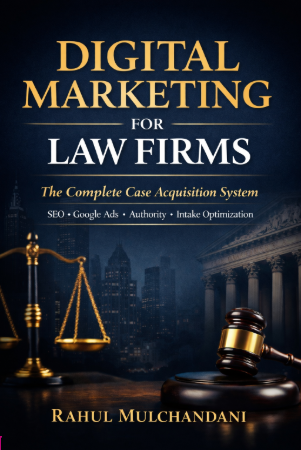
Author of "Digital Marketing For Lawyers" Book
Written by: Rahul Mulchandani
Founder, Digital Marketing Strategist and Author of "Digital Marketing For Lawyers" Book
Table of Contents
Construction law is one of the most specialized areas of legal practice, involving disputes over contracts, construction defects, payment issues, delays, mechanic’s liens, and complex commercial litigation. Because many construction-related disputes involve substantial financial exposure, potential clients often seek legal representation immediately after a problem arises. This creates a significant opportunity for law firms using Construction Law PPC.
Analyze this Construction Law PPC for Lawyers content with AI tools:
ChatGPT Perplexity Grok Google AI ClaudeConstruction Law PPC (Pay-Per-Click advertising) enables firms to place targeted advertisements in front of contractors, subcontractors, developers, property owners, architects, and other industry professionals precisely when they are actively searching for legal help. Unlike SEO, which may take months to generate results, PPC can begin delivering qualified leads within days.
However, legal advertising is highly competitive. Poorly structured campaigns frequently waste thousands of dollars each month on irrelevant clicks and unqualified inquiries. Successful Construction Law PPC campaigns require precise targeting, strategic campaign architecture, persuasive ad copy, and highly optimized landing pages.
This guide explains how construction lawyer PPC works, why it matters, and how law firms can build campaigns that consistently generate profitable cases. Many construction law firms also partner with a law firm seo agency to strengthen organic visibility, reduce dependence on paid advertising, and create a sustainable pipeline of qualified construction-related leads.
What Is Construction Law PPC?
Construction Law PPC refers to paid advertising campaigns designed specifically to generate leads for attorneys handling construction-related legal matters. Most campaigns are run through platforms such as Google Ads, Microsoft Advertising, and, in some cases, LinkedIn Ads.
Unlike consumer-focused practice areas such as personal injury, construction law campaigns frequently target business decision-makers. Prospective clients may include:
- General contractors
- Subcontractors
- Developers
- Property owners
- Architects
- Engineers
- Construction companies
- Material suppliers
- Surety companies
Common legal services promoted through Construction Law PPC include:
- Construction contract disputes
- Mechanic’s liens
- Construction defect litigation
- Delay and disruption claims
- Payment disputes
- Construction arbitration
- Bond claims
- Bid protests
- Contractor licensing disputes
- Commercial construction litigation
Because these cases often involve significant damages or contract values, a single retained matter can produce substantial revenue. This allows firms to justify higher advertising costs compared to many other legal niches.
Google’s Search Quality Evaluator Guidelines emphasize expertise, authority, and trustworthiness for legal websites. Consequently, PPC landing pages should clearly demonstrate attorney experience, industry knowledge, representative cases, and professional credentials.
Why PPC Matters for Construction Law Firms
Construction disputes are usually urgent. Contractors facing unpaid invoices, developers dealing with defect claims, or owners confronting project delays often need immediate legal advice.
When these individuals search online, they typically use high-intent phrases such as:
“construction dispute lawyer near me”
“mechanic lien attorney”
“construction defect lawyer”
“construction arbitration attorney”
“construction contract dispute lawyer”
Appearing at the top of search results during these moments can significantly increase case acquisition opportunities.
PPC Captures High-Intent Searches
One of PPC’s greatest strengths is its ability to capture prospects at the exact moment they need legal assistance.
Consider the following examples:
| Search Query | User Intent |
|---|---|
| What is a mechanic's lien? | Informational |
| Construction lawyer | Moderate |
| Construction dispute attorney | High |
| Construction defect lawyer near me | Very High |
| Construction litigation consultation | Extremely High |
Experienced legal marketers prioritize high-intent keywords because these searches generally produce stronger conversion rates and higher-quality leads.
PPC Generates Leads Faster Than SEO
Search engine optimization remains essential for long-term growth, but competitive construction law markets can take many months to achieve first-page rankings.
PPC offers immediate visibility.
Many firms use paid advertising to:
Launch new offices.
Expand into additional geographic markets.
Generate cases while SEO campaigns mature.
Increase market share in competitive cities.
Supplement referral-based business development.
Geographic Targeting Creates Efficiency
Google Ads allows construction law firms to target highly specific geographic areas.
Examples include:
Individual cities
Counties
ZIP codes
Radius targeting
Statewide campaigns
Multi-state service areas
For example, a Texas construction law firm may create separate campaigns for Houston, Dallas, Austin, and San Antonio. Each campaign can contain city-specific messaging and dedicated landing pages, increasing both relevance and conversion rates.
Construction Law PPC Supports Larger Case Values
Many construction disputes involve substantial financial stakes. Contract disputes, construction defects, and delay claims can involve hundreds of thousands—or even millions—of dollars.
Because average case values are often significantly higher than consumer legal matters, firms can tolerate higher acquisition costs while still achieving strong return on investment.
This is why experienced legal advertisers frequently focus on cost per retained client rather than cost per click alone.
How Construction Law PPC Works
Understanding the PPC process helps law firms structure campaigns more effectively.
The typical journey follows several stages.
Step 1: A Potential Client Searches Google
A contractor or developer searches for legal assistance using terms such as:
“construction contract attorney Chicago”
or
“mechanic lien lawyer near me”
These searches indicate active legal intent.
Step 2: Google Conducts an Ad Auction
Google evaluates all advertisers competing for the search query.
Ad rankings are determined by several factors, including:
Maximum bid amount
Quality Score
Expected click-through rate (CTR)
Ad relevance
Landing page experience
Use of ad assets
Google does not simply award the top position to the highest bidder. Highly relevant ads often outperform competitors with larger budgets.
Step 3: The Advertisement Appears
If the campaign meets Google’s auction requirements, the firm’s advertisement appears above organic search results.
Ads may also include extensions such as:
Phone numbers
Office locations
Practice area links
Additional callouts
Structured snippets
These assets frequently improve click-through rates.
Step 4: The User Clicks the Ad
The prospective client clicks the advertisement and lands on a dedicated practice-area page.
Best practice is to direct users to highly relevant landing pages rather than a generic homepage.
For example:
A search for “construction defect attorney” should direct visitors to a construction defect page, not the firm’s main website homepage.
Step 5: The Visitor Converts
Conversions typically include:
Phone calls
Contact form submissions
Live chat conversations
Consultation requests
Online appointment scheduling
Conversion tracking should be configured using Google Tag Manager, Google Analytics 4, and Google Ads conversion actions.
Step 6: Intake Qualifies the Lead
Many firms mistakenly assume PPC failed when, in reality, intake processes failed.
Construction law prospects often contact multiple firms simultaneously. Response speed directly influences retention rates.
Best practices include:
Answering calls live whenever possible.
Returning missed calls within five minutes.
Recording inbound calls for quality review.
Using CRM automation to track follow-up.
Implementing online scheduling tools.
Popular legal intake platforms include Clio Grow, Lawmatics, Litify, Filevine, and Lead Docket.
Get More Clients for Your Law Firm
Stop losing potential cases to competitors. Let’s build a strategy that brings you consistent, high-quality leads.
Keyword Research and Search Intent Strategy
Keyword research is the foundation of every successful Construction Law PPC campaign. Even highly persuasive advertisements and professionally designed landing pages will fail if campaigns target the wrong search terms.
Construction law is a niche practice area with highly specialized terminology. Prospective clients often search using specific legal phrases tied to the exact dispute they are experiencing. Firms that align campaigns with these search behaviors typically achieve better conversion rates, stronger Quality Scores, and lower cost per acquisition.
Understanding Search Intent
Search intent determines how likely a user is to become a client.
Construction law searches generally fall into three categories:
Informational Intent
Users are researching a legal issue but may not yet be ready to hire an attorney.
Examples include:
What is a mechanic’s lien?
How does construction arbitration work?
Construction contract dispute process
Construction defect statute of limitations
These keywords are valuable for SEO and remarketing but often produce lower immediate PPC conversion rates.
Commercial Investigation Intent
Searchers are actively evaluating legal options.
Examples include:
Best construction lawyer in Dallas
Top construction litigation attorney
Construction dispute law firm reviews
These prospects are typically comparing firms and may convert after reviewing multiple websites.
Transactional Intent
Transactional searches indicate immediate hiring intent and should receive the highest budget allocation.
Examples include:
Construction lawyer near me
Construction dispute attorney
Mechanic lien lawyer
Construction defect attorney consultation
Contractor dispute lawyer
Experienced PPC managers prioritize transactional terms because they consistently generate qualified leads.
Core Construction Law Keywords
High-performing campaigns usually focus on service-specific keyword clusters.
Examples include:
Construction Litigation
construction litigation attorney
construction litigation lawyer
construction dispute attorney
commercial construction litigation lawyer
Construction Contract Disputes
construction contract lawyer
breach of construction contract attorney
construction contract dispute lawyer
Mechanic’s Liens
mechanic lien attorney
mechanic’s lien lawyer
file mechanic lien attorney
construction lien lawyer
Construction Defects
construction defect attorney
defective construction lawyer
building defect lawyer
Payment and Collection Disputes
contractor payment dispute attorney
unpaid construction invoice lawyer
construction collection attorney
Arbitration and Mediation
construction arbitration attorney
construction mediation lawyer
construction ADR attorney
Segmenting campaigns by practice area allows firms to create highly relevant advertisements and landing pages, improving Quality Score and conversion rates.
Long-Tail Keywords Generate Higher Quality Leads
Many firms focus exclusively on broad, high-volume keywords.
This is a mistake.
Long-tail keywords often produce fewer clicks but significantly higher conversion rates because search intent is clearer.
Examples include:
attorney for unpaid construction invoices
lawyer for subcontractor payment dispute
commercial construction arbitration attorney
lawyer for construction delay claims
construction defect attorney for developers
Long-tail searches frequently indicate that the prospect has already identified the legal problem and is actively seeking representation.
Recommended Keyword Research Tools
Experienced legal marketers rarely rely on a single tool.
The following platforms provide valuable insights:
Google Ads Keyword Planner
Google’s Keyword Planner remains indispensable because it provides:
Search volume estimates
Cost-per-click forecasts
Geographic demand data
Historical trends
Keyword refinement filters
The “Refine Keywords” feature is particularly useful for isolating commercial legal intent.
Semrush Keyword Magic Tool
Semrush helps identify:
Related legal terms
Question-based keywords
Competitor rankings
SERP features
Keyword difficulty
The Keyword Gap report is especially useful for identifying opportunities competitors are already targeting.
Ahrefs Keywords Explorer
Ahrefs provides:
Traffic potential estimates
Parent topics
Click metrics
SERP analysis
Competitor keyword visibility
SpyFu
SpyFu allows firms to review:
Competitor ad copy
Historical PPC campaigns
Estimated budgets
Competitor keyword portfolios
This competitive intelligence often reveals profitable opportunities.
Negative Keywords Are Essential
Negative keywords prevent ads from appearing for irrelevant searches.
Failure to implement negatives is one of the most common causes of wasted legal advertising budgets.
Common negative keywords for Construction Law PPC include:
jobs
salary
careers
school
classes
certification
exam
training
template
free
DIY
forms
construction company
contractors near me
building services
Campaign managers should review the Google Ads Search Terms Report weekly to identify additional negatives.
For example, if ads appear for searches such as “construction project manager jobs,” those terms should immediately be excluded.
Building High-Converting Construction Law PPC Campaigns
Campaign structure directly impacts performance.
Well-organized campaigns produce:
Higher Quality Scores
Better click-through rates
Lower cost per click
Improved conversion rates
Poor campaign architecture almost always leads to wasted spend.
Recommended Campaign Structure
Construction law campaigns should be organized by legal service.
A typical structure might include:
Campaign 1: Construction Litigation
Ad Groups:
construction litigation attorney
construction litigation lawyer
construction dispute attorney
Campaign 2: Construction Contract Disputes
Ad Groups:
construction contract lawyer
contract dispute attorney
breach of contract attorney
Campaign 3: Mechanic’s Liens
Ad Groups:
mechanic lien attorney
mechanic lien lawyer
file mechanic lien attorney
Campaign 4: Construction Defects
Ad Groups:
construction defect attorney
building defect lawyer
defective construction lawyer
Campaign 5: Arbitration and Mediation
Ad Groups:
construction arbitration attorney
construction mediation lawyer
This structure ensures maximum keyword relevance between search query, advertisement, and landing page.
Choosing Keyword Match Types
Google Ads offers several match types.
Most legal advertisers use a combination rather than relying on a single option.
Exact Match
Exact match provides maximum control.
Example:
[construction dispute attorney]
Benefits:
Highest relevance
Better lead quality
Reduced wasted spend
Phrase Match
Phrase match offers moderate flexibility.
Example:
“construction dispute attorney”
Benefits:
Expanded reach
Strong intent preservation
Broad Match
Broad match provides scale but requires careful monitoring.
Google increasingly recommends broad match paired with Smart Bidding.
Example:
construction dispute attorney
Broad match should only be used when:
Conversion tracking is accurate.
Negative keyword lists are extensive.
Sufficient conversion data exists.
Writing Effective Construction Lawyer Ads
Construction law prospects want confidence, experience, and industry understanding.
Generic legal advertisements rarely perform well.
Strong Headline Examples
Construction Dispute Attorneys
Experienced Construction Litigation Lawyers
Mechanic Lien Lawyers Near You
Protect Your Construction Business
Construction Contract Dispute Counsel
Effective Description Copy
Ad descriptions should emphasize:
Years of experience
Industry-specific knowledge
Commercial dispute experience
Consultation availability
Geographic service area
Example:
“Representing contractors, developers, and property owners in complex construction disputes. Schedule a confidential consultation today.”
Use Ad Assets Extensively
Google Ads rewards advertisers that fully utilize ad assets.
Recommended assets include:
Sitelink Extensions
Examples:
Construction Defects
Contract Disputes
Mechanic’s Liens
Case Results
Attorney Profiles
Callout Extensions
Examples:
Free Consultation
Trial Experience
Commercial Litigation Focus
Decades of Experience
Structured Snippets
Suggested headers:
Services
Practice Areas
Legal Services
Example values:
Construction Litigation, Arbitration, Mechanic’s Liens, Contract Disputes
Call Extensions
Construction law prospects frequently prefer immediate conversations.
Phone call assets allow users to contact the firm directly from search results.
Location Assets
Connecting Google Business Profile with Google Ads increases credibility and improves local visibility.
Quality Score Optimization
Quality Score remains one of the most important Google Ads metrics.
Google evaluates:
Expected Click-Through Rate
Ad Relevance
Landing Page Experience
A Quality Score of 7 or higher is generally considered healthy for legal campaigns.
Improving Quality Score can substantially reduce cost per click.
Methods include:
Tight keyword grouping
Highly relevant ad copy
Dedicated landing pages
Fast page speed
Strong mobile experience
Consistent messaging between ads and landing pages
Many successful construction law campaigns maintain Quality Scores between 7 and 10 for their highest-value keywords.
Landing Pages and Conversion Optimization for Construction Law PPC
Generating clicks is only half the battle. The true measure of a successful Construction Law PPC campaign is whether those clicks become consultations and retained clients.
Many law firms spend thousands of dollars driving traffic to their websites, only to send visitors to generic homepage content. This approach significantly reduces conversion rates and increases cost per acquisition.
Dedicated landing pages consistently outperform general website pages because they align closely with the user’s search intent.
Why Dedicated Landing Pages Matter
Google evaluates landing page experience as part of Quality Score. Better landing page experiences often lead to:
Lower cost per click
Higher ad rankings
Improved conversion rates
Better user engagement metrics
For example, a searcher looking for a “construction defect attorney” expects to land on a page specifically discussing construction defects—not a homepage listing every practice area the firm offers.
Strong message match between keywords, advertisements, and landing pages is one of the most effective PPC optimization techniques.
Essential Elements of High-Converting Construction Law Landing Pages
Clear Above-the-Fold Messaging
Visitors should immediately understand:
What legal services the firm provides.
Who the firm represents.
Where the firm practices.
What action the visitor should take next.
Example headline:
“Representing Contractors, Developers, and Property Owners in Complex Construction Disputes Throughout Texas.”
The headline should closely reflect the keyword and ad copy that brought the visitor to the page.
Prominent Calls to Action
Every landing page should contain clear and repeated calls to action.
Examples include:
Schedule a Consultation
Speak With a Construction Lawyer Today
Request a Confidential Case Evaluation
Effective CTA placement includes:
Above the fold
Mid-page
Bottom of page
Sticky mobile buttons
Law firms often experience significant conversion increases by adding persistent click-to-call buttons for mobile users.
Attorney Credibility and Trust Signals
Construction disputes frequently involve substantial financial exposure. Prospective clients want reassurance that the attorney understands both construction law and complex commercial matters.
Important trust elements include:
Attorney biographies
Years of experience
State bar memberships
Industry associations
Professional awards
Client testimonials
Representative case results
Trial experience
Examples of valuable trust signals:
Board certification
Super Lawyers recognition
AV Preeminent ratings
Construction industry affiliations
Speaking engagements
Published legal articles
Google’s Helpful Content guidance emphasizes demonstrating first-hand expertise. Detailed attorney credentials help satisfy these expectations.
Use Social Proof Strategically
Construction industry clients frequently evaluate multiple firms before scheduling consultations.
Testimonials from:
Contractors
Developers
Property owners
Commercial clients
can significantly improve conversion rates.
Case summaries describing resolved construction disputes often perform exceptionally well.
Example:
“Successfully represented a general contractor in a $2.3 million payment dispute involving a commercial development project.”
Simplify Contact Forms
Long intake forms create friction.
Most legal landing pages perform best with forms requesting:
Name
Email
Phone number
Brief case description
Avoid requesting excessive information during initial contact.
Additional case details can be collected during intake.
Mobile Optimization Is No Longer Optional
Google now primarily uses mobile-first indexing.
Furthermore, a majority of legal PPC traffic originates from smartphones.
Construction law landing pages should:
Load quickly.
Display clearly on smaller screens.
Use large tap targets.
Include click-to-call functionality.
Minimize scrolling friction.
Tools for testing mobile usability include:
Google PageSpeed Insights
Lighthouse
Google Search Console Core Web Vitals report
Core Web Vitals and PPC Performance
Although PPC advertisers sometimes overlook technical SEO, page performance directly influences both user experience and Quality Score.
Google’s Core Web Vitals benchmarks include:
| Metric | Recommended Target |
|---|---|
| Largest Contentful Paint (LCP) | Under 2.5 seconds |
| Interaction to Next Paint (INP) | Under 200 milliseconds |
| Cumulative Layout Shift (CLS) | Under 0.1 |
Slow pages frequently experience:
Higher bounce rates
Lower conversion rates
Increased advertising costs
Construction law firms should regularly audit landing pages using PageSpeed Insights and Chrome User Experience reports.
Live Chat and Intake Technology
Modern legal websites increasingly use intake technology to improve lead capture.
Popular tools include:
Smith.ai
LiveChat
Intercom
Qualified
Clio Grow chat integrations
Live chat can be especially effective outside normal business hours.
However, chat systems should supplement—not replace—human intake.
Construction law prospects often prefer speaking directly with an attorney or knowledgeable intake specialist.
Budgeting and Bidding Strategies for Construction Law PPC
Construction law keywords can be expensive.
However, because many construction disputes involve significant revenue opportunities, high acquisition costs may still generate substantial returns.
Typical Cost Per Click Ranges
Average CPCs vary by geography, competition, and practice area.
Typical ranges include:
| Keyword Category | Approximate CPC Range |
|---|---|
| Construction Lawyer | $20 – $80 |
| Construction Litigation Attorney | $35 – $120 |
| Mechanic Lien Attorney | $30 – $90 |
| Construction Defect Lawyer | $40 – $100 |
| Construction Arbitration Attorney | $25 – $85 |
Major metropolitan markets frequently exceed these estimates.
Cities such as New York, Los Angeles, Chicago, and Houston generally command higher advertising costs.
Determining an Appropriate PPC Budget
Budget decisions should be based on:
Revenue goals
Average case value
Desired lead volume
Market competition
Intake capacity
General starting points include:
Small Markets
Monthly budget:
$2,500–$5,000
Mid-Sized Metropolitan Areas
Monthly budget:
$5,000–$12,000
Major Competitive Markets
Monthly budget:
$15,000–$50,000+
Rather than focusing exclusively on monthly spend, firms should calculate acceptable acquisition costs based on average retained case value.
Example:
If the average construction litigation matter generates $40,000 in fees, paying $1,500 to acquire a qualified client may represent an excellent investment.
Recommended Google Ads Bidding Strategies
Google Ads offers multiple automated and manual bidding options.
Manual CPC
Manual bidding provides complete control.
Advantages:
Greater transparency
Useful during campaign launches
Strong keyword-level control
Disadvantages:
Time intensive
Limited automation
Many experienced advertisers begin new campaigns using Manual CPC while gathering conversion data.
Maximize Conversions
This automated strategy instructs Google to generate the greatest number of conversions possible within the available budget.
Best suited for:
Accounts with reliable conversion tracking
Moderate to high conversion volume
Target CPA
Target Cost Per Acquisition bidding allows firms to define an acceptable acquisition cost.
Google then optimizes bids toward achieving that goal.
Most legal advertisers wait until campaigns accumulate sufficient historical conversion data before enabling Target CPA.
Google generally recommends approximately 30 conversions within a 30-day period before aggressively utilizing automated bidding strategies.
Target ROAS
Target Return on Ad Spend is less common in legal advertising because law firms often struggle to assign precise revenue values to leads.
However, firms importing signed-case values into Google Ads can successfully utilize this strategy.
Conversion Tracking and Attribution
Accurate tracking is essential.
Without conversion tracking, campaign optimization becomes largely guesswork.
Every Construction Law PPC campaign should track:
Form submissions
Phone calls
Click-to-call interactions
Live chat conversations
Consultation requests
Appointment bookings
Essential Tracking Tools
Google Tag Manager
Google Tag Manager simplifies deployment and management of tracking scripts without requiring constant developer involvement.
Google Analytics 4
GA4 provides valuable insight into:
User behavior
Engagement metrics
Conversion paths
Traffic quality
CallRail
CallRail remains one of the most widely used call-tracking platforms in legal marketing.
Features include:
Dynamic number insertion
Call recording
Conversation intelligence
Lead source attribution
CRM Integration
Integrating advertising campaigns with legal CRMs enables closed-loop reporting.
Popular platforms include:
Lawmatics
Clio Grow
Litify
Filevine
Lead Docket
Offline Conversion Import
Many legal advertisers optimize campaigns based solely on lead volume.
This approach is flawed.
Not every lead becomes a retained client.
Google Ads Offline Conversion Import allows firms to upload signed-case data directly into the advertising platform.
The system can then optimize campaigns toward prospects most likely to become paying clients rather than simply generating inquiries.
This represents one of the most powerful optimization techniques available to sophisticated legal advertisers.
Key Performance Metrics to Monitor
Successful Construction Law PPC management requires ongoing measurement.
Important metrics include:
| Metric | Recommended Benchmark |
|---|---|
| Click-Through Rate (CTR) | 5%–15% |
| Conversion Rate | 8%–20% |
| Quality Score | 7+ |
| Impression Share | 60%+ |
| Call Answer Rate | Above 90% |
| Cost Per Lead | Market dependent |
However, vanity metrics should never drive decision-making.
The most important business metrics include:
- Cost per qualified consultation.
- Cost per retained client.
- Revenue generated from PPC.
- Return on ad spend.
- Signed case volume.
Ultimately, the purpose of Construction Law PPC is not generating clicks—it is generating profitable legal matters.
Common Mistakes Construction Law Firms Make With PPC
Even firms investing significant advertising budgets often underperform because of avoidable strategic mistakes. Construction Law PPC requires continuous optimization, accurate tracking, and disciplined campaign management. The following mistakes are among the most common.
Targeting Broad, Irrelevant Keywords
Many firms launch campaigns targeting generic terms such as:
lawyer
attorney
construction
litigation lawyer
While these terms may generate high traffic volumes, they frequently produce poor-quality leads and wasted ad spend.
For example, broad construction-related searches may trigger ads for:
construction jobs
contractor training programs
construction companies
building services
licensing classes
Instead, focus on highly relevant, practice-area-specific keywords with strong commercial intent.
Examples include:
construction contract dispute attorney
mechanic lien lawyer
construction defect attorney
construction arbitration lawyer
Review the Google Ads Search Terms Report weekly and continuously expand negative keyword lists.
Sending Paid Traffic to the Homepage
A generic homepage rarely aligns with user intent.
Consider a prospect searching for “mechanic lien attorney.” If the advertisement sends that user to a homepage discussing ten different practice areas, the visitor must search for relevant information independently.
This creates friction and increases bounce rates.
Dedicated landing pages should be created for each major service area, including:
Construction defects
Contract disputes
Mechanic’s liens
Arbitration
Payment disputes
Contractor representation
Message consistency between keyword, advertisement, and landing page typically improves both Quality Score and conversion rates.
Ignoring Mobile User Experience
Google reports that a substantial percentage of legal searches occur on mobile devices.
Construction executives, contractors, and developers frequently search for attorneys while traveling, attending meetings, or visiting job sites.
Poor mobile experiences commonly include:
Slow loading pages
Tiny text
Difficult forms
Missing click-to-call buttons
Intrusive pop-ups
Every landing page should be thoroughly tested on multiple mobile devices.
Use:
Google Mobile-Friendly Test
PageSpeed Insights
Lighthouse
to identify usability issues.
Failing to Track Qualified Leads
Many law firms optimize campaigns solely around lead volume.
This often produces misleading conclusions.
Ten unqualified inquiries are less valuable than one signed construction litigation matter.
Sophisticated advertisers track:
Lead → Consultation → Qualified Opportunity → Signed Client → Revenue
Legal CRMs such as Lawmatics, Litify, and Clio Grow make this level of reporting possible.
Closed-loop attribution helps firms identify which campaigns produce actual revenue rather than simply generating inquiries.
Poor Intake Processes
Campaign performance often suffers because of weak intake rather than ineffective advertising.
Common intake failures include:
Missed phone calls
Delayed follow-up
Lack of lead qualification
Failure to schedule consultations
Inconsistent communication
Research across legal marketing consistently shows that response speed significantly impacts retention rates.
Best practices include:
Answer calls live whenever possible.
Return missed calls within five minutes.
Use automated follow-up workflows.
Record calls for quality assurance.
Monitor intake conversion rates.
Even modest improvements in intake efficiency can dramatically increase return on advertising spend.
Emerging Trends in Construction Lawyer PPC
Paid search continues to evolve rapidly. Law firms that adapt early frequently gain competitive advantages.
Artificial Intelligence and Smart Bidding
Google increasingly relies on machine learning to optimize campaigns.
Smart Bidding strategies such as:
Maximize Conversions
Target CPA
Target ROAS
use historical conversion data, audience signals, and contextual factors to adjust bids automatically.
However, automation is only effective when supported by accurate conversion tracking.
Firms importing offline conversion data into Google Ads often achieve superior results because Google’s algorithms learn which leads ultimately become paying clients.
First-Party Data Is Becoming Critical
Privacy regulations and browser restrictions continue to reduce the availability of third-party tracking data.
As a result, first-party data has become essential.
Construction law firms should prioritize:
CRM integration
Enhanced Conversions
Consent Mode v2 implementation
Server-side tagging
Customer Match audiences
Google Ads Enhanced Conversions helps improve attribution accuracy by securely using first-party customer information.
Performance Max Campaigns
Performance Max campaigns provide access to Google’s entire advertising ecosystem, including:
Search
Display
YouTube
Gmail
Discover
Maps
While Performance Max can support brand visibility and remarketing efforts, many experienced legal advertisers continue to prioritize traditional search campaigns for high-intent keywords.
Search campaigns typically provide:
Greater control
Better transparency
More precise keyword targeting
Performance Max generally performs best when supplementing—not replacing—core search campaigns.
AI-Assisted Intake and Lead Qualification
Artificial intelligence is increasingly influencing legal intake operations.
Modern platforms now offer:
AI chat assistants
Automated appointment scheduling
Call transcription
Conversation intelligence
Lead scoring
Examples include:
Smith.ai
CallRail Conversation Intelligence
Clio Duo
Lawmatics AI capabilities
These technologies can improve responsiveness while reducing administrative workload.
Nevertheless, high-value construction disputes often require direct attorney involvement during the consultation process.
Video Advertising and Remarketing
Construction law matters are frequently complex and high value.
Prospective clients often conduct extensive research before hiring counsel.
Video remarketing campaigns allow firms to remain visible throughout this decision-making process.
Examples include:
Attorney introductions
Explanations of mechanic’s liens
Construction defect case overviews
Contract dispute guidance
Arbitration process videos
YouTube campaigns combined with remarketing audiences can nurture prospects who previously visited the firm’s website but did not initially convert.
Next Steps
Begin by evaluating your current PPC infrastructure. Review campaign organization, search terms, conversion tracking, and landing page performance. Ensure each major construction law service has dedicated campaigns, highly relevant advertisements, and purpose-built landing pages. Implement comprehensive conversion tracking using Google Tag Manager, Google Analytics 4, and call tracking software. Finally, integrate your CRM with Google Ads so campaign optimization is based on retained clients and revenue rather than lead volume alone. Firms that consistently refine targeting, improve intake processes, and leverage first-party data are best positioned to maximize long-term PPC profitability.
Frequently Asked Questions
What is Construction Law PPC?
Construction Law PPC is paid online advertising that helps construction law firms appear in search results when potential clients look for legal services related to construction disputes, defects, contracts, or mechanic’s liens.
How much does Construction Law PPC cost?
Costs vary by market and competition, but construction law keywords typically range from $20 to $120 per click. Monthly budgets often start at $2,500 and can exceed $20,000 in competitive markets.
Is Google Ads effective for construction law firms?
Yes. Google Ads is highly effective because it targets users actively searching for construction attorneys, resulting in high-intent leads and faster case acquisition.
What keywords should construction lawyers target?
Firms should target keywords such as “construction lawyer,” “construction dispute attorney,” “mechanic lien attorney,” and “construction defect lawyer.”
Should construction law firms use dedicated landing pages?
Absolutely. Dedicated landing pages improve ad relevance, Quality Score, and conversion rates by matching the user’s specific search intent.
How important are negative keywords in Construction Law PPC?
Negative keywords are critical because they prevent ads from appearing for irrelevant searches such as jobs, training courses, or construction services.
What is a good conversion rate for Construction Law PPC?
Well-optimized legal PPC campaigns typically achieve conversion rates between 8% and 20%, depending on market conditions and intake quality.
Which bidding strategy works best for Construction Law PPC?
Most firms begin with Manual CPC or Maximize Conversions and transition to Target CPA once sufficient conversion data has been collected.
How long does it take to see results from Construction Law PPC?
Most campaigns begin generating leads within days, while full optimization and profitability typically occur within 30 to 90 days.
What metrics should construction law firms track?
Law firms should monitor cost per lead, conversion rate, Quality Score, cost per retained client, return on ad spend, and signed case volume.
🚀 Get Free Consultation
Our Latest Posts
-
 How We Generate Signed Cases for Lawyers: 7 Proven Strategies That Deliver Real Results
 -
 Case Study: Multi-City Personal Injury SEO Success – New Mexico
 -
 Case Study: Personal Injury Lawyer in Texas
 -
 Lawyer SEO: The Complete Guide to Optimizing Law Firm Websites for Clients and Rankings
 -
 Why Lawyer Switch to Us
Updated on
Get In Touch with Us!
other way to contact us
Office Email
rahul@webkeydigital.com
Office Phone
+1 503-303-8639
Office Location
8 The Green STE A, Dover, Kent , Delaware 19901