
Civil Rights Lawyer SEO
The Ultimate Guide for 2026

Written by: Rahul Mulchandani
Founder, Digital Marketing Strategist and
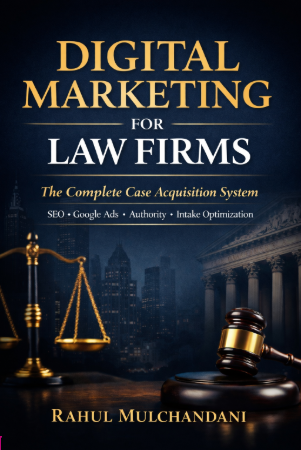
Author of "Digital Marketing For Lawyers" Book
Written by: Rahul Mulchandani
Founder, Digital Marketing Strategist and Author of "Digital Marketing For Lawyers" Book
Table of Contents
Civil rights lawyer SEO helps attorneys who fight for justice in discrimination, police misconduct, and constitutional rights cases get found by people who need them most. When someone searches “civil rights lawyer near me” or “police brutality attorney,” your firm appears at the top of Google instead of your competitors. Many civil rights law firms work with a law firm seo agency to improve search visibility, strengthen authority in civil rights matters, and attract more qualified enquiries from individuals seeking legal representation.
Analyze this Civil rights lawyer SEO content with AI tools:
ChatGPT Perplexity Grok Google AI ClaudeCivil rights lawyer SEO combines traditional search optimization with legal-specific tactics because civil rights cases fall under Google’s strict YMYL (Your Money or Your Life) guidelines. Strong E-E-A-T signals — experience, expertise, authoritativeness, and trustworthiness — matter more here than in any other practice area.
Civil rights lawyer SEO delivers the highest ROI of any marketing channel for this niche. Organic traffic converts at 14.6% versus 3.75% for paid ads, and top-ranking firms sign 5–25 new cases per month from search alone.
Civil rights lawyer SEO works differently from general legal SEO because clients search during crises — after an arrest, job loss, or housing denial. Your strategy must speak directly to their urgent pain while staying 100% compliant with state bar advertising rules.
Civil rights lawyer SEO builds long-term authority that paid ads cannot match. Once you rank for core terms like “employment discrimination lawyer” or “housing discrimination attorney,” the traffic and leads keep coming year after year.
Civil rights lawyer SEO also prepares your firm for 2026 realities: Google’s AI Overviews, generative engine optimization (GEO), and voice search. Firms that ignore these changes lose ground fast.
In this complete guide you will learn every step, tool, cost factor, and mistake to avoid so your civil rights practice dominates local and organic search in 2026 and beyond.
What Is Civil Rights Lawyer SEO?
Civil rights lawyer SEO is the specialized process of optimizing a law firm’s website and online presence so people searching for help with discrimination, police misconduct, wrongful termination, housing bias, or ADA violations find your practice first. It targets both broad terms like “civil rights lawyer” and hyper-specific long-tail phrases such as “Section 1983 police brutality attorney in [city].”
Civil rights lawyer SEO differs from general lawyer SEO because the topics are emotionally charged and legally complex. Google applies extra scrutiny under YMYL rules, demanding clear proof of your real experience through case results, client stories (anonymized), bar admissions, and media mentions.
Civil rights lawyer SEO also includes local optimization because most clients want an attorney “near me” who knows their county’s courts, police departments, and EEOC filing procedures.
Why Civil Rights Lawyer SEO Matters More Than Ever in 2026
Civil rights lawyer SEO matters because the EEOC received 88,531 new discrimination charges in FY 2024 — a 9% jump from the prior year — and retaliation claims still top the list at 47.8% of filings. Every one of those victims starts their search on Google.
Civil rights lawyer SEO matters because organic search drives 53% of all law firm website traffic, and top organic positions receive 8.5 times more clicks than paid ads.
Civil rights lawyer SEO matters because AI tools like Google’s Search Generative Experience and ChatGPT now summarize answers and cite sources. Firms that optimize for generative engine optimization (GEO) get quoted by AI and win clients before traditional search even loads.
Civil rights lawyer SEO matters for ethical reasons too. State bar rules allow truthful advertising, but only SEO done right builds genuine trust instead of misleading claims.
Keyword Research for Civil Rights Lawyer SEO
Civil rights lawyer SEO success starts with the right keywords. Use tools like Google Keyword Planner, Ahrefs, or SEMrush to find terms with decent volume and low-to-medium difficulty.
Primary keywords include:
- civil rights lawyer near me
- civil rights attorney
- employment discrimination lawyer
- police brutality attorney
Long-tail gold includes:
- “racial discrimination lawyer in [city]”
- “housing discrimination attorney free consultation”
- “ADA violation lawyer [state]”
- “wrongful termination civil rights claim”
Create content clusters around major practice areas: employment, housing, education, voting rights, and law enforcement accountability. One pillar page on “Your Rights Under Title VII” links to 8–10 supporting blog posts.
Get More Clients for Your Law Firm
Stop losing potential cases to competitors. Let’s build a strategy that brings you consistent, high-quality leads.
On-Page Optimization Tactics That Win
Civil rights lawyer SEO requires every page to follow on-page best practices while sounding like a compassionate expert, not a robot.
Write title tags under 60 characters: “Civil Rights Lawyer in [City] | Discrimination Attorney”
Meta descriptions must include the main benefit and a call to action within 155 characters.
Use H1 for the main service, H2s for subtopics, and schema markup (Attorney, LegalService, FAQPage, and LocalBusiness) so Google and AI understand exactly what you do.
Add internal links from every blog post to your core service pages and include clear calls-to-action like “Schedule a free consultation today.”
Content Strategy and Topical Authority for Civil Rights Cases
Civil rights lawyer SEO demands helpful, original content that educates without crossing into legal advice. Publish 2,000+ word guides on topics like “What to Do After Police Misconduct” or “How to File an EEOC Charge Step by Step.”
Civil rights lawyer SEO content must demonstrate real expertise: reference specific statutes (42 U.S.C. § 1983, Civil Rights Act of 1964, ADA), cite recent court cases, and include anonymized client success stories with outcomes.
Update older posts every 6 months with new EEOC data or landmark rulings to keep topical authority high. Google rewards fresh, authoritative civil rights content in 2026.
Local SEO and Google Business Profile Mastery
Civil rights lawyer SEO lives and dies by local search. Claim and fully optimize your Google Business Profile with every practice area, service area (even if you accept cases statewide), weekly posts, and 50+ genuine reviews.
Civil rights lawyer SEO local tactics include building consistent NAP (name, address, phone) citations on legal directories like Justia, Avvo, and state bar sites plus city-specific pages for each county you serve.
Encourage reviews after every consultation or case resolution. Respond to every review publicly to show you care.
Technical SEO Essentials for Law Firm Sites
Civil rights lawyer SEO fails without a fast, secure, crawlable website. Aim for under 3-second load times using Core Web Vitals.
Civil rights lawyer SEO technical checklist:
- Mobile-first responsive design
- HTTPS everywhere
- XML sitemap submitted to Google Search Console
- Proper robots.txt
- Structured data markup on every attorney bio and service page
- No duplicate content across location pages
Fix crawl errors monthly and monitor for broken links that hurt user experience.
Link Building and E-E-A-T Building the Right Way
Civil rights lawyer SEO link building focuses on authoritative sources: local news outlets covering your cases, bar association profiles, ACLU chapters, and guest posts on respected legal blogs.
Civil rights lawyer SEO E-E-A-T comes from author bios with real credentials, “About the Firm” pages listing verdicts and settlements, and media mentions (even better if you earn them through PR).
Never buy links — Google penalties can destroy months of work.
Step-by-Step Civil Rights Lawyer SEO Implementation Plan
Civil rights lawyer SEO follows this exact 6-month rollout that works for solo practices and multi-attorney firms alike.
Month 1: Technical audit, keyword research, and Google Business Profile optimization.
Month 2–3: On-page fixes and creation of 10 core service pages plus 8 blog posts.
Month 4: Local citation building and review campaign launch.
Month 5: Content cluster expansion and outreach for 5–10 high-quality links.
Month 6: Analytics setup, performance review, and first round of content updates.
Repeat months 4–6 forever for continuous growth.
How Much Does Civil Rights Lawyer SEO Cost in 2026?
Civil rights lawyer SEO investment ranges from $2,500 to $10,000 per month depending on market size and competition.
| Firm Size / Market | Monthly Investment | Expected Timeline to Results | Typical ROI |
|---|---|---|---|
| Solo / Small city | $2,500–$4,000 | 4–6 months | 3–5x |
| Mid-size / Medium market | $4,000–$7,000 | 6–9 months | 5–8x |
| Large firm / Major metro | $7,000–$10,000+ | 9–12 months | 8x+ |
Costs include content writing, technical work, link outreach, and reporting. Many agencies offer performance bonuses tied to new case inquiries.
Measuring Results and Tracking ROI
Civil rights lawyer SEO success shows in Google Search Console (impressions and clicks), Google Analytics (organic traffic and goal conversions), and your CRM (new consultations booked).
Track these key metrics monthly:
- Organic traffic growth
- Keyword rankings for 20–30 target terms
- Calls and form submissions from organic sources
- Cost per lead compared to Google Ads
- Map Pack positions
Use call tracking numbers to prove which searches turn into signed retainers.
Common Mistakes Civil Rights Lawyers Make with SEO
Civil rights lawyer SEO fails when firms copy generic templates instead of creating practice-area-specific pages.
Civil rights lawyer SEO suffers when attorneys ignore E-E-A-T and publish thin content that Google flags as low-quality.
Civil rights lawyer SEO collapses when firms chase black-hat links or make unrealistic outcome promises that violate bar ethics.
Civil rights lawyer SEO stalls without consistent blogging — one post per month is the minimum for real momentum.
Real-World Case Studies That Prove It Works
The Ben Crump law firm partnered with an SEO agency and saw a 1,000% increase in page rankings and a 2,000% boost in website traffic after a full site redesign and targeted content strategy focused on civil rights and high-profile cases. Leads increased dramatically for both core civil rights work and expanded practice areas.
A California civil rights firm working with a specialized agency achieved a 20% organic traffic increase in six months through on-page SEO, targeted content on police misconduct, and local citation building.
Smaller firms in mid-sized markets routinely report 5–25 new monthly cases after 9–12 months of disciplined civil rights lawyer SEO.
Emerging Trends and Future-Proofing Your Civil Rights Lawyer SEO
Civil rights lawyer SEO in late 2026 must include GEO tactics: create FAQ sections that answer exactly how AI tools phrase questions (“What should I do if police used excessive force?”).
Civil rights lawyer SEO now requires voice-search optimization with conversational long-tail phrases because more people ask Siri or Alexa for legal help.
Civil rights lawyer SEO future-proofs by publishing data-driven content tied to annual EEOC reports and major court decisions the moment they drop.
Monitor Google’s Helpful Content updates and keep every page focused on real user problems rather than keyword stuffing.
Should You Hire an Agency or Do It In-House?
Civil rights lawyer SEO agencies with legal experience understand bar rules, YMYL requirements, and the exact keywords victims use. Most firms see faster results and higher ROI by outsourcing.
If your team has a full-time digital marketer who already knows legal SEO, an in-house approach works — but expect slower initial progress and higher learning-curve costs.
Hybrid models (agency for strategy + in-house for content) often deliver the best of both worlds.
Civil rights lawyer SEO is not a one-time project. It is an ongoing system that compounds month after month. Firms that commit for at least 12 months almost always see life-changing growth in case volume and community impact.
Start today with a free Google Business Profile audit and a keyword list tailored to your city and practice focus. The clients who need your help are already searching — make sure they find you.
Frequently Asked Questions
Civil Rights Lawyer SEO: What Exactly Does It Cover?
Civil rights lawyer SEO covers every tactic that improves visibility for searches related to discrimination, police misconduct, ADA violations, voting rights, and constitutional claims. It includes keyword research, on-page optimization, local Google Business Profile work, content clusters around Title VII and Section 1983, technical fixes, ethical link building, and AI-search readiness. The goal is to rank your firm when people need urgent legal help and convert those searches into consultations and cases.
Civil Rights Lawyer SEO: How Long Until I See Results?
Most civil rights lawyers see initial ranking improvements in 3–4 months and significant lead increases by month 6–9. Competitive metro markets take 9–12 months for page-one dominance. Consistent monthly effort compounds; firms that pause after three months lose momentum. Track progress with Google Search Console impressions and organic traffic growth each month.
Civil Rights Lawyer SEO: Is Local Optimization More Important Than National?
Yes. Over 70% of civil rights searches include “near me” or a city name because clients want an attorney familiar with local courts, police departments, and filing deadlines. Master the Google Map Pack first, then expand to national terms like “police brutality attorney” once local dominance is locked in. Both layers work together for maximum case flow.
Civil Rights Lawyer SEO: What Keywords Should I Target First?
Start with high-intent local terms: “civil rights lawyer near me,” “[city] employment discrimination attorney,” “police brutality lawyer [city],” and “housing discrimination attorney [state].” Add long-tail educational phrases like “how to file an EEOC charge in [city]” and “what is a Section 1983 claim.” These lower-competition terms build quick wins and topical authority fast.
Civil Rights Lawyer SEO: How Much Should I Budget Monthly?
Expect $2,500–$4,000 per month in smaller markets and $5,000–$10,000 in competitive cities like New York, Los Angeles, or Chicago. The investment typically pays for itself within 6–9 months through new cases. Look for agencies that guarantee transparent reporting and tie bonuses to actual leads, not just rankings.
Civil Rights Lawyer SEO: Do I Need Schema Markup?
Absolutely. Attorney, LegalService, FAQPage, and LocalBusiness schema tell Google and AI systems exactly who you are, what you do, and where you practice. This markup helps you appear in rich results, AI summaries, and knowledge panels — critical in 2026 when AI answers many legal questions before users click through.
Civil Rights Lawyer SEO: Can I Do This Without Violating Bar Rules?
Yes. Stick to truthful statements about your experience, results (with disclaimers), and services. Never guarantee outcomes or use misleading claims. Publish educational content that helps people understand their rights without giving specific legal advice. Most state bars explicitly allow SEO as long as it remains honest and professional.
Civil Rights Lawyer SEO: What Role Do Reviews Play?
Reviews are massive for local pack rankings and trust signals. Aim for 50+ five-star reviews across Google, Avvo, and your site. Respond to every review publicly. Positive client stories about discrimination or police misconduct cases build powerful social proof that Google and potential clients both value highly.
Civil Rights Lawyer SEO: How Does AI Search Change the Game?
AI Overviews and tools like ChatGPT now pull answers from authoritative sites. Optimize by creating clear, structured FAQ content that directly answers common questions. Use schema so AI can easily parse your expertise. Firms that rank in traditional search and provide machine-readable content get cited by AI — driving even more traffic and authority.
Civil Rights Lawyer SEO: Should I Focus on Blogging?
Yes — blogging is the fastest way to build topical authority in civil rights topics. Publish one in-depth post per month covering new laws, recent cases, or practical guides like “Your Rights After Workplace Retaliation.” Each post links back to service pages and targets long-tail keywords that convert well.
Civil Rights Lawyer SEO: What If My Website Is Old?
An outdated site hurts rankings and conversions. In 2026 Google prioritizes fast, mobile-friendly, secure sites with strong E-E-A-T. Plan a redesign that includes proper schema, fast loading, and clear calls-to-action. Many firms see traffic double after a modern rebuild paired with ongoing SEO.
Civil Rights Lawyer SEO: How Do I Know If My Agency Is Legitimate?
Choose agencies that specialize in legal SEO, show real case studies from other civil rights or personal injury firms, provide monthly transparent reports, and understand bar ethics. Avoid anyone promising overnight results or guaranteed rankings. Request references and ask how they handle YMYL compliance and AI optimization.
🚀 Get Free Consultation
Our Latest Posts
-
 How We Generate Signed Cases for Lawyers: 7 Proven Strategies That Deliver Real Results
 -
 Case Study: Multi-City Personal Injury SEO Success – New Mexico
 -
 Case Study: Personal Injury Lawyer in Texas
 -
 Lawyer SEO: The Complete Guide to Optimizing Law Firm Websites for Clients and Rankings
 -
 Why Lawyer Switch to Us
Updated on
Get In Touch with Us!
other way to contact us
Office Email
rahul@webkeydigital.com
Office Phone
+1 503-303-8639
Office Location
8 The Green STE A, Dover, Kent , Delaware 19901